

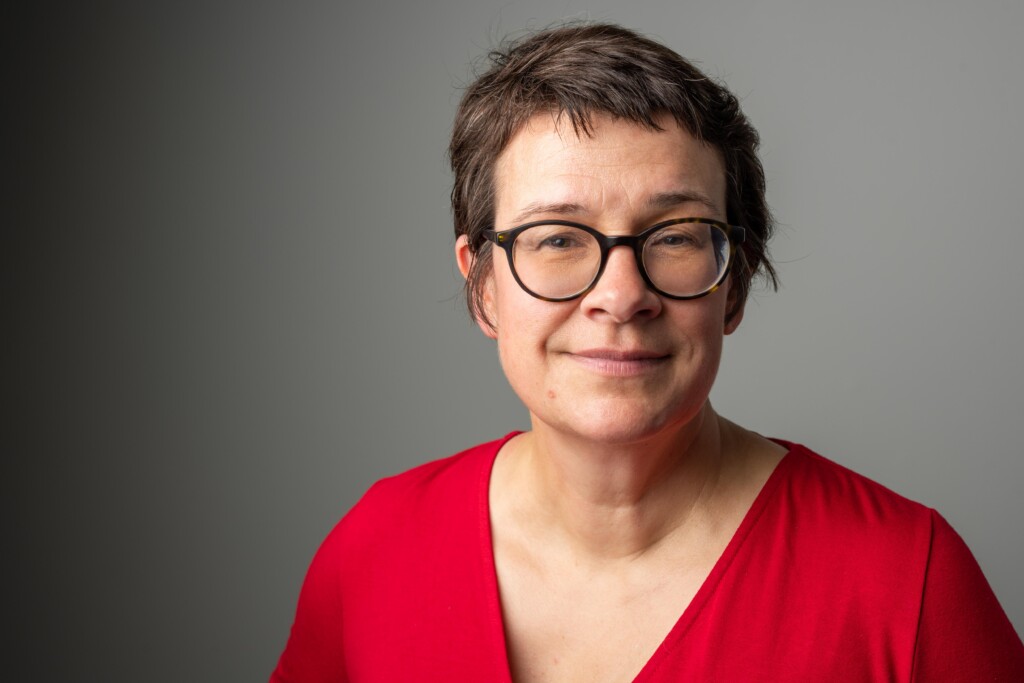
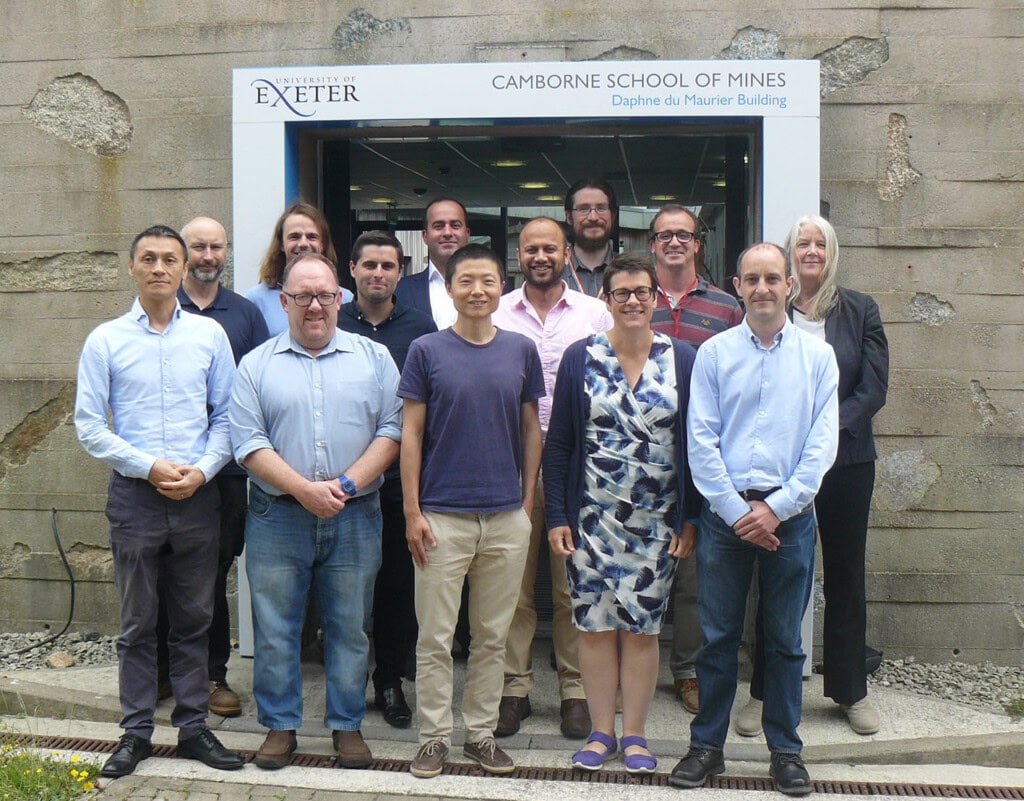
I recently spoke to Kathryn Moore, Senior Lecturer in critical and green technology metals at the Camborne School of Mines, about her research into mobile, switch-on switch-off (SOSO) and small-scale mining. This solution presents not only a valuable addition to the leading mining paradigm, but an opportunity to diversify Europe’s sustainable domestic extraction and supply of critical minerals.
Even though Moore’s journey in the mining industry began with her academic research in geology, specifically on carbonatites (magmatic rocks that host ores of technology metals), she quickly realised that the supply chain issues faced in Europe aren’t necessarily geological.
“Many deposits simply aren’t considered economically viable under the current mining paradigm, and so it’s not just about where we find minerals, but about reconsidering their value in a way that ensures supply stability,” she told me. “If there’s a supply crisis, how do we know what to access and how do we access it?”
She explained that many high-grade deposits remain sub-economic, unless there is a supply shock.
“This is why we need to build capability and capacity for operations that can come onstream quickly when needed,” said Moore. “This will allow us to offset these shocks until a new large-scale project comes online.”
Aside from economic considerations and geological complexities of small-scale mineral deposits, Moore also has a keen interest in the social and socio-economic implications of mining. She wondered how more sensitive mining solutions could enable companies to operate in close proximity to communities and populations and feels that the answer may lie in accessing smaller, more complex deposits which implies rethinking how we mine.
Moore got an opportunity to explore these possibilities during the implementation of the IMP@CT project; a Horizon 2020 flagship project that investigated the feasibility of mobile, modular mining equipment for complex, small-scale mineral deposits in short timespans and also be switched on and off depending on market demand.
The IMP@CT project
The IMP@CT project ran for four years between 2016 and 2020. IMP@CT stands for ‘integrated mobile modularised plant and containerised tools’ for selective, low-impact mining of small high-grade deposits.
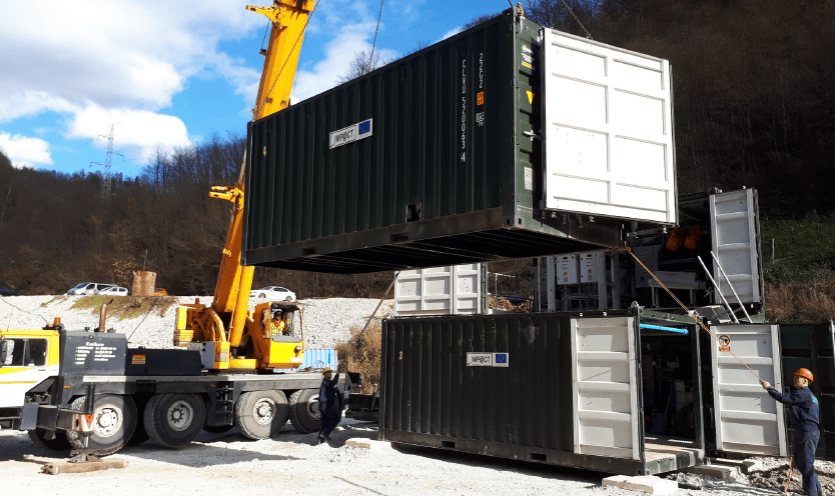
During the implementation period, containerised plants were developed that could quickly and easily be moved between sites, making them ideal for locations that wouldn’t suit conventional mining infrastructure. To achieve this, the project team adapted existing mining equipment to be transportable in standard 20-foot containers.
Moore explained: “The ability to deal with geological and geometallurgical uncertainty is paramount for the technological success of rapid SOSO mining activities in small or complex deposits. The plants were designed to process about 5 tons per hour of material and were adaptable to different geologies.”
Through these technologies, SOSO mining offers a flexible approach to mining that can rapidly respond to market demand and maintain lower environmental impacts than conventional processing plants.
“Mining technology can move fast, but legislation often lags,” Moore noted, highlighting the need for updated policies and permissions to support these adaptive solutions.
Localised benefits and community engagement
Moore believes the SOSO model’s social impact could be transformative. Many of the areas where SOSO operations are particularly viable, like narrow valleys, complex terrains, and rural locations, are often economically marginalised. By creating local employment and business opportunities, small-scale mining can serve as an incubator for employment and bring socioeconomic benefits to communities.
This approach represents a middle ground between the artisanal mining model, which is often unregulated, and large-scale mining that requires substantial infrastructure and investment.
For instance, Cassia Johnson, one of Moore’s Ph.D. candidates, found that in regions like the Yukon in Canada, small-scale gold miners work with full licenses, demonstrating that regulated small-scale mining is not only possible, but can coexist with local communities in a mutually beneficial way.
“Small-scale mining has been overshadowed by narratives of large-scale industrial operations or unregulated artisanal mining,” Moore explained. “But there’s tremendous potential for a recognised, sustainable approach that benefits communities.”
Integrating renewable energy and low-carbon solutions
Environmental considerations are fundamental to Moore’s vision for small-scale mining. The IMP@CT project sought to integrate containerised renewable energy solutions, recognising the need for low-carbon operations in spatially constrained sites.
Rather than relying on large solar farms, which may be unfeasible in narrow or shaded valleys, the IMP@CT project team modelled the application of hybrid systems combining solar, biomass, and battery storage.
“Energy solutions need to be customised,” Moore said. “For example, at our pilot project site in the Balkans, where forestry is a significant industry, gasification reactors utilising forestry byproducts proved viable, providing a low-emission energy source with minimal ecological impact.”
Bridging the gap with large-scale mining
Moore’s work with small-scale mining also holds lessons for large-scale operations, particularly in terms of community expectations. The IMP@CT project team found that, even for small-scale mining, communities had expectations of jobs creation and longevity of jobs provisions.
For small-scale mining with low capital expenditure (CAPEX), the establishment of costly automated solutions was not economically viable. Therefore, the requirement for human operators was greater than in large-scale mining.
In this way, and relative to the size of operation, small-scale mining might more readily meet community expectations than large-scale mining and offer a pathway for the mining industry to cultivate better relationships with local populations.
“The issues faced by small-scale mining can provide insights for large-scale operations,” Moore noted. “Especially around building community trust and minimising environmental disruptions.”
Moreover, by valuing raw materials more highly from the outset, Moore suggested that material supply chains could better enable miners to account for and pay the environmental and social costs associated with extraction.
She believes that as the industry progresses toward higher environmental, social and governance (ESG) standards, a small-scale approach to mining could inform a more responsible ethos across the sector, where low volume, high-grade ores become more valuable relative to low-grade ores at higher tonnages that often have a high carbon footprint.
A more diversified future for mining
Looking forward, Moore envisions a more diversified mining ecosystem where small-scale mining complements traditional methods, supporting Europe’s growing demand for critical minerals.
“My hope is that the conversation will become more nuanced, moving away from the polarisation of large-scale and artisanal mining towards a more open dialogue about mining’s role in society and the ways it can drive sustainable development,” she said.
Small-scale mining, according to Moore, could play an important role in the energy transition and resource security, not in terms of volume or absolute ore quantities, but in easing supply shocks.
As the demand for critical minerals intensifies, Moore believes that the SOSO model will become increasingly relevant, providing a flexible, sustainable and community-focused alternative to traditional mining approaches.
“With small-scale mining, we have a chance to develop an industry that aligns more closely with environmental and social values, opening up economic opportunities while preserving local ecosystems,” she added.
As Europe moves towards a greener, more resource-secure future, the SOSO philosophy presents a promising new model —one that balances the need for mineral resources with a commitment to community well-being and environmental sustainability.