

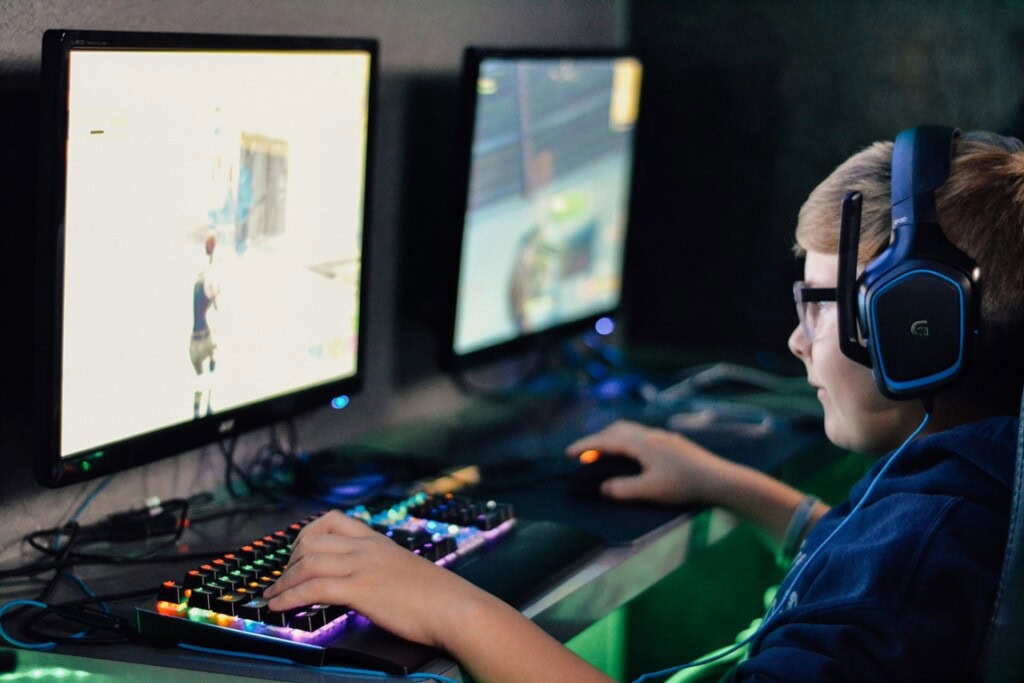
Personally, as a young person, I love gaming as a way to stimulate my mind and learn new skills. Although some would disagree with this point, it is obvious that in recent years the usage of gaming for education amongst youth has increased significantly, especially in relation to the topic of mining and metals.
Using basic gaming skills for mining education

Gaming can be an important communication tool in mining, and strengthening these links can allow youths to become interested in the subject and begin to view it as a long term, successful career path.
Whilst doing some reading, I found an opinion from Ross Digby stating that using gaming could help to close a skill gap and attract more young people towards the mining industry.
Digby believes there are many young people playing and creating games that teach them the skills needed to operate autonomous equipment; proving they are qualified for mining roles by the skills they display on screen.
Although trades are a strong aspect in mining, it is especially important that the industry turns its attention towards the aid of robotics, mechatronics and IT, and the results that can be achieved with open opportunities for younger people to thrive in the mining sector and move forward using new technologies.
What can be developed for younger people to cater these skills in the workforce?
Gamification – tools and techniques developed by the gaming industry – can be employed to increase engagement in the mining sector. For example, mining jobs, such as being an underground machine operator, can become dull and exhausting at times.
However, by introducing counting systems (online or real world) or maybe a scoreboard system this boredom could be counteracted. Using this, points can be given to operators based on the numbers of loads relocated, their attention to following instructions, and care when using safety feedback forms, which could also promote interaction and interest between operators.
When reading about working in mining from an online perspective, I found that Dr. Sean Dessureault had been working with a duo of researchers from Germany to develop a mining gaming tool powered by virtual reality to train young engineering students.
Most people in the younger student age range haven’t seen the interior of a mine (yet) and virtual reality would enhance this learning experience for us. This idea is not new, being used in equipment safety training and universities for educational purposes, but it could be improved.
The benefits for us of using this approach include unlimited access to equipment, saving time by having no requirement to travel and simulations of hazardous situations in a safe, controlled environment. It is especially important to first focus upon the underground environment, as I read the health and safety benefits would be greatest in these situations.
Virtual reality and photogrammetry can create realistic, immersive opportunities for youths, using headsets to demonstrate a scenario or begin to train a particular technique in problem-solving. Users can be awarded points (as in the gamification point made earlier on) and supervisors can review their performance to determine areas of improvement.
Mining games developed specifically as educational tools
There are various different online games that have been developed specifically as educational tools and for recreation. This helps young students like me to engage in the topic of mining and metals.
A personal favourite game of mine, which has had an extreme growth of popularity in youth constantly throughout the years, is the 2011 video game Minecraft which inspired me to write this very article.
In the game, players explore a generated earth on their screens with the ability to discover materials, build with crafting and learn new mining techniques. However, (although I have no complaints) there is a small accuracy debate with the game and how educationally precise it is which you can explore here.
Another good example of an educationally stimulating game for youth is Mining Evolution. This borrows inspiration from main-stream games with a large popularity, such as SimCity, by supporting and creating supplements for educational programmes specifically catered towards 10-17-year-olds.
It has the aim of making mining fun and creative through experiential learning, which is critical to the new way in which most of us Gen Zs learn. In the game, young players are guided through topics of exploration, construction, ore processing, environmental responsibility and career pathways later on, while linking the industry back to critical minerals.
Endless potential
As discussed in this article, gaming offers a huge range of possibilities to engage, interest and incentivise younger generations to consider working in the mining industry. Once part of the workforce, there are further opportunities to educate and upskill employees using gaming tools and techniques.
It’s been proven that play is an essential component of the learning process, regardless of age. As younger generation’s ‘play’ activity of choice, gaming offers immense possibilities for mining, and other industries, to secure future talent.
Eve Payne is a UK-based secondary/high school student with a passion for gaming. She is currently studying English language and literature and is considering a career in journalism.