

Mineral exploration and mine development are often cited as roadblocks that could hamper future minerals and metals production, and thus, global electrification and decarbonisation efforts.
Current processes are expensive and riddled with uncertainty. They’re also slow, and the time it takes to get a project from discovery into production continues to increase. S&P Global found that mines which came online in 2020-23 took, on average, 17.9 years to develop compared to 12.7 years for mines that started up 15 years ago.
But what if it were possible to shorten that timeframe, make the whole process more efficient and better manage uncertainty? What impacts could this have on the way in which the industry stage-gates important projects and finances new mines?
And, if we take a step back, how could this shift improve national security and empower countries to meet their decarbonisation targets?
What needs to change?
A team of tech founders, explorers, data scientists and mining leaders have coalesced at US-based startup Terra AI to address this challenge. And they believe they’ve cracked it.
CEO and Cofounder, John Mern, and Chief of Staff, Luke Ren, joined me to chew the fat. “What’s currently holding companies back when it comes to exploration?” I asked them.


“We see two main bottlenecks: target differentiation and resource definition,” said Mern. “It’s very hard to differentiate deep surface or fully undercover targets from surface signals, and it’s difficult to tell a mineralised deposit from an un-mineralised anomaly based solely on classical geophysics interpretations.”
Prospect generation is not the issue. The mining industry has lots of targets and data – a huge amount of money is being spent by governments and the private sector to gather high-quality survey data in key regions.
However, until recently, companies haven’t had the right tools to interrogate that data and accurately filter true signals from background noise.
“Explorers are spending too much time and money pursuing barren targets, because they can’t falsify them successfully early on in the cycle,” said Mern.
Ren agreed: “As an industry, we’re collecting more data than ever, but the cost-per-discovery is going up and success rates are going down. A lot of senior leaders have said that miners are facing ‘an internal reckoning’ on whether greenfield exploration is worth the investment.
“Many companies are considering focusing their growth strategies purely on M&A [mergers and acquisitions] for mature assets. That might make sense for some, but it won’t ensure that the world has the materials it needs for the future.”
The caveat is that things are starting to change. Financiers, governments, policy makers and miners are coming together to figure out how to funnel capital into the industry and allocate it in the most effective way to advance vital mining projects.
“If we can overcome the challenges that exploration faces, then there’s a unique chance to redefine the sector and its value to the world, which is exciting,” Ren told me.
Understanding what lies beneath
Exploration is one area where human instinct and local expertise still reign supreme.
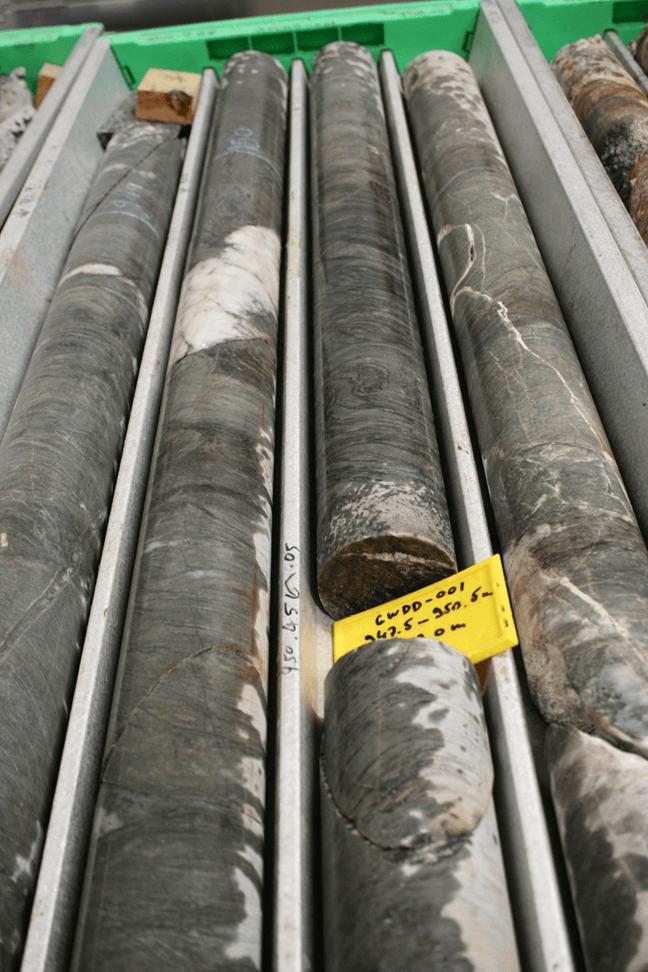
Drilling has long been, and will likely remain, the main truth engine for defining mineral resources. Prior to that, pre-drilling evaluation of targets and the allocation of prospectivity scores are processes that can carry a high degree of subjectivity.
Quantifying a target based on qualitative theories and assumptions is a risky business, and the results can give a false sense of precision.
“The main reason why cost-per-discovery is increasing is because drilling is the major cost driver in exploration campaigns – around 75% of expenditure comes down to drilling,” said Mern.
“Companies are spending huge amounts to falsify targets with drill core. If we can reduce the amount of drilling that’s needed from 10-15 cores, to two or three, that will allow companies to cut their costs by an order of magnitude and either walk away or pursue targets more confidently. The earlier in the process we can weed out barren targets, the better.”
The second bottleneck that Mern mentioned – resource definition – drives the length of time it takes for companies to develop economic projects. If 17 years is the average lead time, then approximately 12 of those years are spent drilling to define the resource.
“During that time, many companies finance themselves on the open market,” Mern explained. “They’re diluting themselves by raising high-risk capital early on. Digital technologies can help here.
“If companies can have a clear picture of their deposit, built on open-source data gathered early in the exploration process, and extract every insight possible from that, then they’ll be able to tell good projects from bad much earlier.
“Using advanced modelling technologies, it’s possible today to make a quantitative case for resource evaluation, rather than allocating a subjective score based on what geologists think might be there.”
Providing companies with this information could allow them to apply a more principled approach to portfolio management using risk-weighted decision making. For example, helping them decide where best to drill, where further data is needed, where to install infrastructure etc. so that they can move more quickly.
Mern told me: “Using today’s technologies, there’s the potential to cut that 12-year definitional period in half, or even further. Technology isn’t going to solve all our issues, but it can help companies make smarter decisions about how and where to spend their money.”
Visualise it
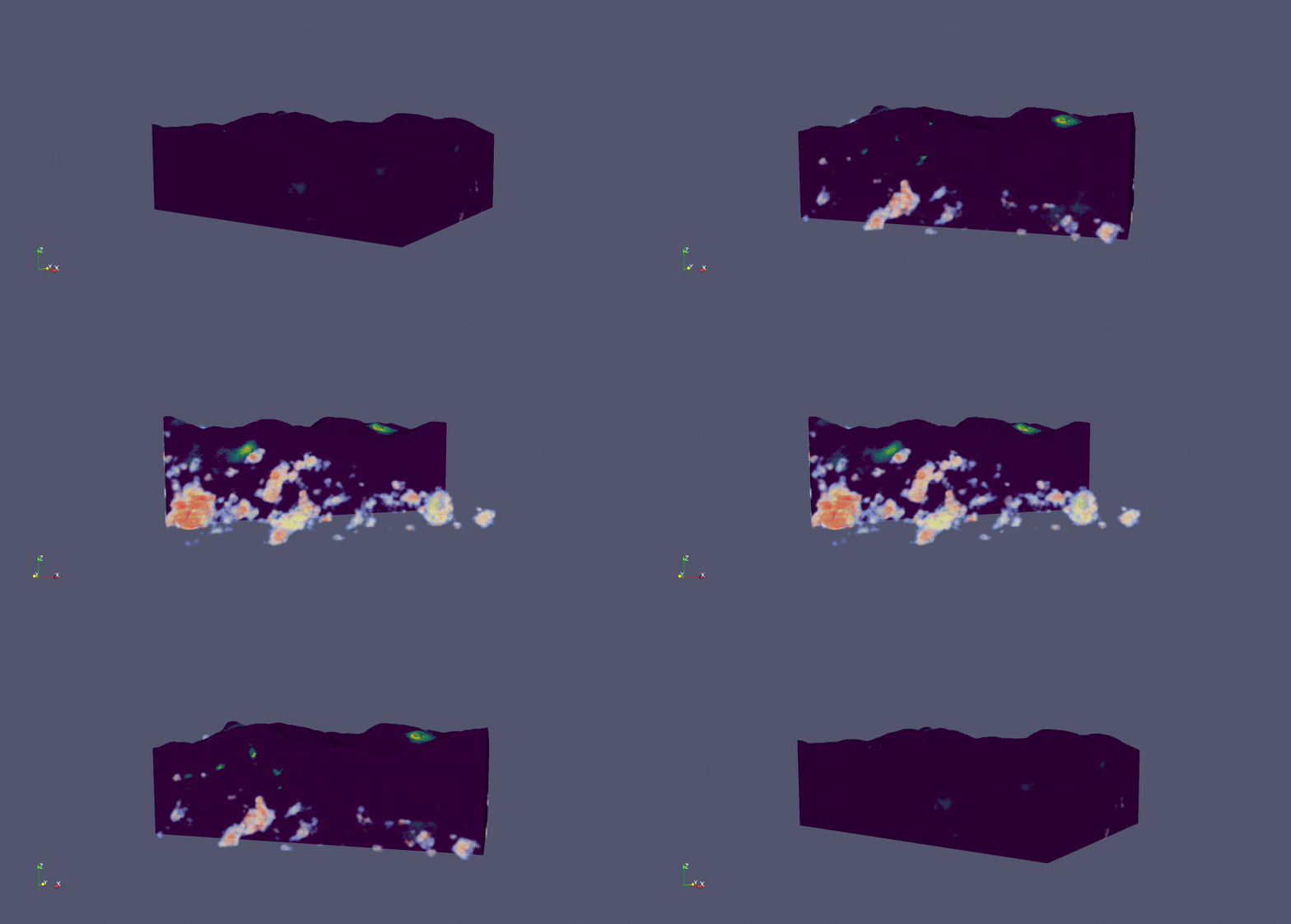
A multi-physics approach to resource modelling combines datasets from multiple surveying techniques, such as electro-magnetic, gravity and acoustic, to provide geoscientists with a more complete view of subsurface geology compared to more traditional singular inversions.
It also provides a way to visualise correlations between the datasets; something which is increasingly difficult for humans to do on paper or in their heads.
“To consider all the different geological properties together at once in 3D is challenging even for experienced geologists,” said Mern. “If signals are subtle, or if that person is looking at a system of mineralisation that’s different to those they’ve encountered elsewhere, there’s a good chance they might miss anomalies.
“With a multi-physics approach, companies can detect signals that exist only by considering these datasets simultaneously. They can zoom in and out to see local versus regional trends, and they can extract quantitative insights on projects – for example, whether a target is worth pursuing – and then overlay that answer with qualitative information, like, where the upper and lower boundaries of the mineralisation lie.
“It creates a rich, detailed resource model that can be used in decision making at every stage through exploration and downstream.”
Humans are still fundamental to this process, but even the best geologists need to sleep. Advanced modelling won’t replace human expertise, but it is a tool that geoscientists can apply to multiply their reasoning with computer-level speed and scale.

From information to insights
Multi-modal geophysical modelling isn’t new, but what is new and exciting is the way in which companies like Terra AI are using data fusion and generative capabilities to take the outputs of these models to the next level.
For example, the reasoning agent built into Terra AI’s generative modelling software can recommend the best next data collection actions to geologists based on the available survey and/or drilling options. This allows for more efficient campaign planning and execution, saving miners time and costs.
“In the context of multi-million or billion dollar decisions, it’s important that companies understand how these models work and why they’re recommending certain actions,” Ren told me. “A black-box approach might provide answers, but it doesn’t inspire trust and confidence.
“We spend a lot of time with clients building their geological theories and hypotheses into our models. That soft data is layered with hard physics-based data, and the client can then interrogate the outputs to understand why certain recommendations are better than others, and which hypotheses led to those predictions. I think that capability is super important.”
It’s also very practical because, no matter how much data or time is spent developing and deploying a model, things can and will change. The ability to evolve and continually improve a model, both on the technical and human side, is vital.
Transparency builds trust
As Mern pointed out, transparency is not just important for building miner’s trust in software. It’s also important for investors who need assurance that the decisions an explorer is making are the best possible ones.
The ability to provide greater understanding of mineral resources and possible development pathways could help to attract greater, and newer types, of capital.
“Venture capital is all about looking for that 10x or 200x return on high-risk projects,” said Mern. “A good exploration project can return 10x on capital spend in five or six years.
“But, to attract venture capital and other tech savvy investors, we need to give them a way to due diligence these projects. It’s not about reducing risk but recognising and quantifying it in a more objective way, so that we can attract the right funding.”
Ren, who has extensive experience leading and growing junior mining companies, nodded. “The fundamental problem is a filtering one. Capital providers find it difficult to identify which companies and projects are truly promising and which ones aren’t.
“We need a filtering system that gets projects from exploration into feasibility, into construction, and we’re building a tool that can support that.”
Mern’s background is in aerospace and AI, and Terra AI has leveraged that knowledge to create a systems architecture for its platform which mirrors that seen in traffic management solutions for self-driving vehicles. This gives the platform the ability to take multiple data streams and fuse them into a single model that’s usable for humans, and is compatible with downstream AI.
“The model tells our clients, not just what their resource looks like, but also where they have uncertainty,” Mern explained. “Our software can then make recommendations on how to optimise project development against different metrics, such as net present value (NPV) or internal rate of return (IRR).”
Terra AI has spent the past year building out prototypes, developing a proof of concept and validating its platform with mining companies of all shapes and sizes, including tier one copper producers, oil and gas providers and geothermal developers. In Ren’s words “they didn’t give us the easy projects. These partners truly put us to the test”.
“We’re bringing the lessons learned from these projects into the platform and finessing our offering to make it faster and more scalable in different commodities,” said Mern. “We’re also raising another round of capital which will enable us to expand our team and support more global contracts.”
The bigger picture
The Terra AI team hopes that, in time, as technologies like theirs become standard in mineral exploration, junior companies will become more successful and thus, the value of the entire sector will begin to rise.
Mern explained: “Today a lot of projects are traded 1% or 5% of NPV, regardless of what their true potential is. Technologies like ours should make it easier to pick winners from losers, cut exploration timelines and dilution, lower costs and quantify project risk more precisely.”
If technology can (and Terra AI’s can) cut the time and cost of exploration by 40%, improve the size and grade of a resource by 5-15% (and thus revenue potential), that could translate into a huge gain in project valuation by the end of feasibility.
“That would mean, all things equal, having about an 80% higher valuation four years earlier than any other project,” said Ren. “Those numbers increase the earlier the technology is applied, because companies are saving exploration costs too.”
Mern added: “Over the next decade, I think we could cut the advanced exploration stage of projects for many assets from a 10-year cycle to a one-year cycle by making the generative process of geological concept creation and modelling less human driven.
“In the next 2-5 years, I think we’ll see a lot of top explorers collaborating closely with tech and data science companies to create geological concepts faster and more robustly using computer-based methods.”
It’s likely that many of the trends seen in biotechnology and drug discovery – for example, where human biomedical engineers no longer design protein folds and sequences by hand, instead candidate molecules are created by computers – will also seep into mining.
As Mern said: “Exploration will become less of an art and more of a science.”
Ren concluded: “I think, in 10 years, exploration will be faster, cheaper, better and cleaner. That will speed up downstream processes as well. Mining cycles are driven by the lead time between high commodity prices and bringing on new supply.
“If we can collapse that lead time down to one year, then the mining industry will be more responsive to the market. That will generate additional value and prevent loss of value.”
He added: “Right now, we’re in a perfect storm of new technologies, interest from new investors, and we’re at a unique moment in terms of political and societal support for mining, especially in critical minerals.
“The rise of geophysics in the 1930s underpinned the most successful mineral discoveries of the past century. It birthed a whole new wave of explorers and miners. AI has the potential to be a lot more disruptive than geophysics, because its application is so much wider.
“We’re standing on the cusp of the next big leap in exploration capabilities.”
This article is sponsored by Terra AI
1 comment
Danny
Good article, Carly. Appreciate this insight.