

I was about five years old when I first encountered a video game. It was Kaboom! on an Atari 2600. We also had cartridges for Frogger and a few others.
Back in the day, there were simple graphics, only one button and a joystick. I still remember the game like it was yesterday — sitting with my family and seeing who could get the highest score.
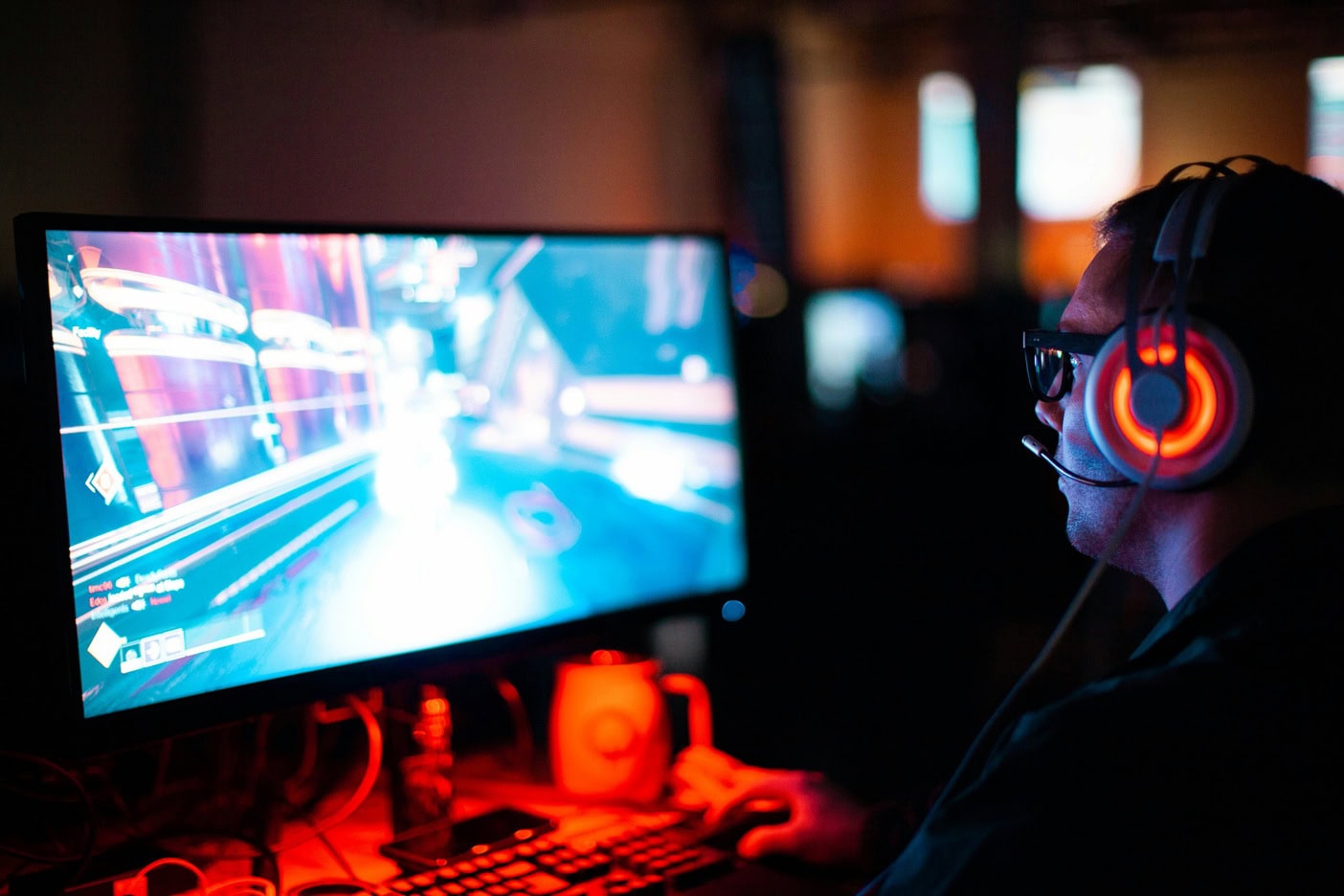
Later on, I continued to play games like Mario Brothers and then moved on to more modern games like Dota (multiplayer online battle arena type game) and Gran Turismo – the father of modern racing games.
Gaming was my outlet and a way to escape. It wasn’t just a fun way to pass the time, but occasionally a way to learn. Everything I know about Greek mythology, for example, I learnt by playing certain games.
In 2000, I started my mining career. I studied as a mine surveyor and was on the cusp of the analogue-to-digital transition in mining. When I started, paper plans and hand peg calculations were still the norm.
Over my career, I’ve seen technology change from manual to automated systems. Remote-operated laser solutions and advanced 3D modelling became the norm, and mining found a new way to see and explore data.
Learning the craft
In 2023, I started playing a bit of Minecraft, as both of my children loved the game. I would spend hours with my daughter building and crafting.
My daughter, 11 at the time, was in the midst of her Minecraft ‘career’. I was doing an underground mine design for a diamond company, and she would occasionally come and sit in my office, asking questions about what I was doing.
I explained the purpose of declines, crosscuts, sill drives and stopes. She asked things, like “how do you know where the ore is?” I explained the idea of drillholes and how I arrived at an orebody design. I didn’t think much of it, apart from enjoying her taking an interest in my career.
A few days later, she called me over to her computer. She showed me that she had built a mini mine in Minecraft. She had a full decline to an orebody and showed me her idea. She learned the basics of mining through playing a game.
That stuck with me, and I wondered why this wasn’t already the norm.
Why gaming is great for mining education
When I started the idea of building a game specifically for mining, I found many examples where science, technology, engineering and mathematics (STEM) gamified platforms were already being used. This was clearly happening in other sectors, so why not in mining?
It might have something to do with the love-hate relationship that miners have with technology. Mining is often seen as a slow adopter. This might also have something to do with how universities approach education.
So, what does gaming offer mining education?
- It provides an active learning experience through simulation. Players can play, fail and learn in a stress-free environment.
- Game-based learning increases attention and participation through rewards, challenges and progression. Learn at your own pace and play your way.
- Like me remembering Frogger patterns, information is retained more effectively. The visual, audio and interactive elements just stick with a player.
- Explore and learn at your own pace. Just like Gran Turismo you can play your way and choose your own toolsets and craft your own path.
- Gaming also fosters collaboration. Games can be designed for multiplayers, allowing players to interact with each other in a simulated mining environment and learn together.
If I gave you an advanced simulation model for a uranium plant in a Word document or Excel spreadsheet, you might struggle to understand it. But if I built that same model into a game and let you learn on your own time — clicking, adjusting inputs, seeing outcomes — your understanding will almost certainly improve.
Gaming is an unexplored element in education, and it’s only now starting to go mainstream.
Let’s make mining sexy again
If we want to attract and retain the next generation of mining professionals, we must start speaking their language.
Mining is losing smart individuals to sectors like fintech and medical. We need to find ways to bring those potential people back, and one way to do that is to bridge the gap between perception and reality, and show that gaming is not a gimmick, but a bridge to a meaningful career.
To completely misquote Donald Trump, we need to “make mining sexy again”.
The way to do that is by switching up the message. Education needs to reflect how today’s students are growing up, and it needs to adapt accordingly. Gaming won’t fully replace traditional educational tools, but it can absolutely enhance it. It adds a new layer of interaction and imagination.
The world is changing. Technology is changing. We owe it to the next generation of miners to rethink how we teach, train, and inspire. A game can spark curiosity and open minds to what’s possible. Perhaps this is the start of a new movement, something deeper that can change the way mining is seen from the outside.
Let’s go Kaboom! on mining — yes, pun absolutely intended.
With over two decades of experience in mining technology and operations, Paul Ehlers is a leading voice in the movement to revolutionise mining education through gamification and simulation. To continue the conversation, connect with Paul on Linkedin