

Critical metals – copper, lithium, cobalt and nickel among others – sit at the heart of modern living. They’re essential building blocks in batteries, energy storage systems, electronics, defence and infrastructure, yet their supply chains are often fragile, geographically concentrated and technically challenging.
“National and international governments designate metals with critical status based on a combination of factors, including resource scarcity, strategic importance and supply risk,” explained Janne Karonen, Director – Hydrometallurgical Technologies at Metso, when we spoke in August.
“Availability is key. Western production of certain minerals, like rare earth elements (REEs) indium, gallium, germanium and antimony are limited. Substitution is often impossible because many of these minerals have specific properties. And after decades without production, the West has lost much of the technical competence needed to develop and run these projects.”
He added that the challenge is not only about resource availability and suitability. Many critical mineral deposits, such as copper, can take decades to bring into production.
From discovery, it can take 20 years before a copper mining operation is producing at scale. In that time, market demand can change, battery chemistries can evolve, and new processing technologies and flowsheets emerge.
“A lot depends upon where a resource is located,” said Karonen. “Geopolitical instability, access to funding and rapid changes in legislation and incentives can complicate the situation. It’s not always clear what the rules are if companies want to establish a new mine or processing facility in certain jurisdictions.”
Time is of the essence
The urgency of bringing on new and alternative sources of supply is underscored by the International Energy Agency’s (IEA) 2025 Critical Minerals Outlook, which reported that lithium demand increased nearly 30% in 2024, far outpacing the ~10% annual growth of the previous decade.
Demand for nickel, cobalt, graphite, and REEs each grew between 6–8% in the same year, driven largely by the energy transition.
Refined production of these critical metals has also become more geographically concentrated, as shown in figure 1, with the top three refining countries (China, Indonesia and the DRC) now controlling 86% of the market, up from 82% in 2020.

Figure 1: Change in refined copper, lithium, nickel, cobalt and REE production by country 2020-24. Source: IEA.
Accelerating value through circular models
One way the mining and metals ecosystem is responding is by realising greater value from resources through circular approaches. As well as building and permitting new mines, some operators are also looking at existing tailings, process residues and by-products as potential feedstocks.
The environmental and economic advantages can be compelling, particularly if mineral processing and transport infrastructure is already in place. Additionally, permitting can be simpler, and the environmental footprint often smaller than starting from scratch.
A good example of this approach can be seen at Cenzig Holding’s Eti Bakır Mazıdağı site in Turkey. Roasting calcine from the operation, that was once considered waste, now yields both precious and base metals thanks to an integrated recovery process.
This has unlocked additional value from the resource without the need for a new mine, reduced the operation’s environmental liabilities and diversified its revenue streams.
Similarly, the Australian Vanadium Project in Western Australia has integrated advanced roasting technology from Metso into its flowsheet to ensure recoveries above 90% from magnetite concentrates. By doing so from the outset, the project has aligned its economic performance with environmental, social and governance (ESG) objectives and reduced the risk of leaving valuable material behind.
“Optimisation of the whole flowsheet, from the mine concentrator to the refining plant, is key,” said Karonen. “It can provide supplementary revenue streams and environmental benefits for companies.”
Battery metals: innovating for purity and sustainability
He explained that the boom in electric vehicle (EV) production and stationary energy storage has created particularly high demand for ultra-pure lithium, nickel and cobalt. Producing these metals to the required specifications is not straightforward; the extraction processes must achieve high recovery rates along with minimal environmental impacts.

One example of innovation in this space is Metso’s alkaline pressure leach concept for lithium production. This approach offers a two-step, acid- and sulphate-free direct leach process for spodumene to produce battery-grade lithium hydroxide or carbonate.
“It typically achieves more than 90% lithium recovery while generating inert, neutral residues that can be safely reused or disposed of,” explained Karonen. “By avoiding sulphates and strong acids, the process reduces environmental risks and operating costs. It also delivers lifecycle improvements, including 40–60% water savings, lower acidification potential and a smaller overall footprint.”
Such advancements illustrate the value of flowsheets that are not just efficient but also designed to adapt to changing feedstocks and ever-stricter sustainability requirements.
Karonen said that, in practice, this means designing for flexibility from the outset, enabling a plant to handle variations in ore quality, to integrate multiple feedstocks, or to pivot to different products as market demand evolves.
Recycling: urban mining meets ESG
While new mines will remain necessary, mining and metals producers are increasingly turning their attention to the recovery of metals from end-of-life products. Nowhere is this more evident than in battery recycling.
The black mass recovered from spent batteries contains manganese, cobalt, nickel, lithium and often copper. Mechanical separation and, where appropriate, thermal treatment are used to concentrate this black mass. It’s then processed hydrometallurgically – the metals are dissolved, separated through solvent extraction, purified and converted back into battery-grade chemicals.
Recycling not only reduces reliance on virgin materials but also dramatically cuts embedded carbon footprints. For instance, US-based recycler, Redwood Materials, uses a closed-loop process to recover 95% of battery metals from spent EV battery packs and recycle them back to battery manufacturers, reducing emissions and strengthening supply security.
The company already receives 20 GWh of batteries annually, representing 90% of all lithium-ion batteries recycled and processed in North America. It plans to produce 100 GWh of cathode-active material annually by 2026 – enough for 1.3 million EVs.
Globally, momentum is building in battery recycling. The IEA reports a 56% annual growth in lithium-ion battery recycling patents between 2017 and 2022, alongside a surge in venture capital investment.
Legislation is also reinforcing this shift. Karonen explained: “The EU Battery Directive mandates that specific percentages of lithium, nickel and cobalt in new batteries must come from recycled sources.
“The EU’s Critical Raw Materials Act (CRM Act) goes further, requiring that by 2030 at least 40% of strategic raw materials consumed annually in the EU are processed domestically and at least 25% are recycled. It also caps reliance on any one non-EU country at 65% of supply.”
In Europe, the potential is huge but underutilised. Reuters reports that the region could recycle enough battery material to supply up to two million EVs annually by 2030. However, high energy costs and limited incentives mean current capacity is only about 10% of what’s required.
According to the IEA, without such measures, lithium supply may only meet 50% of demand by 2035, and copper just over two-thirds. Recycling, it estimates, could reduce the need for new mining by up to 30%, relieving both environmental and geopolitical pressure.
Designing for smaller scale and greater agility
According to Karonen, a defining feature of both critical metal mining and battery recycling operations is scale – or rather, the lack of it compared with bulk commodities. Iron ore and copper mines may handle millions of tonnes of material per year, but many critical mineral operations deal in hundreds of thousands of tonnes, or less.
This has design implications. Smaller, modular plants are often easier to permit and build, especially when dealing with decentralised feed sources, like battery collection points or satellite ore deposits.
Modularity allows for easier relocation, faster construction, and lower capital investment. It also makes it easier to match plant capacity to the available feed, avoiding the inefficiencies of underutilised equipment.
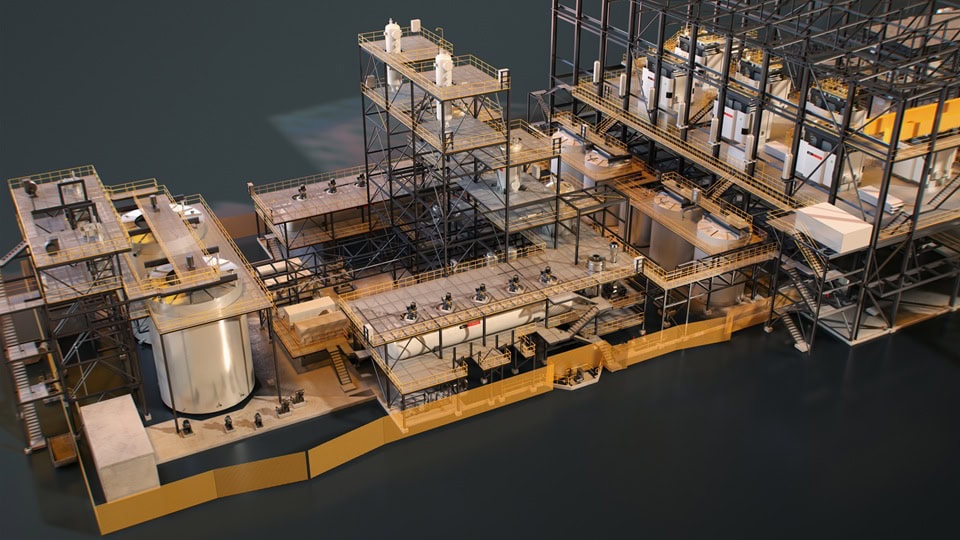
“In battery recycling, decentralised plants can process material closer to the point of collection, reducing transport costs, emissions and improving responsiveness,” said Karonen. Modularity in plant design has also formed the basis of Metso’s eScrap solutions for the treatment of Waste Electrical and Electronic Equipment (WEEE).
Building a responsible critical minerals ecosystem
Recovering the full value from critical minerals is about more than just maximising profit. It can also support the development of a responsible business ecosystem that delivers transparency, ethical sourcing and environmental stewardship.
“A transparent value chain – from ore to refined product -helps customers and consumers alike understand where materials come from, how they are processed and whether they meet responsible sourcing standards,” said Karonen.
Industrial symbiosis offers another opportunity: creating ecosystems where one company’s by-product is another’s feedstock.
Karonen pointed to Swedish miner, LKAB’s, plans to establish a circular business park in Luleå as a good example. By clustering critical minerals processing, manufacturing and recycling facilities, this will allow the companies involved to reduce their waste, share infrastructure, and lower costs, while creating new jobs and economic opportunities.
Collaboration to keep pace with change
The rapid pace of development in battery chemistries poses a unique challenge. As Karonen noted: “We need to optimise the whole value chain from raw materials to end-of-life recycling.”
To do this effectively, miners, equipment suppliers, manufacturers and recyclers must work together from the outset, designing products and processes that not only support high-performance, but also recyclability and financially viability across the product lifecycle.
Research partnerships are proving vital in achieving this. Metso is currently involved with several, including the EU-funded RESPECT project. Through this, a consortium of mining, metals and recycling companies is working to develop a global flexible, adaptative and safe lithium-ion battery recycling process at a modular level, encompassing pre-treatment, full hydrometallurgy and direct recycling.
The project aims to contribute to the development of a sustainable European battery supply chain.
The LITHOS project is another – the goal of this is to unleash Europe’s full lithium hard-rock ore potential through responsible mining and refining, allowing the region to become self-sufficient in lithium hydroxide production by 2030–35.
Karonen added: “In Finland, the BATCircle ecosystem also brings together miners, technology providers, manufacturers and academia together to address recycling challenges from multiple angles, blending technical R&D with business model innovation.”
Looking ahead to meet demand
Karonen is cautiously optimistic about the future. “There’s a lot going on in critical metals across the globe – public funding, new market entrants, rapid technology development… I think interest and investment in this area of the market will continue to grow,” he said.
“From Metso’s point, our portfolio of technologies, equipment, digital solutions and intelligent sensors, fit very well to this area of business. And our project execution model is well suited too.”
Another example of Metso’s capabilities in critical minerals is the Ausmelt Top-Submerged-Lance (TSL) technology which can provide for the recovery of tin, antimony, gallium, germanium and indium from both traditional concentrates, but also waste streams such as metallurgical residues and tailings.
As the IEA projects, scaling recycling could cut new mining needs by 40% for copper and cobalt, and 25% for lithium and nickel by 2050. In a low-carbon future, such measures will be indispensable.
“Meeting demand will require more than just opening new mines,” said Karonen. “It will mean reimagining how we – society – use and reuse the materials we already have, designing processes that recover maximum value from every source, and building the collaborative ecosystems needed to make it happen.”
The ability to recover critical minerals from complex orebodies, concentrates and residues, and increase recovery and recycling through either hydrometallurgical or pyrometallurgical means, will become increasingly important for all producers.
As full value recovery becomes a strategic imperative, the companies that thrive in this new era will be those that can think beyond extraction to embrace circularity and integrate sustainability into every part of their operations.
This article is sponsored by Metso