

Six major mining companies have announced CEO transitions in 2025, including Newmont, BHP, Barrick, Anglo American and Teck (soon to be Anglo Teck). Although unprecedented in scale, this clustering of entries and exits is not as surprising as it first appears.
According to Rowan Phendler, Partner – Mining & Process Industries, at executive search firm Granger Reis, the timing reflects both the natural cadence of leadership cycles and the mining sector’s rapidly changing needs.
“We’re seeing a huge number of executive leadership changes across the sector,” he explained. “Many appointments were made during the last upcycle in mining in 2019-2020. The typical tenure for a CEO is five to six years. Those cycles are ending, and at the same time, the industry is undergoing profound structural change.”
CEO turnover in mining has been rising steadily for several years. Bedford Group data shows that turnover reached 15.1% in 2023; one of the highest rates across extractive industries.
Broader leadership benchmarks reflect the same pattern: S&P Global noted a steady uptick in CEO exits across the energy and materials sector since 2019, where average CEO tenure now typically falls in the five- to six-year range.
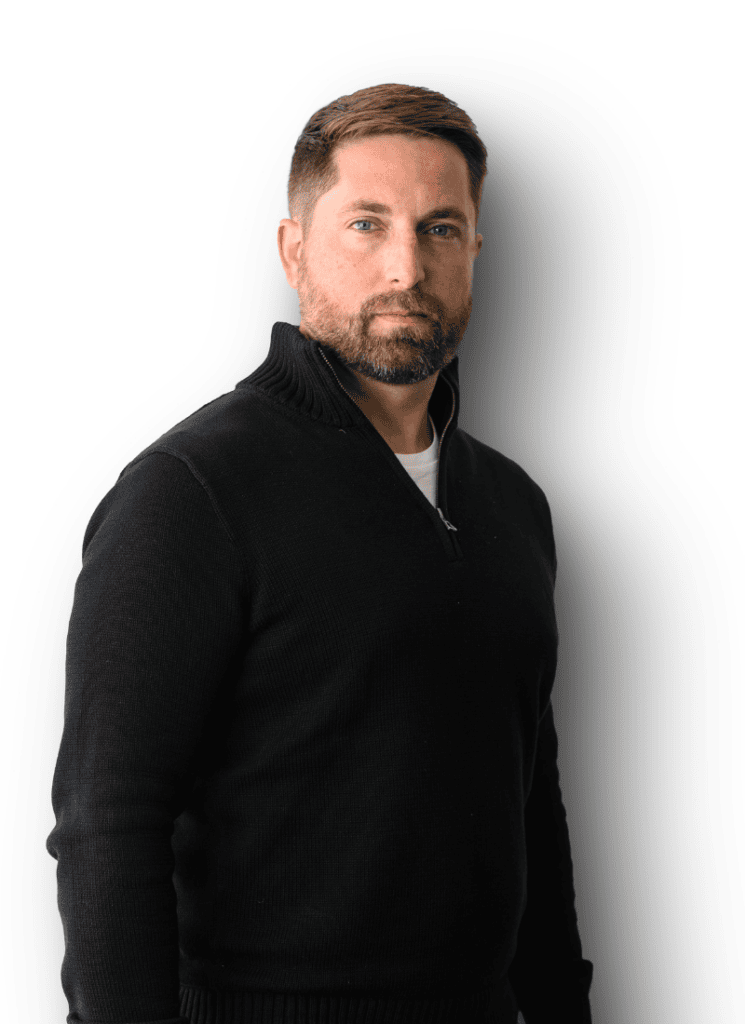

Phendler attributes the current wave to a combination of consolidation, investor pressure, and the maturing of environmental, social and governance (ESG) into a strategic discipline rather than a reporting function.
“This is a leadership reset,” he said. “Boards want CEOs who can rationalise portfolios, integrate acquisitions and accelerate digital transformation. They’re moving away from pure operators towards strategic architects.”
Internal succession or fresh blood?
Each CEO transition reignites a familiar question: should the successor be an internal contender or an external disruptor?
Traditionally, mining has favoured the former. This reflects the sector’s longstanding preference for continuity, asset-specific knowledge and technical backgrounds.
“Internal candidates bring continuity,” said Brad George, Senior Partner and Head of Granger Reis’ Natural Resources Practice. “If a business is performing well or going through a long-term strategic transition, promoting from within can help to maintain cultural stability. It reassures employees and investors.”
External candidates, however, can inject fresh thinking when organisations hit structural barriers or need to pivot strategically. “If you need to change the organisation’s direction, an external CEO may be the right answer,” George explained. “But external hires can take longer to integrate, and their selection can unsettle stakeholders, especially if they’re brought in to disrupt.”

George emphasised that even internal successors require more time to adjust than many boards expect. “People often assume that internal promotions can ramp up quickly. But, realistically, it can take a year or more for someone to fully transition into a CEO role,” he said.
In today’s operating environment, marked by geopolitical tension, technological transformation and shifting societal expectations, boards are generally pursuing a more balanced approach to executive search. This includes investing in internal talent pipelines while maintaining active visibility of high-potential external candidates.
“Companies can’t afford to foster one pipeline and neglect the other,” George said. “We just don’t know how business or the world will change over the next few years.”
The changing shape of a mining CEO
Operational excellence and technical understanding remain foundational for mining CEOs, but these skillsets are no longer sufficient on their own. Industry leaders today require an expanded set of strategic, social and technological capabilities.
“Alexis Bird, Partner – Mining & Metals at Granger Reis, explained: “A modern mining CEO isn’t just an operator. They’re a strategist, a diplomat, a political chameleon, a technologist and an ESG champion, among many other things.”
The rise of ESG as a central decision-making framework has transformed leadership expectations. Executive remuneration packages are now commonly linked to metrics like emissions targets and climate risk disclosure, while actors up and down global supply chains are scrutinising sustainability performance as part of their sourcing practices.


At the same time, the geographical footprint of mining continues to expand into more complex jurisdictions, where community relationships, political sensitivity and cultural intelligence are critical to success.
“Successful CEOs need the emotional intelligence to build trust and the judgement to act ethically under pressure,” said Bird.
Digital transformation has added a further dimension. AI-enabled operating systems, real-time analytics and automation are no longer optional upgrades; they’re enablers of operational competitiveness and leaders must have the capacity to leverage them strategically.
“Mining has historically been conservative with emerging technologies,” Bird added. “But with AI, automation and data-driven decision making reshaping the sector, CEOs must become champions of technology, not resistors.”
Diversity: from aspiration to necessity
Mining’s lack of diversity, especially in senior roles, is well documented. Women still hold only 13% of executive positions globally, and only 17.6% of board seats.
But the tide is beginning to turn, driven partly by the recognition that diversity strengthens governance, decision quality and stakeholder credibility. In fact, research by McKinsey found that companies in the top quartile for racial or ethnic diversity were 36% more likely to financially outperform their peers.
“Inclusive and representative leadership is increasingly recognised as a driver of innovation, resilience and stakeholder trust,” said Danielle Hatton, Principal – Natural Resources at Granger Reis.
“Our job, as leadership search and development experts, is to broaden the talent pool. Today we’re sourcing globally, across different sectors and a wider range of professional backgrounds.”

Hatton noted that the shift is supported by data-driven assessment tools that help reduce unconscious bias in selection processes. But the real impact, she said, comes from embedding diversity into long-term leadership planning, rather than treating it as a discrete hiring objective.
“The desire is there,” she said, “But making it real, and embedding DE&I into succession planning, development pathways and company culture, is a big challenge.”
She added that mining companies that succeed in this regard are more likely to be those that approach diversity, not as a target, but as a competitive advantage.
The regional–global balancing act
Mining companies – particularly the majors – often operate with strong regional autonomy, reflecting the localised nature of businesses based on factors such as geology, regulation and stakeholder engagement.
But the increased importance of ESG governance, global reporting standards and digital integration is increasingly pushing companies toward more centralised leadership models.
George believes the optimal structure is a hybrid. “Every region has its own challenges, regulatory expectations and stakeholder dynamics,” he said. “A one-size-fits-all approach is often too rigid.”
Centralisation provides consistency, particularly around agendas such as ESG, digitalisation and capital planning. Meanwhile, regional autonomy maintains responsiveness and credibility where it matters most – with communities, governments and local partners.
“It’s the only way to balance consistency with local responsiveness,” George said. “Regional leadership is essential for stakeholder relationships and ESG credibility.”
Succession planning rises up the agenda
Succession planning has historically been one of the mining industry’s weak points. Activities tend to be sporadic, compliance-driven and overly focused on the near term. But the 2025 CEO transition wave highlights the risks of failing to plan proactively.
“Mining is capital intensive, and commodity cycles can be lengthy,” Phendler explained. “A poorly managed CEO transition can disrupt production targets, safety performance and investor confidence. It could wipe out value fast.”
Mismanaged leadership transitions can materially impact shareholder value across global industries; according to McKinsey, poorly managed CEO and C-suite transitions wipe out close to $1 trillion in market value every year in S&P 1500 companies. The mining sector, with its propensity for capital intensity and high operational risk, is particularly vulnerable.
“A succession plan can’t just be a list of names,” Phendler said. “It needs cultural insight, emotional intelligence assessments, leadership evaluations and diversity considerations.”
Companies are improving, but many still fail to treat succession planning as the dynamic, strategic process it needs to be. Increasingly, boards are beginning succession planning as soon as a new CEO is appointed… and that is a good thing.

Preparing and retaining future leaders
Identifying high-potential leadership candidates is only the first step. Preparing them for future roles (and retaining them) is a far greater challenge, particularly in a market where competition for senior talent is intense.
“It’s a multi-year, multi-layered process,” Bird explained. “Retention isn’t just about compensation anymore. High-potential leaders want purpose, impact and values alignment.”
To succeed in developing future leaders, companies could look to provide cross-functional exposure, international assignments, coaching support and space for individuals to shape their own career paths. Flexibility, Bird said, is essential.
“If businesses can’t be agile in supporting career aspirations, people will leave,” he added. “Mining companies that approach talent with humility and openness, and encourage people to navigate their own career paths, are more likely to win.”
What comes next?
Looking ahead, Hatton expects future mining leadership strategies to be shaped by digital transformation, decarbonisation and rising expectations from communities, governments and employees.
She explained that leaders will need to be fluent in both operations and technology, comfortable navigating political complexity and be credible on ESG.
As for where future CEOs will come from, Hatton anticipates a balanced model. Internal succession will remain strong because it provides continuity, she explained. But external hires will become more common in roles requiring new skills, particularly those related to sustainability, technology and supply-chain governance.
George added a final word of caution: mining companies must start integrating external talent earlier if they expect them to thrive in leadership roles later.
“Dropping someone from a different industry straight into a CEO role is risky,” he said. “Integration takes time. Exposing them to the realities of mining, including its geographies and complexities, is essential.”
A leadership model rewritten
In summary, the CEO transitions of 2025 aren’t an anomaly. They’re a sign of a sector that’s reimagining its trajectory, from the ground up.
“This is about redefining what leadership looks like for the next decade of mining,” Phendler concluded. “The challenge now is whether companies can evolve their leadership strategies to match the speed of change in the world around them.”
This article is sponsored by Granger Reis