

Below are some reflections from 50 years of teaching, research and consulting experience in applying geotechnical engineering principles to managing mine wastes and mine closure. Many can be more broadly applied.
Lesson 1: Beware of “bias” and “ego”.
John Lupo, then of Newmont and now an independent consultant, spoke at the Tailings and Mine Waste 2018 Conference on bias and ego. He highlighted that everyone brings their own “bias” to any discussion. Some also bring “ego”, particularly in the mining industry, which can be far more damaging than bias.
Both contribute to “doing what we have always done” (expecting or hoping for a different outcome), being complicit in maintaining the status quo and leading to a loss of community confidence and trust, which is very difficult to restore.
Lesson 2: We should all strive to think critically and add value.
If you aspire to simply input given parameters into a given equation, you will inevitably be replaced by a machine. Options decrease and costs increase with time.
Lesson 3: Mine operations and mine closure appear mutually exclusive. They cannot be.
Miners and regulators have opposed perspectives on the cost of closure. Miners consider that mining is all about liberating a commodity of value, which is shipped for processing and to markets elsewhere.
In fact, the commodity of value is but a small proportion of what is extracted, down to one part-per-million for gold and 1% or lower for copper. The bulk of what is excavated to liberate the commodity of value is waste, which remains on the mine site. Hence, miners should consider themselves in the mine waste management business.
Rehabilitation liabilities are escalating, and yet there is no certainty that mines can successfully be rehabilitated (to be safe, stable and minimise pollution), let alone relinquished.
Lesson 4: Reprocess and repurpose mine wastes for cost-effective closure.
Value-added mine closure should be pursued, in which the post-closure value is identified upfront, and mining and processing are directed towards achieving this within the budget provided by the post-closure value.
Reprocessing low-grade ore and tailings does little to reduce waste volumes. Repurposing wastes (for example, for construction sand) at best reduces their volume.
Repurposing mine sites has the potential to best add value post-closure, and there are examples worldwide of cost-effective mine closure.
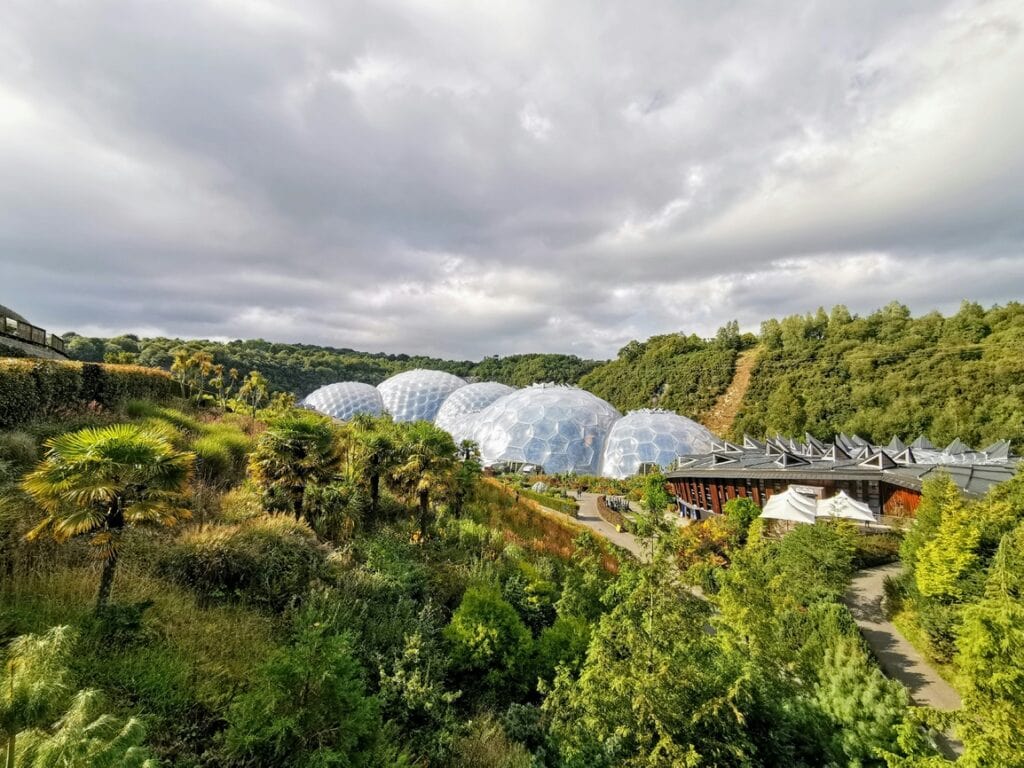
Lesson 5: Capping potentially (likely) contaminating mine wastes must be more than applying a thin “apple skin”.
Any capping must be as robust as possible, handle rainfall without excessive seepage and resist erosion.
Lesson 6: Slopes should be flattened to the extent required for geotechnical stability, but not to the extent that erosional and/or geochemical stability are impaired.
Natural slopes persist because they are rocky and resistant to erosion over geological time and can be steep (up to the angle of repose of the rocky material).
For mine slopes, a balance is required between geotechnical, erosional (rilling, gullying, and sediment loss) and geochemical (seepage) stability of slopes. There is a perception that steep mine slopes should be flattened, and ‘greened’.
In fact, the flatter the slope, the greater the catchment and hence the greater the erosion for a given (usually fixed) slope height.
Lesson 7: There is a mismatch between mine, natural and dam slopes…
Shrubs and trees are found on slopes due to deep drainage, while shallow-rooted grasses tend to predominate on flat areas.
Lesson 8: Design for geochemical, geotechnical and erosional stability.
Ensure geochemical stability by burying contaminating wastes. Ensure geotechnical stability and minimise erosion by applying a rocky cover and revegetation.
Lesson 9: Apply (natural) geomorphic principles.
On geotechnical engineering design and analysis, interrogate input parameters and the results of analyses, including sensitivity analyses. The only true certainty is a factor of safety of 1.0. All other factors of safety are calculated, based on adopted parameters.
Lesson 10: In all jurisdictions, it is becoming more difficult to permit conventional tailings dams, forcing existing dams to be raised ever higher – not a good scenario.
Recent catastrophic tailings dam failures, particularly the Samarco failure in 2015 and the Brumadinho failure in 2019 that led to 272 fatalities, both in Brazil, have drawn attention to tailings dam design and tailings management in general.
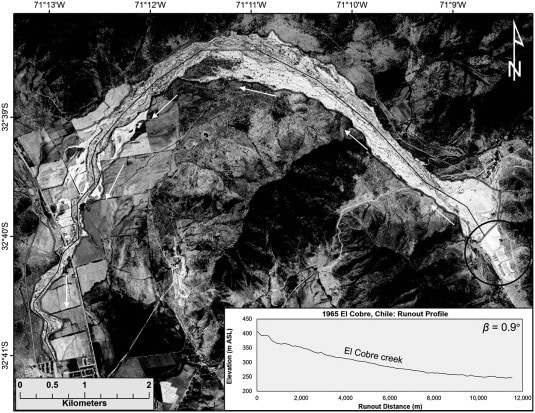
Upstream tailings dam construction, which was first banned in seismically active Chile following the fatal El Cobre failure in 1965, and later in seismically active Peru, was banned in Brazil’s wet climate after Brumadinho.
In Brazil, there has been a forced and rapid transition to compacted filtered tailings stacks, which will become susceptible to failure, including liquefaction, as they are also forced to be raised ever higher. Brazilian regulators are reluctant to permit any new footprint for tailings storage, exacerbating the problem.
Lesson 11: Fatal tailings dam failures can bring real change.
The El Cobre failure revolutionised tailings dam construction in Chile’s highly seismic setting, and the Brumadinho failure led to the Global Industry Standard on Tailings Management (GlSTM), with the ambition of zero harm to people and the environment from tailings facilities.
The GISTM affords operators the flexibility as to how best to achieve this goal. While tailings dam construction in Chile is a success story, the GISTM has led primarily to a focus on governance rather than changes to tailings management, to date.
Lesson 12: We must improve tailings management to recover community confidence and trust.
All failures, including tailings dam failures, lead to the loss of community confidence and trust in designers, operators, owners and regulators. Once lost, community confidence and trust are very difficult to recover.
This has been particularly evident in tailings management, with a number of high-profile and fatal tailings dam failures in recent years and ongoing lower-profile tailings dam failures in developing countries over the last year or so. The mining industry is judged by its poorest performer.
The poor record of tailings dam performance is perhaps the key impediment to the mining industry maintaining its social and financial licences to operate, despite the escalating demand for minerals. The “tail is starting to wag the dog”.
Permitting expanded and new tailings storage facilities is limiting the expansion of existing mines and the opening of new mines to meet the demand for minerals. This can only be turned around through demonstrated improved tailings management, which will take effort and time.
Lesson 13: Tailings dams that fail are marginally stable, and there is typically a combination of causes, with water a key element.
Alternatives to conventional tailings dams include compacted filtered tailings and integrated waste rock dumps / tailings facilities. It is important to separate stable tailings containment and optimal storage, which can lead to more stable and cost-effective tailings storage.
Lesson 14: Most importantly, be a part of a solution, not an armchair critic on the side lines, while enjoying the benefits of the industry.
Continue the conversation…
Emeritus Professor David Williams is a Brisbane-based geotechnical practitioner and consultant with over 50 years of consulting, research and teaching experience, specialising in applying geotechnical engineering principles to mine waste management and mine closure. He also manages the industry-funded Large Open Pit project through The University of Queensland, serves on Independent Tailings Review Boards globally, offers expert review and advice, and initiated and leads the AusIMM Tailings Management Professional Certificate Course.
Dr Danish Kazmi is a civil and geotechnical engineer and scientist whose career connects Australian academia, private-sector engineering and public-sector strategic planning and leadership. He works full-time as a Senior Adviser – Marine Strategic Planning at Redland City Council in Queensland Local Government and concurrently serves as an Adjunct Senior Lecturer at The University of Queensland, where he completed his PhD under the principal advision of David Williams.
9 comments
Roy Saint
Makes one wish to be entering this field, not looking at retirement. On the undertaking of my tertiary education, Mining Engineering was offered as an alternative Bachelor Course in Engineering. There was little encouragement to seek out expertise at the time. My son undertook the same direction and was very fortunate to study under Dr David Williams. He has benefitted from that input, David. Unfortunately we haven’t seen the personal encouragement available to pursue this aspect of remediation as a fruitful career path. Let us hope the next genre will be given more encouragement and be offered a reward for this expertise.
Douglas Morrison
Examples of the way tailings have to be managed in future have been long in coming, but are about to begin. If we need double or more metals for the energy transition can we really have double the amount tailings disposed with the current approaches. Of course not. So the tailings issue has to be resolved or climate change become unstoppable. It needs a lot of changes but the first few we’ve focused on is to accept that burying toxic material permanently is no longer acceptable. Most of the tail consists of by-products that the mining company had no interest in. Finding industrial applications for over 80% of the extracted material is step one. Then treating the rest become inert is step 2. Mining companies that don’t want to take responsibility for doing this to their waste stream cannot be allowed to continue mining. By volume mining is not an extraction process it is a waste management process – done very badly. Household and industry have made huge strides in diversion (glass, paper, plastic etc) in the few decades – mining companies have done nothing. The future of mining belongs to the companies that own the IP that makes these changes happen. These are CEMI’s clients.
Dr David Williams and Dr Danish Kazmi
Douglas, agree completely that mining and processing must be recognised as a mine waste management business, requiring increased focus on repurposing mine wastes for other purposes, reprocessing mine wastes containing economic minerals, and value-added rehabilitation and post-closure use of mined landforms.
David Corriveau
A useful summary. Critically, we need to advance the conversation into action at the mine.
Attracting and retaining the talent as on-site expertise is one call to action. Support from investors and civil society at large to recognize the full cost of all mining activities from exploration to closure is absolutely necessary.
Dr David Williams and Dr Danish Kazmi
David, operators need to be proactive in managing mine wastes, as you say, requiring on-site expertise as well as expert advisors, and a recognition that the full cost of mining from exploration to effective closure is necessary.
peter richter
I continue to be amazed at how much information is out there in relation to lessons to be learnt.
How come those lessons do not seem to be learnt? Too many guides, too much information?
Just an example of a site is the ASDSO https://damfailures.org/
Dr David Williams and Dr Danish Kazmi
Peter, agreed that we are slow learners and that lessons could be better conveyed. Failure Reports, like Design Reports, tend to be overly long to the extent that the message is unclear or lost.
john metzger
A nice share, and always worthwhile. However, the constant re-sharing of the “lessons” of the last 15 or so years, is barely making a dent in the world practice of Tailings and Mine Waste Management. It’s beyond the Top 5 or 10 operators; the real responsibility and need is everyone else … where resources are leaner, company longevity is shorter, and risk-taking may be higher, and more frequent.
Where can you go to see real change and real monitoring, considering all the current options, and make a real impact? We do not get examples; we get heartfelt and experience-supported best intentions.
What companies or sites, Top 5 out of the Rest, beyond the Top 10 sectoral leaders … are there examples of real change and new considerations?
Dr David Williams and Dr Danish Kazmi
John, agree that the mining industry is judged by the worst performers, and many of these are small operators in developing countries, as evidenced by the plethora of tailings failures over the last 18 months.