

In theory, there’s much value to be gained from making environmental, social and governance (ESG) a core part of mining businesses. There is measurable value for the organisation, communities and stakeholders, and there’s also an opportunity to reinforce the role and purpose of the company.
Some argue that the future of mining could be at risk if the industry fails to achieve this threefold pursuit of sustainable value creation. Yet, there may be alternative pathways to bringing an integrated value-driven sustainability approach to life.
This made me wonder about what it takes, as a mining company, to create and live an integrated approach to ESG that is purpose-led? And what does this value-driven approach look like ‘on the ground’?

When Djaria Traoré, Executive VP of ESG and Supply Chain at Endeavour Mining, agreed to have a conversation about this, I was delighted. I believe there are few people who could speak to these questions in more vivid and clear terms than Traoré, who was named one of the 100 most inspirational women in the global mining sector in 2020.
I’m sure in this article, you will get a glimpse as to why.
The journey begins …
Traoré’s journey with the mining industry started 25 years ago, when she was “called to the adventure” of becoming a sales director for Africa with an American mining supply company.
“I had an ‘aha’ moment at a mine site in Egypt that changed something for me,” she remembered. “Being the only woman at the site, I wasn’t allowed to move around without being accompanied by a man. And I realised that was not normal, it’s not how things should be.
“I realised I could be an inspiration for other women, and that I might have the opportunity to promote positive change,” she said.
“Seeing the young women I’ve worked with or mentored now in leadership positions is one of the most rewarding things for me. It’s no longer just my story; it becomes a legacy.”
Creating a legacy of change then became Traoré’s mission on a broader scale.

ESG as a platform for driving lasting change
“ESG gave me a platform to push boundaries and implement economic development measures that would have real and lasting impact,” Traoré recalled.
Throughout her career, Traoré’s approach to ESG has been clearly shaped by her passion for fostering lasting change. “In ESG, you have to report statistics and metrics. But behind those numbers, the question that really matters is: what are your beliefs? What’s driving your actions, first as a human being and then as an employee?” she said.
“If you consistently do the right thing, and you do it because you believe in it, not because you have to do it, you will succeed in making a lasting impact and drive change.”
Traoré continued: “There will come a point when people ask you questions beyond the numbers, and the differentiator will be the driving force behind all the actions. If there’s passion to inspire people, they will keep going, even when you’re not there.”
Pioneering a bottom-up approach to ESG
Traoré is convinced that applying common sense is a good place to start in ESG strategy making. “If you look around and take in your environment, really take it in, you can usually see what needs to be done,” she explained.
“At Endeavour, our entire ESG strategy in 2021 was developed from the bottom-up, based on surveys and discussions with communities, employees, suppliers, partners and even investors, to find out what was important to them and what would impact their lives.”
Putting the results, concerns, challenges and ideas for change-making initiatives together, the strategy was developed to address those needs.
The impacts that were created and results achieved were rewarded with outstanding ESG ratings, but Traoré made it very clear that rankings were not the primary purpose of this journey.

Building a culture of accountability
Accountability, for Traoré, is key. At Endeavour, she has put great emphasis on fostering a culture where employees, at all levels, are encouraged to contribute to ESG initiatives and take ownership of ideas.
“At Endeavour, ESG is not just a leadership discussion,” she said. “We have the full commitment of the board as well as down to the last employee.”
This means accountability is built into the company’s governance structure and supported by quarterly reporting on all actions in the field as well as annual reporting on targets at a board level.
“Even if targets are not being met, we’re transparent about it, and in areas where we fall short, we make adjustments and then we progress,” said Traoré.
“In addition, ESG related targets are part of our short-term and long-term compensation plans. Our ESG strategy is designed for five years, and so are the compensation plans. This means compensation is directly linked to achieving the goals we all agreed on, so everyone is accountable.”
A purpose-led approach to ESG
A culture of accountability needs to be tied in with the purpose, core values and beliefs the company is guided by.
“It’s important to define your purpose in an authentic and genuine manner, and to translate it in a simple way that everyone can understand,” Traoré said. “At Endeavour, for example, we have defined our purpose in that we produce gold that provides lasting value to society. This is the North Star that guides all that we do.”
This also means there is a general belief around sharing the benefits and revenues that Endeavour generates. This includes building resilient communities and investing in revenue-generating activities that can flourish past the life of each mine.
In this sense, the purpose-led lens of ESG is no longer a concept, but an attitude and mindset that’s integrated into the DNA of the company and embodied by each employee on a day-to-day basis. This extends to engaging with communities and stakeholders from a place of honesty, mutuality and trust.
Traoré gave an example to illustrate this. “Whether it’s strategy formulation at the executive level, purchasing decisions or prioritisation of resource allocation, our actions are based on the belief that we need to support local entrepreneurs,” she said.
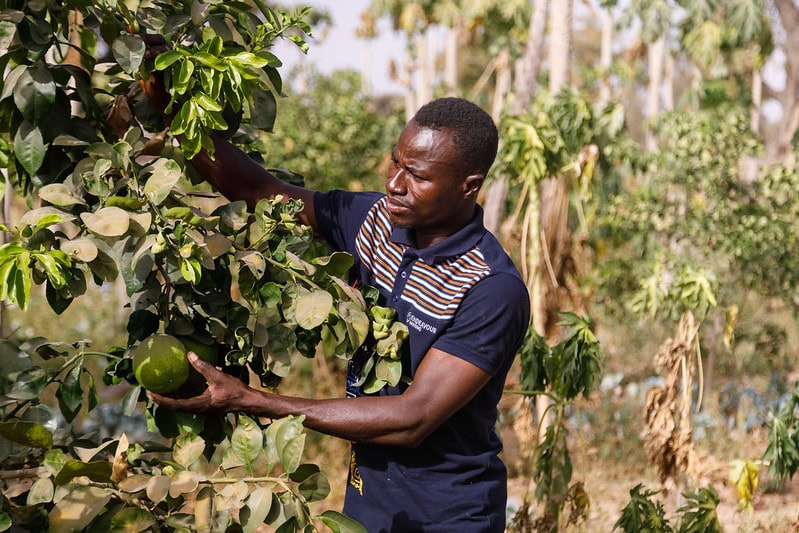
“We first focus on doing the right thing, and then link those actions back to sustainability and targets afterwards.
“For example, we were wondering how to move the needle on our female suppliers, who are still low in number. So, we ran a local workshop in early 2024 with 150 women to understand what was hindering them and what we could do to address gender equality in local content more effectively.”
At the end of the workshop, all concerns were clustered and responded to with several concrete recommendations and action items. The aim was to address these concerns and increase the visibility of female entrepreneurs, as well as strengthen their capacity to capture more business opportunities in the mining sector.
Touching lives – empowering future generations
The rewards of this approach are plenty and multifaceted. For Traoré, there are few places where the impact can be felt as tangibly as in the education programmes that Endeavour offers.
“I went to one of our sites in early 2024, because we have an educational programme targeted at young girls,” Traoré explained. “The story of one girl particularly moved me. She explained that her father, who was a teacher, had passed away and that, if it wasn’t for our programme, she would’ve had to stop attending school. She’s an excellent student and that would’ve impacted not just her, but also the future of her family.”
Another moving story is that of a mother who, following an Endeavour literacy programme said, she could, for the first time in her life, read her kids’ report cards.
“Now she will encourage and push the kids to go to school in a different way, because she sees the value of it differently,” said Traoré. “It breaks the generational cycle of illiteracy, and it’s very moving to see the impact we can have, and it doesn’t even cost a lot of money.”
How to start moving beyond compliance
For Traoré, at its core, ESG is neither a ‘show’ nor a one-size-fits-all approach.
“It has a human element to it, and if you’re not passionate about this human element, you will not succeed in the long-term,” she explained. “If ESG is just about numbers, you will miss the core opportunities it holds.”
To move beyond compliance, Traoré is certain that ESG needs to be guided by a fundamental desire to do good.
“We identify the risks and evaluate them, but it shouldn’t be limited to that,” she said. “We need to ask ourselves, what opportunities can we create from that? ESG then becomes an ongoing journey that is, very likely, never completed.”
The initiatives undertaken will be different depending upon the environment each company is operating in. But deciding which aspects of ESG are the most important for the organisation is crucial because, as Traoré pointed out…

“Without understanding the expectations of partners and communities, anything you will do will have only minimal impact,” she said. “Companies need to understand what will move the needle in their particular region, and what it means to be a responsible neighbour.”
That’s why it’s so crucial to work from the bottom-up, through transparent and honest dialogue with all stakeholders. This approach also includes owning any failures and being transparent about them.
At the same time, she said: “each company needs to take time to define its purpose; to reflect what’s driving the company and its beliefs. If this is done in an authentic way, employees and stakeholders will stand behind that purpose and align with it. That purpose can then be translated into measurable actions that people can own and relate to.”
In short: define what you believe in and be passionate about putting it into action!