

Can I tell you a story? In 2009, I was working as the assistant editor at Mining Magazine. At the time, the publishing house also ran a title called Mining, People and the Environment which was led by Katherine Welch.
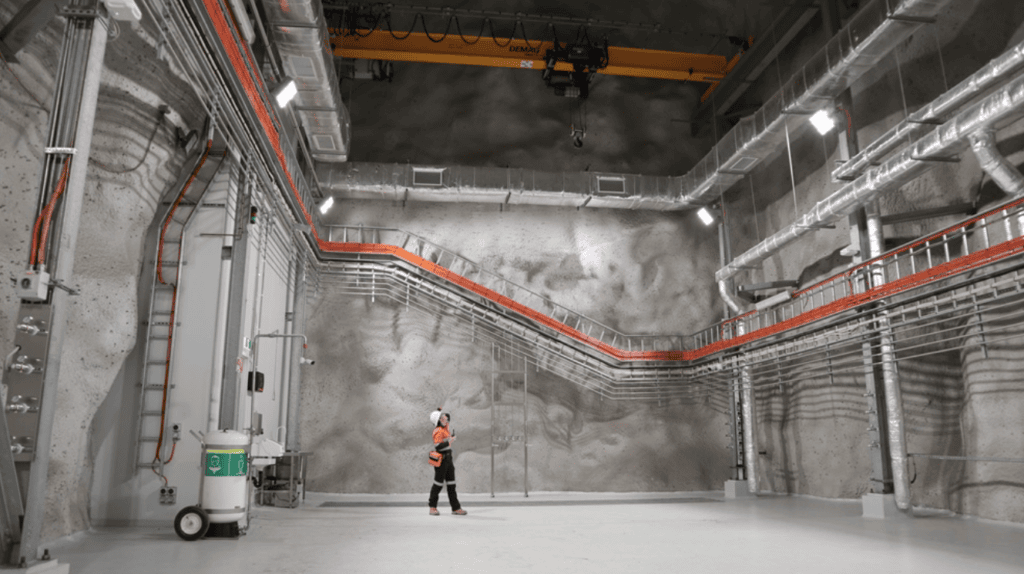
I walked over to Katherine’s desk one day and on it was a magazine proof, a double page spread filled by a breathtaking panoramic photo of a physics laboratory housed in a former underground mine.
She told me that it was taken from a book that had just been published by the Eden Project’s Post Mining Alliance called ‘101 things to do with a hole in the ground’. The book showcased projects from around the globe that had found innovative uses for closed mine sites.
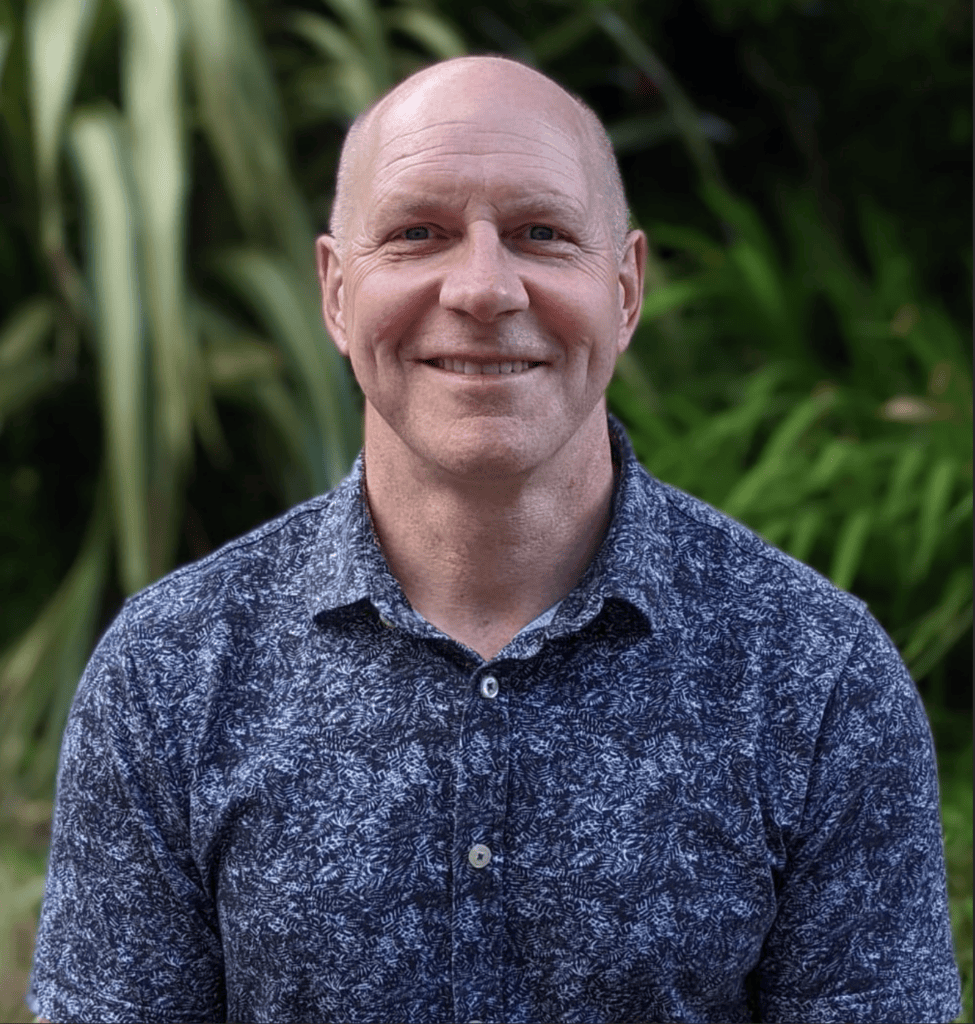
I was bowled over, a) by the fact that seemingly worthless sites could be put to such good use, and b) with the photography – it was mining made beautiful and exciting. I loved it so much that I introduced a monthly photo feature to Mining Magazine when I stepped into the editor role a couple of years later.
Fast forward 15 years… I attended the 2024 UK Mining Conference in Cornwall in June and met Dr Pete Whitbread-Abrutat of Future Terrains; a mining-environmental specialist with a particular interest in improving mine closure and restoring damaged places.
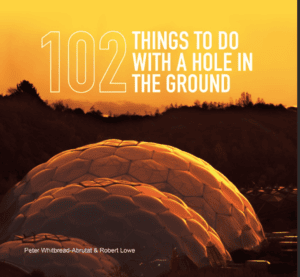
Whitbread-Abrutat was part of the team who developed the original book and had just finished co-writing its sequel – ‘102 things to do with a hole in the ground’ – a not-for-profit book published by the Eden Project.
Mine closure is one of the most searched and read topics on The Intelligent Miner, and the concept of transition planning – repurposing sites at the end of primary extraction so that they can continue to generate economic, but also social and environmental, value – is of particular interest to this community.
Also, I’m a sucker for nice photos. So, I invited Whitbread-Abrutat to tell us more.
From 101 to 102
“In 1998, I was at the University of Exeter’s Camborne School of Mines (CSM) in Cornwall where I was researching revegetating mine wastes and fixing mining-related, arsenic contaminated land in Thailand. That’s how I became interested in mine closure,” he told me.
“Locally, a guy called Tim Smit announced that he was going to create an architecturally spectacular educational garden and visitor attraction called the Eden Project in what was an old China clay quarry near St Austell. It sounded interesting, so I sent him my CV, had an interview and eventually got a job.
“Initially, I worked at Eden’s plant nursery while the Eden Project itself was just a muddy hole in the ground, with a small group of horticulturalists and the project development team. My main job was to work out how we could grow plants on an old mine site with no soil.”
In the early 2000s, Eden formed a strategic partnership with Rio Tinto which lasted around 10 years. This aimed to explore good practice in mine closure, dealing with abandoned mines and, more generally, to talk to visitors about the role and essentiality of mining in society.
The Eden Project is now a successful environmental regeneration story and a vehicle for socio-economic rejuvenation, and it all started with an old mine site.
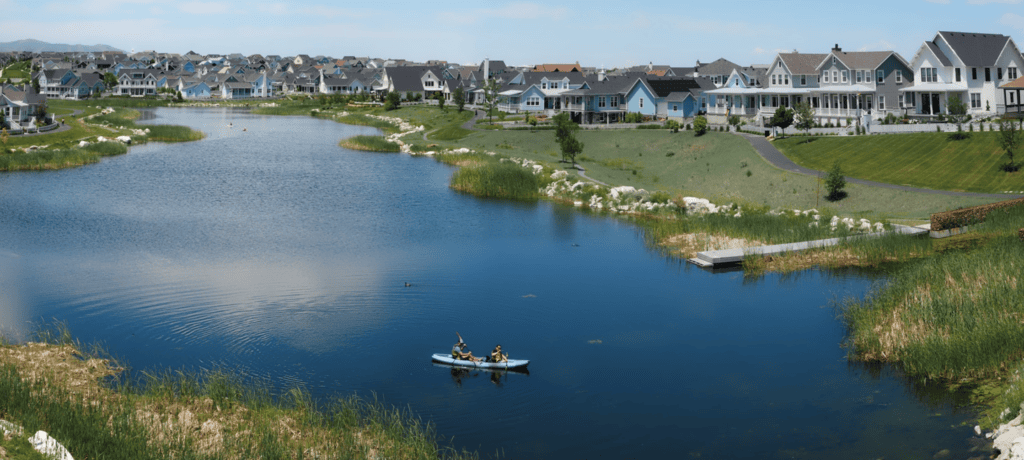
Whitbread-Abrutat managed the partnership in the early days and was an ongoing part of the venture. Since his work at CSM, he had compiled examples of interesting projects, places and people around the world that were linked to closed mines.
That list eventually formed the starting point for the first book, written by Georgina Pearman, which sold several thousand copies globally in four languages and was sponsored by Rio Tinto, among others.
“It was quite successful – books like that hadn’t been written about mining before,” said Whitbread-Abrutat. “I stayed working at Eden for several years and left in 2011 to set up my own consulting practice.
“Around 2020, out of the blue, I began receiving email requests for copies of the book. By that point, we’d sold out and it was out of print and out of date. I contacted my friends at the Eden Project and at Rio Tinto to see if they’d be interested in producing a second edition – essentially an update of the first book.
“They both said yes and, subsequently, Newmont, Anglo American and BHP agreed to sponsor the project too, which meant that it could evolve into something grander; a more self-contained sequel.
“When I started to research the book, I found there were so many amazing projects going on in different countries that told really interesting stories. We wanted to produce something that was worthy of them, and that was as beautiful, informative and accurate as possible.”
In the end, 111 projects made the final cut for 102 things… with uplifting, positive stories accompanied by stunning photos. The subjects range from tourist attractions to ecological restoration, new commercial ventures and artistic uses, through to residential developments and scientific research facilities.
Ultimately, it’s a celebration of how endings can become new beginnings, with mining as the catalyst.
Closure or transitioning?
“Rather than ‘mine closure planning’, I prefer to call the process ‘transition planning’,” Whitbread-Abrutat told me. “Because it should involve the gradual transition of people, places and ecology from one purpose to another, rather than a dead stop and then restart.
“If mining companies carry out progressive restoration of the landscape and social transitioning during operation, as defined in the ICMM’s mine closure guidance, which is considered best practice today, that’s exactly what will be achieved.”
However, despite good guidance and varying levels of regulation, closure planning in many mining jurisdictions is not as good as it should be today.
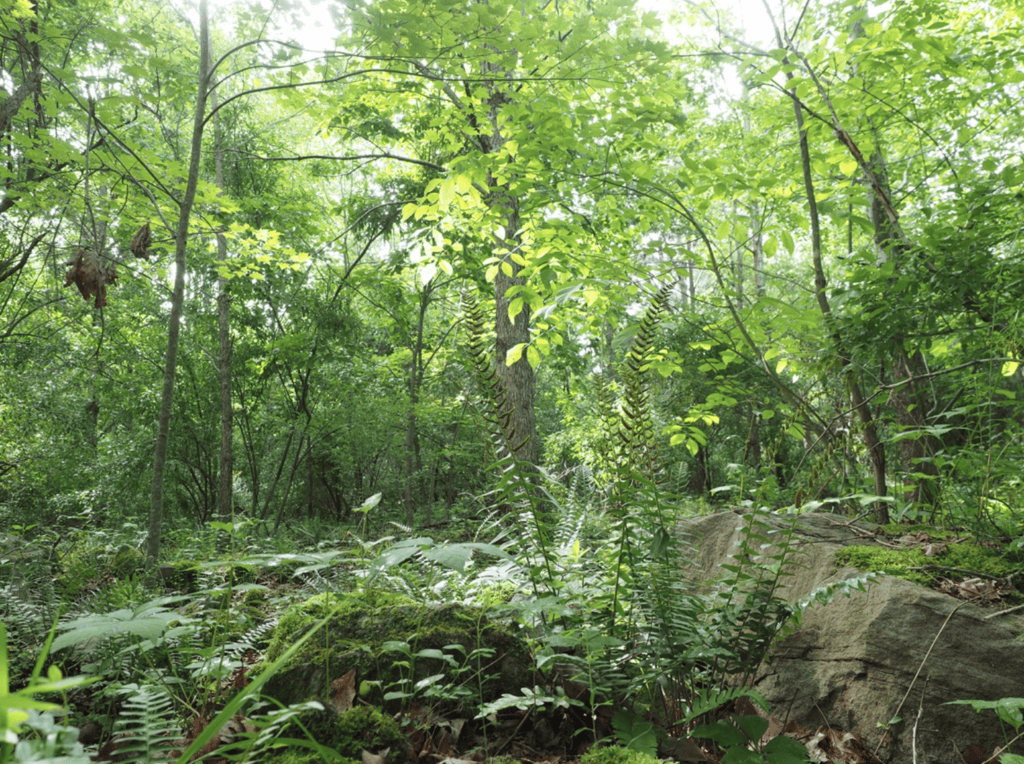
“With traditional mine closure practices, many sites end up as a grassy mound and a pit lake,” Whitbread-Abrutat told me. “In some jurisdictions, companies are required to restore the original vegetation, or add a grassy cover that can be used, for example, as farmland.
“But over the life-of-mine, the socio-economic environment surrounding the operation may have completely changed, and often plans don’t include provisions to sustain that. However, there is potential to use the mine itself as a vehicle for supporting a new future with socio-economic opportunities for the surrounding communities, while also maintaining the ecological integrity of the site.
“We wanted to showcase such approaches in the new book and show that many of the challenges traditionally associated with mine closure, like acid drainage or unstable buildings and landforms, are being addressed, in some cases, very creatively, at sites around the world.
“Companies don’t need to reinvent the wheel at every site, they can take inspiration from these examples and adapt the blueprint to suit their operations. So really, the book is about connecting people and companies, changing perspectives of mining, and highlighting new solutions to old problems.”
New concept, new mindset
Once extraction ends, the general thinking has long been that a mine site should be closed in a way that minimises end costs and future liabilities that must be managed indefinitely, rather than exploring how closure activities might stimulate new financial, social and ecological value. Because of this, little creativity is usually applied to the end design.
But, if more time and care were spent planning and executing the final phases of a mine, companies would likely find themselves alleviated of a significant source of risk and with a better reputation to boot.
“For understandable reasons, miners have a different perspective when they’re opening a mine to when they’re closing one,” said Whitbread-Abrutat. “The reality is that mining organisations aren’t generally social or economic regeneration specialists, nor experts in landscape restoration or creative approaches to post-mining land use.
“But they can collaborate with those who are to produce some amazing post-mining outcomes, as can be seen in 102 Things. Progressive miners are now starting to think how a mine can act as a catalyst for generating post-mining value and are engaging the expertise to do some really cool things.”
Ten heads (or more) are better than one
Many mining companies have huge portfolios of legacy sites that must be managed in perpetuity to guard against issues like acid mine drainage. These legacy asset portfolios can be extremely costly to manage on an annual basis, and some progressive thinkers are starting to question whether a future might exist where mines are no longer ‘closed’ but instead transitioned to another purpose.
In this way, sites can continue to generate financial value, e.g., through supplying water, renewable energy, or reusing mine wastes, buildings and infrastructure, which helps promote responsible environmental management, and supports local businesses and skills development.
“In many jurisdictions, regulation hasn’t caught up with that thinking yet,” Whitbread-Abrutat explained. “But if we look at Australia, for example, the Queensland government supported the development of the Kidston pumped hydro project which leverages two abandoned gold mining pits to store power and generate renewable energy. That site’s become a poster child for what’s possible.
“In Germany, enormous areas of old lignite surface mines have been connected and reinvented as lake districts that encourage people and wildlife back into areas they were once excluded from by extraction and are the stimulus for new regional tourism and recreation.”
Examples like these demonstrate that transition planning isn’t just the right thing to do, it also makes good business sense. But for it to be a success, a multi-stakeholder approach is needed.
“That’s another important message from the book: transition planning isn’t just a mining company or government issue,” said Whitbread-Abrutat. “There’s a broad range of stakeholders who must be engaged – investors, social experts, ecologists and landscape designers, among others – and community participation is also required to successfully turn mine workings into something with the power to regenerate economies and landscapes.
“The sooner the planning process starts, and the more engaged the team and stakeholder group are, the better and more cost-effective execution is likely to be.”
Continually planning for closure
Developing a good transition plan takes time – years really. Making regular updates to the initial conceptual plan over the life-of-mine to accommodate expansions and features that will aid transition to the site’s next purpose, will allow landscape restoration and social transitions to take place progressively and with minimal disturbance.
It will also ensure that adequate financial provisions are made to support delivery of these plans, and that any risks are properly managed.
“The further in advance that companies plan for transitioning and work to understand the risks, the easier it is to manage them, and the relative cost of doing so declines as the end of mining approaches,” Whitbread-Abrutat explained.
“Can you see a future where transition planning is an integral part of every mining operation?” I asked.
“Based on international best practice guidance, it’s supposed to be happening already, and in some cases, it is,” he replied. “But the challenge lies in lifting the whole industry up to the same standard, because when something goes wrong, the whole industry’s reputation gets damaged.
“It’s important that best practice in closure is encouraged and incentivised. Only then will transition planning become an integral part of the design of every operation.”
More than a mine
Whitbread-Abrutat suggests that, rather than thinking about mines as patches of land with boundaries surrounding them, think of them instead as jigsaw pieces in a broader landscape or puzzle. Each jigsaw piece connects with others that represent things like the local culture, hydrology, the economy, ecology and more.
“Again, companies are good at thinking this way at the design phase, but it also needs to apply to transition planning and what happens after that as well,” said Whitbread-Abrutat.
“We need to think long term for success. A mine is just one short chapter in a landscape’s narrative, and while closure represents the end of that chapter, it should also mark the start of the next interesting, vibrant instalment.
“We get to write the start of that too, which is really exciting.”
More than an article or book…
By this point, our conversation had come to an end.
But readers, in the spirit of what you’ve learnt today, let the end of this article become a new beginning…
Take these ideas back to your own companies and communities, start discussions of your own surrounding transition planning. Reach out to those who are making change happen today.
Let’s usher in a new, more responsible chapter in mine closure.
1 comment
Tshilidzi Tsotetsi
What an interesting article. I am involved in social mine closure planning (South Africa) and reading this article was intriguing to know of mine site that have been transitioned. It actually comes down to thinking about the next chapter at the end of the mine chapter and having communities and businesses come together to discuss transitioning planning.