

Valuing nature and building actions to restore and promote ecosystem health into business models has become a growing priority for responsible mining companies over the past five years.
Committing to being ‘nature positive’ is one thing, but what does that statement actually entail? How can organisations accurately measure and monitor their impacts at a granular level as well as at scale? And how can companies that are well advanced in this area help others, so that collectively, we can raise the bar on sectoral performance?
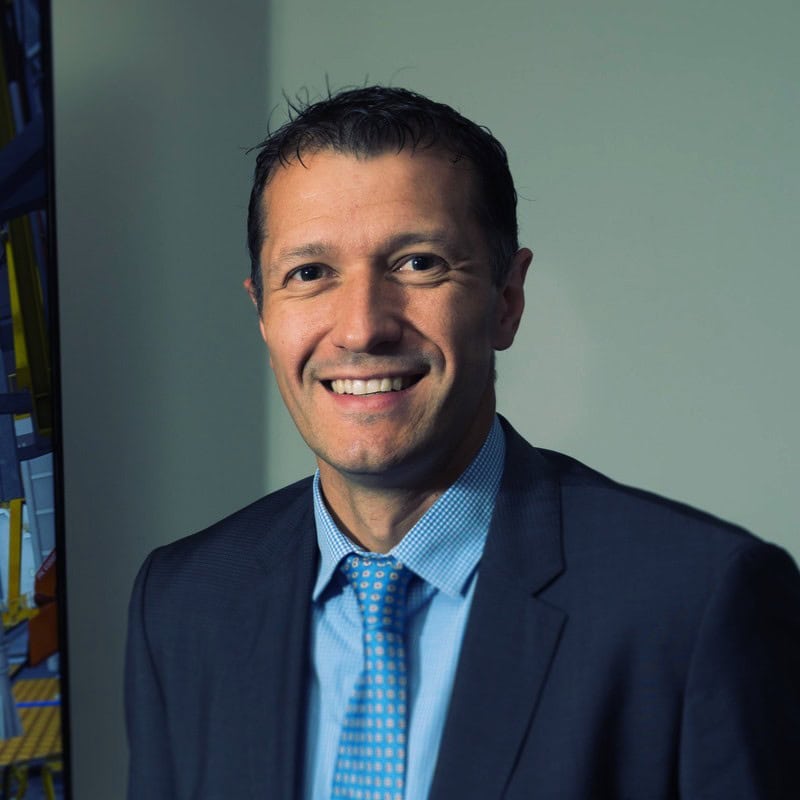
I had a lot of questions. And luckily, Dr Ian Hudson, Head of Nature and Land at London-headquartered global mining company, Anglo American, was on hand to answer them…
CL: What does nature and its value mean to Anglo American?
IH: Nature and its services are fundamental to the health and wellbeing of our economy, our environment and our society.
Nature may be resilient and adaptive, but when planetary boundaries and ecosystem equilibria are pushed by human activities, they do not always re-balance naturally and we have to play a deliberate role in regaining that balance.
The mining sector has the expertise and capacity to restore ecosystems and habitats at scale. Companies can implement programmes that deliver positive biodiversity outcomes in landscapes and regions beyond their direct operational footprint and within their land holdings that do not normally receive conservation priority.
For Anglo American, having a strong focus on contributing to nature-positive outcomes means we’re managing the direct impacts of our business, but also making positive contributions to the wider landscape around our operations.
We do this through additional conservation actions and community benefits, through aspects like water availability, future land use planning and job creation, to carbon sequestration and climate resiliency.
The delivery of successful and sustained outcomes for nature also requires collaboration with other sectors, financial institutions, value chain partners, academia, government, civil society and local communities.
This is particularly important, as the demand for minerals and metals critical to the energy transition, improved global living standards and food security, will require increased mining activity. Innovation, circularity and integrated spatial planning are vital to meeting climate and development goals while protecting and restoring nature.
You’ve committed to having a net positive impact (NPI) on biodiversity across the business by 2030. What steps has Anglo American taken towards this so far?
In 2018, Anglo American made a commitment to deliver NPI, over and above what was already in place, in terms of current and existing best practice to rigorously apply the mitigation hierarchy of avoiding and minimising impacts, undertaking rehabilitation and/or restoration, and offsetting (where needed) the residual impacts.
To achieve this, each operation develops site-specific Biodiversity Management Programmes (BMP) following requirements and guidance set out in Anglo American’s Biodiversity Standard and Guideline.
Each site and business must also be able to demonstrate through evidence-based indicators that we’re on the appropriate path towards delivering on our NPI commitment, as well as contributing to nature-positive outcomes.
Similar to our pathway to carbon neutrality, an evidence-based roadmap for NPI enables an assessment of our NPI trajectory now, out to 2030. And, where needed, to 2040 and beyond.
Development of a consistent metric and methodology was started to ensure we can compare the pathways and NPI trajectories of our businesses and sites. By using this standardised approach, we can start to quantify actions to avoid, reduce and restore habitats, and identify opportunities to deliver positive biodiversity outcomes wherever we operate, as well assess timing and cost to implement.
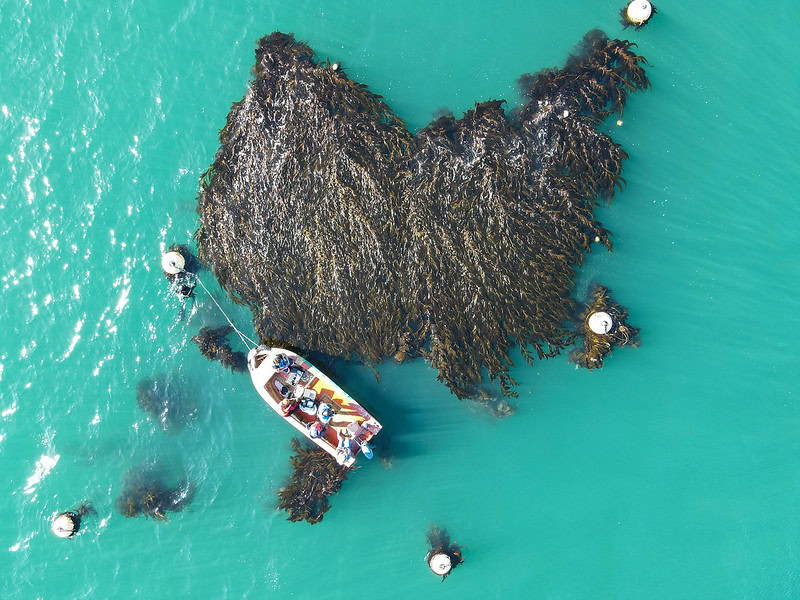
Together with our biodiversity partners (Fauna & Flora, Endangered Wildlife Trust, IUCN and others), Anglo American recently developed a Quality Habitat Hectare (QHH) Metric. This was necessary for us to measure, manage and report biodiversity losses and gains by ecosystem type, area and condition value overtime.
Reporting by ecosystem assets overcomes the challenge of assessing performance across a diverse portfolio. Further, in alignment with other best practice recommendations and accounting methodologies, ecosystem condition is evaluated with respect to its composition, structure and ecosystem function.
Irrespective of the ecosystem type and location, these three biodiversity components are a set of complementary characteristics of an ecosystem that together provide a comprehensive representation of its condition.
The approach aims to provide a standardised framework based on science and local granularity to facilitate transparent internal and external reporting of progress towards NPI at the site, business and group level.
Anglo American has created its own biodiversity standard to measure and manage its impacts. Why was this necessary and how does it align with the work of the Taskforce on Nature-related Financial Disclosures (TNFD)?
We need to start with the history. Anglo American developed its first standard in 2008 and has continuously evolved it ever since, with the most recent update in 2023 alongside the provision of training in best practices for adopting the standard.
In the past, environmental management within Anglo American was guided by environmental principles, through the Anglo American Environment Way and Environmental Performance Standards.
The original biodiversity performance standard “required projects and managed operations to implement measures to avoid, minimise or mitigate potential adverse impacts on biodiversity and optimise positive impacts and opportunities, and to ensure that biodiversity is actively managed in all phases of our activities”.

While at the time (2009), this was adequate to meet current commitments, it needed to be revised and updated in order to meet the 2018 NPI commitment and requirements.
Since 2018, changes and updates were made to the standard and supporting guideline, which sites and operations use to assess their status against the NPI requirements and implement steps and actions needed to close gaps.
The importance of nature alongside climate is increasing, and with this comes an increased focus on disclosure and reporting as well as interest from investors and wider stakeholders.
In the same way Taskforce on Climate-related Financial Disclosures (TCFD) has enabled increased focus and action on climate, the work of TNFD is gathering momentum to do the same for nature. We’ve already progressed past the TNFD’s integrated assessment approach for nature-related risk and opportunity management, known as the LEAP (Locate, Evaluate, Assess, Prepare) approach. For TNFD reporting, it’s about aligning and re-communicating our approach and data that we have already.
As an active member of the TNFD, Anglo American is well-positioned to increase the relevance of the framework to the mining and metals sector and catalyse a wider positive impact on nature.
Nature-based solutions (NbS) seem to hold a lot of promise in mitigating the effects of mining. Are these a core part of your NPI efforts?
Mining operations use NbS and new technologies along the full mining lifecycle including:
- Developing non-invasive exploration techniques
- Extracting minerals with minimal disturbance
- Improving recovery technologies, and extraction efficiency
- Using non-harmful, non-chemical processes in mineral extraction and processing
- Reducing water usage and delivering waterless mines
- Remediating mine-impacted water and land
- Reducing priority ecosystem services impact within and beyond our area of influence
- Rigorously implementing the mitigation hierarchy
- Delivering sustainable land-management practices, incorporating innovative restoration and rehabilitation plans in partnership with communities
- Recycling mining waste to valuable products
- Reducing GHG emissions and delivering carbon-neutral mines.
Some specific projects of NbS centered on microbes, soil health and reforestation for carbon and biodiversity are under development in our operations in Brazil, where we’re also developing new ways to measure the health of an ecosystem using microbial communities.
We also have ongoing work focusing on water bioremediation and mining waste recycling, and we are using these programmes to create learnings that are applicable to all our sites and businesses.
In particular, we’ve led early-stage development work to repurpose our mineral waste into growth medium and soil ameliorant products at our steelmaking coal operations in Australia and our Kumba Iron Ore operations in South Africa.

We’re also partnering with renowned universities to grow algae to reduce salinity in mine-impacted water, while producing biomass that can be used as an agricultural or industry feedstock at our steelmaking coal operations.
We’re working on the development of floating wetlands on pit lakes and post-mining wetlands for water treatment and encourage birds, fish and other aquatic life to assist with nutrient cycling and the building blocks of a healthy ecosystem.
Additionally, we’re undertaking a body of research to show the value of ponded wetlands formed from underground subsidence, and their biodiversity and ecosystem services value to a landscape where significant number of wetlands have been negatively impacted by agricultural and other land development activities.
What role are innovative technologies and partnerships playing in achieving NPI?
Innovation continues to play a major role in the way we assess the state of nature and its recovery. Whether through satellite imagery, drone applications or the use of eDNA, we’ve taken a proactive approach to understanding our impacts on nature, to be able to better protect it and restore it.
To deliver on our commitments, both at a company and global level, we need to make nature collaborative not competitive, and move the conversation from being about risk, downside protection and the cost to a business, to one of opportunity that comes from cross-sector and cross-societal collaboration.
Tell me about the eDNA programme – how did this come about and how is it empowering your teams?
Environmental DNA (eDNA) technology represents a significant advancement in ecological monitoring, offering a non-invasive, efficient, and sensitive method for detecting species and assessing ecosystem functions.
Historically used by scientists and academic institutions, eDNA technology is now being adopted by the conservation sector through non-governmental organisations (NGOs) and in the private sector, as demonstrated by the partnership between Anglo American and NatureMetrics over the past three years.
Anglo American has implemented eDNA sampling across many of its operations, including land-based operations as well as marine and benthic sampling at one of our major port facilities.
eDNA data has enabled our teams to monitor biodiversity, track invasive species, assess aquatic system health, and evaluate environmental management strategies effectively, to support expansion and conservation activities on site.
The use of eDNA sampling data extends Anglo American’s commitment to environmental stewardship, from local operations to the global stage, ensuring alignment with international sustainability standards and market expectations.
The integration of eDNA data across the value chain – from resource extraction to final sale and transportation – serves as a robust environmental management tool, highlighting our commitment to sustainability and setting a precedent for other mining operations worldwide.
This approach not only enhances environmental protection efforts, but also reinforces the company’s reputation as a leader in sustainable mining practices.
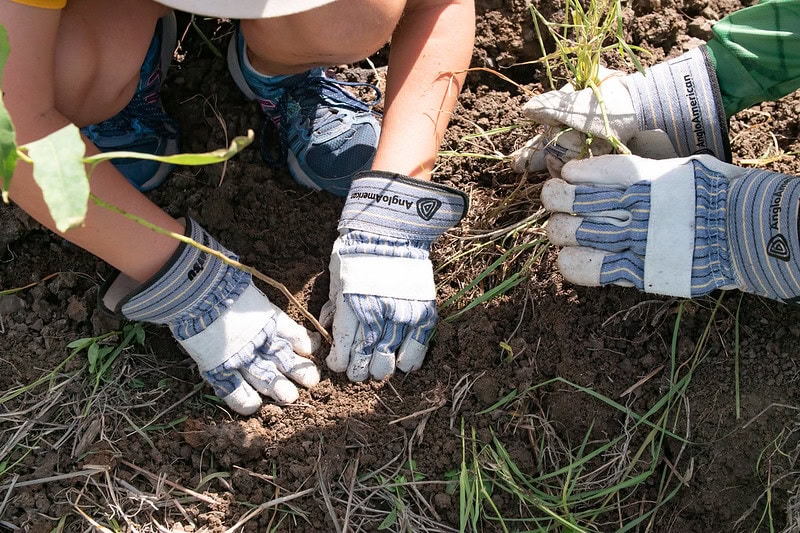
Overall, would you say that Anglo American is on track to achieve its 2030 NPI target?
Overall, we remain on track and continue to actively monitor and assess our plans across the business at a detailed level. We recognise global disclosure, reporting and target setting mechanisms are now calling for evaluations of ecosystem integrity or assessments of the state of nature.
Aligning with these requirements and metrics will support how we communicate our performance, business resilience with nature, and the site-specific and business NPI trajectory across our portfolio and regions in which we operate.
Having data at the ecosystem and species levels places this work at the forefront of future requirements on nature reporting. Data from our sites has been tested through our QHH model and approach, and is compiled for each business to provide an aggregated position of projected losses over time in a way that’s also dynamic and can be updated based on scenarios and changes in the business.
Gains from planned, executed and expected BMP actions are being modelled to show the current and forecasted status with achieving and/or being on the pathway to achieve targets or where gaps exist, with some sites having already reached a net positive position.
What advice would you give to other mining companies that are looking to make nature a more integral part of their business plans and strategies?
Anglo American has always taken an interconnected view of nature to climate, society, water and our business.
The mining sector needs to play a role in supporting the Global Goals for Nature (GBF 2030 goals from the COP 16 Kunming/ Montreal Protocol) to foster increased protection and enable faster restoration. This needs to be with a systems view in mind and an understanding of local context, as every location is different.
We need to seek opportunities for collaboration with stakeholders and regulators to find the right balance for ongoing and post-mining land use and regeneration opportunities. Greater attention to nature should encourage our industry to grow and to develop current and future assets without compromising nature, and to then use those assets to contribute to nature enhancement over the long term.
The challenge for the private sector, and not just the mining industry, is that nature should be non-competitive. Taking learnings from cross-sector collaborations on aspects, like safety and tailings, to create more practical examples of how our industry is, and can continue to be, a key positive change agent for nature is vital.