

Have you noticed that nature is having a bit of a ‘moment’ in mining right now?
From the ICMM’s recent mission statement on nature-positive mining, to new guidelines from the Taskforce on Nature related Financial Disclosures (TNFD), an update to the GRI Biodiversity standard and the International Sustainability Standards Board (ISSB) commencing “projects to research disclosure about risks and opportunities associated with biodiversity and ecosystem services”, my inbox has been flooded with stories this year. And it’s only July.
Measuring and monitoring nature-related metrics, such as biodiversity, isn’t new for mining companies. It’s something they’ve been doing for a long time and are actually very good at. So, why the uptick in activity?

Kyle Knopff, Senior Principal and Biodiversity Specialist at WSP, joined me for a chat. “It’s not new for miners,” he agreed. “Rio Tinto was one of the first mining companies to set a net-positive impact objective in 2004. And Teck has had strong biodiversity commitments in place for more than a decade.
“The mining industry has been addressing this much longer than many other industries. The reason that nature is having a moment right now, not just in mining, but in lots of sectors, is because it’s preservation has risen to the top of the public discourse agenda around things that we need to do for our planet.”
Climate change, which is, of course, closely linked to nature and biodiversity, has been a major public focus for some time. But the adoption of the Kunming-Montreal Global Biodiversity Framework (GBF) by global leaders during the COP 15 event in 2022, prompted a shift in the collective attention.
Governments across the globe are working to adopt the targets set out in the GBF and develop policies that support their delivery. Companies are paying close attention to this process. And, because many mining organisations are already well advanced in measuring and mitigating their impacts on nature, they’re capitalising upon this head start when it comes to reporting.
Knopff explained: “Target 15 requires governments to compel large multinational corporations to disclose their nature-related impacts and dependencies, and a lot of miners are getting ahead of impending regulations using the TNFD or GRI frameworks. Many companies are well positioned to report, because they’ve been working with the IFC’s Performance Standard 6 which was introduced in 2012.”
How best to measure and monitor?
“What challenges do mining companies face when it comes to measuring and monitoring their impact on nature and in setting realistic goals?” I asked. “I think there’s a danger of getting a bit carried away with target setting, isn’t there?”
“There definitely is,” said Knopff. “Some companies set very aggressive targets in this area 10 or 20 years ago and had to back off when they realised they weren’t achievable. It’s important to connect the dots between what companies say in the boardroom or to investors, and what they can achieve on the ground. In my view, implementation is one of the biggest challenges the mining industry faces right now.”
The general scarcity of talent in mining, let alone talent with skills specific to this field, is not helping the situation. Knopff stressed the importance of investing to upskill, educate and support workers, so that they understand how to implement company objectives, apply the biodiversity mitigation hierarchy, and relay information back to corporate teams in a meaningful way.
“Biodiversity is not like carbon, which is measured in the same way at almost every mine site,” said Knopff. “Understanding how best to monitor biodiversity losses and gains is incredibly site specific, depending upon which species are present and their habitats, and it requires local expertise.”
“Where do we draw the line?” I asked. “Are companies measuring down to the micro-organism level?”
“The most effective programmes focus at the ecosystem level,” Knopff explained. “Some sites might require a multi-layered approach with different levels of organisation to capture certain species that are of particular importance, for example, to Indigenous people.”
No small feat
He added that best practices and technologies are evolving all the time, and there’s no silver bullet. Every site will require a different combination of tools, including things like eDNA, bioacoustics, motion cameras, pitfall traps and more, to capture the information it needs at an appropriate level, and that requirement will change over the life of mine.
Also, it’s worth remembering that some mining companies manage significant land holdings – not just the land they mine on, but, in some cases, thousands of hectares of land surrounding operations. Some of that might also play host to other industries, like agriculture. The sheer quantity of land for which some companies are responsible can make managing biodiversity a gargantuan task.
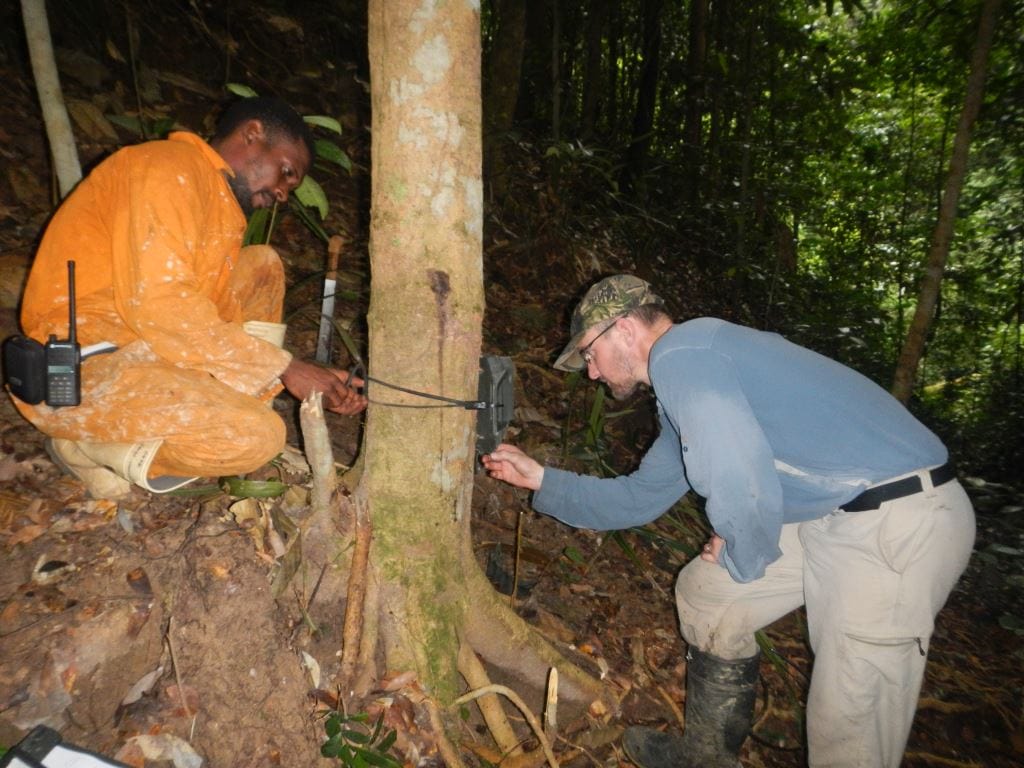
Image: Kyle Knopff
“Often, these holdings are geographically very diverse,” Knopff told me. “For example, a single company might manage land covering rainforests, deserts, wetlands… all sorts. They will need expertise in lots of different fields to capture relevant information and manage biodiversity in those locations properly.
“Some mining companies are even starting to see themselves as environmental, social and governance (ESG) companies, or nature companies, because in order to get a social license to operate their mines, they need to be really good at this.”
What does net positive actually mean?
Having a net positive effect on biodiversity sounds really nice, but what does that statement actually entail? I wondered.
Knopff explained that the targets are different for different companies. Some might aim for a net-positive impact from a pre-mining condition on the landscape, while others might be aiming for no net loss from a specific date. Commitments vary widely and that will influence what it takes to achieve those goals.
Most companies follow the biodiversity mitigation hierarchy as they work towards that outcome. But typically, the first three steps in the hierarchy (avoid, minimise, and rehabilitate) won’t be enough to achieve a no net-loss scenario, and certainly not enough to achieve a net-positive impact, so offsetting is required.
“To achieve no net loss is incredibly difficult,” said Knopff. “There are examples, such as the Ambatovy mine in Madagascar, but those cases are extremely rare.”
“Are there any levers or tools that companies can harness to get a head start on this process, and ensure that they’re collecting accurate data?” I asked.
“One of the biggest levers that companies can pull is to access their environmental impact assessments (EIAs),” Knopff said. “For many capital projects, especially mining projects, an EIA is required for project approval.
“Often those have a lot of data about the biodiversity that’s present at a site, and that may already have been impacted by mining operations or could be impacted in the future. Some EIAs might be older and not produced to the same level of rigor that companies would apply today.
“But it’s a good place for businesses to start. They can build on that information using some of the modern technologies and techniques that we discussed earlier.”
Reporting and disclosure requirements are also changing fast in this area. “What do mining companies need to be thinking about, if they want to ensure alignment?” I asked Knopff.

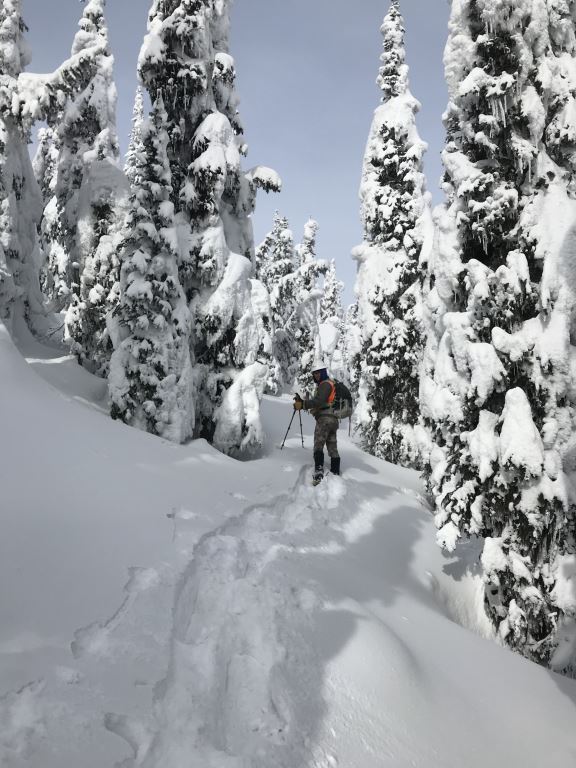
techniques and technologies depending upon which species are present.
Image: Kyle Knopff
“Most countries have not yet determined how they’re going to comply with Target 15 of the GBF,” he said. “However, there seems to be some consolidation in expectations, mostly around TNFD recommendations. So that’s a good framework for companies to align with.”
He added: “Consolidating disclosure requirements and expectations is important, so that these efforts don’t take resources away from actions that facilitate nature-positive outcomes on the ground. We don’t want to spend the next ten years concentrating our efforts in the wrong place.”
Do you like a challenge?
Speaking of disclosures… The ICMM’s commitment in January 2024 towards nature-positive mining, which included a five-point plan for its members to follow, has made waves in the industry.
“What’s the significance of this?” I asked Knopff.
“Not all mining companies are members of the ICMM,” he replied. “But having a global leader like the ICMM making a pretty strong statement about how its members are going to work towards nature-positive outcomes over the next decade in support of the GBF… that’s an important step for the industry.
“Some industry associations, like the ICMM, MAC, the Copper Mark, and the World Gold Council, are also working on a consolidated set of goals to help accelerate industry-wide progress.”
The ICMM requires its members, who represent around one third of the global mining industry, to achieve at least no net loss by closure for their direct operations, and to report on their actions by 2026.
Looking further ahead, members are also required to measure and disclose their impacts on nature at a value chain level by 2030 – think scope 3 reporting, but for nature rather than carbon emissions.
“For many companies, it will require a big stretch to achieve those goals within the set timeframes,” said Knopff. “But challenging ourselves to uphold excellence in this area is important, and I’m excited to see how companies respond.”
Time for miners to shine
It’s not often that the mining industry is held up as an example of how to do things well – not in the environmental space anyway.
But the preservation and promotion of biodiversity is one area where companies could and should make a big deal of their actions, and even look to help companies in other sectors that are less advanced.
“The mining industry is leading in this space,” said Knopff proudly. “I think that other industries should look to mining and pay close attention to what companies here are doing. Because it can serve as a template for actions and disclosures within their own businesses.
“It’s not always a perfect analogue, but businesses are thinking more and more in terms of ecosystems and value chains, and eventually it’s all going to connect up.”
He added that, from a corporate perspective, the most important reason to focus on nature and its wellbeing right now, is because it’s integral to the future viability of the mining industry. To continue operating, miners must demonstrate that they’re not irrevocably harming nature.
“There’s a very strong business case,” said Knopff. “In the future, buying decisions, especially for products like copper and nickel that are critical to the energy transition, are going to be increasingly tied to a company’s ability to operate according to the GBF.”
Global gross domestic product (GDP) also hinges upon the integrity of environmental ecosystems. A 2023 study by PwC found that 55% of global GDP, equivalent to an estimated US$58 trillion, is moderately or highly dependent on nature. And that’s at risk unless immediate action is taken.
And so, to work
“Mining companies have a sophisticated understanding of their impacts and dependencies on nature,” said Knopff. “But other sectors and companies globally are just waking up to this. That’s another reason why – coming back to your first question – nature and mining are in the spotlight right now.
“Mining companies are advanced in this field, but to continue that trajectory requires us to implement commitments like those we’ve recently seen from the ICMM. It’s nice to talk about strong commitments and leadership in the mining industry, but now we’ve got to show that we can follow through.
“Now the real work begins.”