

Swarm mining is a concept that has long fascinated me.
Back in 2014, a whole other lifetime ago (or so it seems), I worked with innovation strategists, George Hemingway and Jeff Loehr of Stratalis Group, to produce a series of articles for a well-known magazine exploring what future mining companies and operations might look like.
We dreamed big. Some of their predictions came true within a year, some are only just starting to take root ten years later. But the one that stuck with me the most was the idea that, in ‘the future’ it might be possible to mine metal deposits in-situ using swarms of micro-robots.
At the time, the idea seemed fairly out there. However, over the subsequent years, I’ve seen a growing number of breakthroughs towards this approach, some through robotics, some through the application of autonomy and others through the use of biological agents.
The age of swarm mining is no longer a vision, it’s upon us. And it’s the complete antithesis to everything we know about mining thus far. Here’s what you need to know…
What do we mean by ‘swarm’?
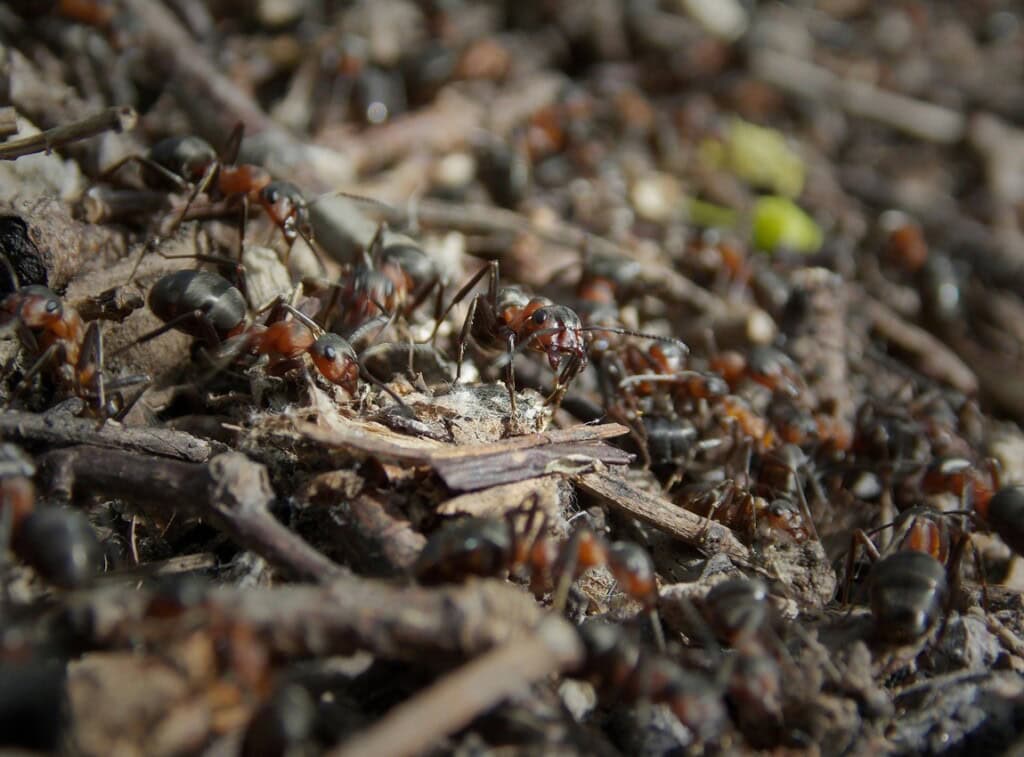
Swarm intelligence describes the collective behaviours displayed by decentralised, self-organised systems created by some social animals, such as ants, bees, and birds. In this Harvard Business Review article, Eric Bonabeau and Christopher Meyer explain this capability well.
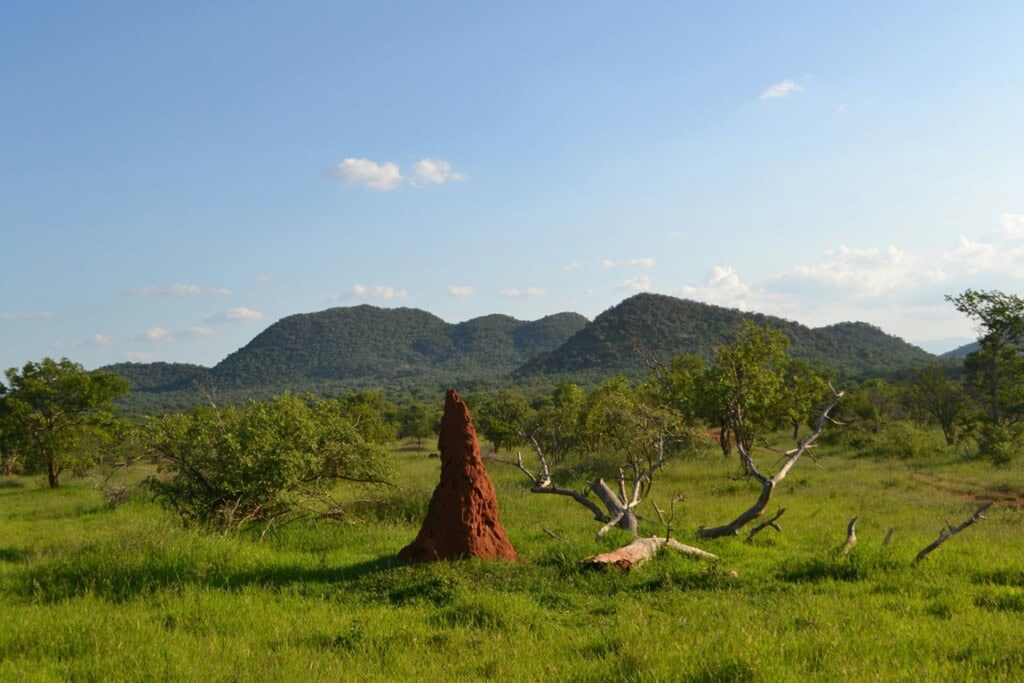
“Consider termites,” the authors state. “Individually, they have meagre intelligence. And they work with no supervision. Yet collectively they build mounds that are engineering marvels, able to maintain ambient temperature and comfortable levels of oxygen and carbon dioxide even as the nest grows. Indeed, for social insects teamwork is largely self-organised, coordinated primarily through the interactions of individual colony members.
“Together they can solve difficult problems (like choosing the shortest route to a food source from myriad possible pathways) even though each interaction might be very simple (one ant merely following the trail left by another).”
Bonabeau and Meyer posit that social insects like termites have been so successful—they are almost everywhere in the ecosphere—because of three characteristics:
- Flexibility (the colony can adapt to a changing environment);
- Robustness (even when one or more individuals fail, the group can still perform its tasks); and
- Self-organisation (activities are neither centrally controlled nor locally supervised).
These qualities have much to offer organisations in various industries, and the concept of swarm intelligence has already been used in optimisation and problem solving in sectors including defence, aviation, communications, tourism and municipal waste collection among others.
In short, swarming is not new. But to mining – an industry whose viability and profitability are based on scales of economy – it’s application requires a departure from normal business models and processes.

Mining with swarm robotics
In swarm robotics, computational power is used to coordinate the behaviours of a large number of relatively simple robots in a decentralised manner.
The team at the Bristol Robotics Laboratory (BRL) in the UK state: “Swarm intelligence allows agents to work together through simple local interactions with their neighbours or their environment. The swarm behaviours that emerge from these interactions (e.g. decision making, exploration, collective motion, shape formation, mapping) are typically more than the sum of their parts.”
Dr Sabine Hauert explains how this can be achieved in this Living with AI podcast episode, which is a great listen if you have a spare 30 minutes.
One of the first concrete applications that I heard about for swarm robotics in mining was mining in space. This 2019 Intelligent Miner article details a few projects.
More recently, in 2021, NASA announced it would fund a project that proposed the use of swarms of autonomous robots to mine for rare earth elements and other lunar material on the moon. Led by researchers at the University of Arizona, the team developed a neuromorphic learning architecture technique, called the Human and Explainable Autonomous Robotic System, or HEART.
To test the design, the team created low-cost, rapidly designed, 3D-printed rover prototypes that, when perfected, could assist astronauts on the moon with mining tasks.
A few weeks ago, I also met Jim Keravala, CEO of OffWorld, a company that has, since 2016, been developing an AI-powered industrial Swarm Robotic Mining system for application both terrestrially and extra-terrestrially.
In 2023, the company launched a line of robot ‘species’ that it has created for surveying environments on the surface and deep underground, performing precision excavation, and collecting, hauling and processing material. The robots work in squads and can produce from hundreds of tonnes to over one million tonnes of ore annually in a single mining operation.
Each of the robots is what Keravala describes as an ‘edge’ server. Dispensing with the need for remote servers and the necessity to shuttle data to and fro, this system allows machines to make decisions much faster.
Their software architecture leverages machine learning, allowing the robots to work with and eventually learn from human experts. The company said that Swarm Robotic Mining can improve customer productivity and cost efficiency through 24/7 operations. Because the robots are fully electric, the swarms have a zero-carbon footprint and, by replacing the use of explosives with precision mining, they remove humans from dangerous working conditions.
OffWorld has undertaken studies for a number of tier one and mid-tier mining companies, and it signed a memorandum of understanding with Saudi miner, Ma’aden, at the Future Minerals Forum in Riyadh in 2023 to explore the potential of utilising smart robots in Ma’aden’s mines.
From robots to autonomous trucks
A little closer to home, swarms of small-scale trucks have garnered interest as a potential alternative to conventional mining truck fleets.
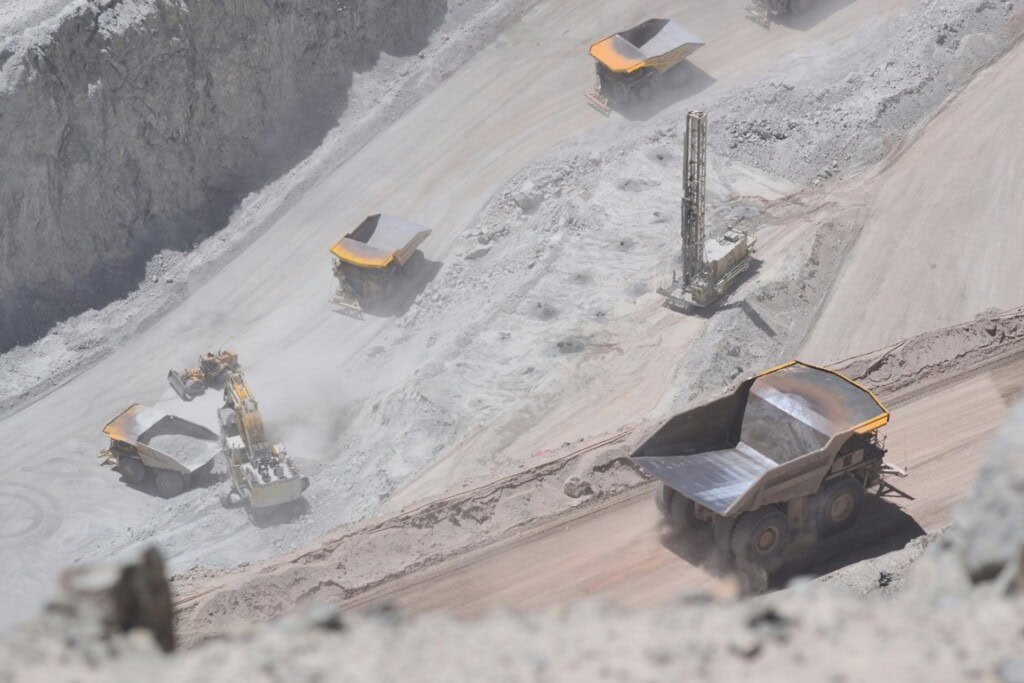
Traditional fleets rely on a relatively small number of very large (100+ tonne capacity) rigid-frame trucks to haul material out of open-pit operations to waste dumps or mineral processing operations. While these fleets offer high productivity and are designed with a certain level of flexibility and redundancy, this approach has, in many cases, reached the limits of its efficiency.
Miners are increasingly focused on technologies and concepts that will enable them to lower their scope one and two emissions while reducing costs and allowing for more agility. As open autonomy haulage platforms, such as those developed by Safe AI and Wenco, gain greater acceptance in mining, swarms of smaller vehicles offer a real possibility to achieve this.
For example, in August 2023, integrated strategic planning software pioneer, Whittle Consulting, and autonomy start-up, Pronto.ai, released a joint study titled Autonomous Swarm Haulage: The Economics of Autonomous Haulage with Small Trucks.
Their research modelled the net present value (NPV) of mining a representative copper orebody through four different scenarios, taking into account all facets of the mining value chain over an 18-year life-of-mine horizon.
The study found that operating the mine with a fleet of autonomous 40t haul trucks would realise a 31% greater NPV than if the mine were operated with a fleet of manually driven 100t off-road haul trucks. Autonomy also significantly improved utilisation by reducing truck downtime, standby, and operating delays to 5% of availability versus 20% for manual vehicles.
Microbes: nature’s answer to mining
And then, of course, there’s a world of possibilities for swarming enabled through biology.
Biological organisms have been used for decades to help extract metals, like gold and copper, from specific ore types, remediate mine wastes and, more recently, sequester CO2 from the atmosphere and leach ores in-situ (mining without creating a ‘mine’ essentially).
However, biotechnologists, bioinformaticians and geomicrobiologists, are also working to find and engineer microbes that can, for instance, explore for the presence of specific metal deposits without drilling, or induce microfractures in rocks to precondition ore ahead of crushing and grinding, thus lowering energy consumption in these processes.
In a 2020 interview, Marny Reakes of Cemvita Factory explained to me that there’s a subset of microbes called endoliths which live and grow in cracks in rocks. There’s one particular species that can wedge themselves through cracks in rocks that are smaller than their diameter, then grow on mass and potentially crack them.
That said, there’s a lot that we still don’t know about microbes and their role within mining processes. To discover and implement useful organisms, the Canadian government’s Digital Supercluster initiative has formed the cross-industry Mining Microbiome Analytics Platform (M-MAP).
Teck, BGC Engineering, Rio Tinto, and Allonnia are participating, as well as the Centre for Excellence in Mining Innovation, Koonkie Canada, Genome BC, and the University of British Columbia. The partnership’s goal is to extract DNA from 15,000 mine site water, rock, and soil samples, sequence it, and create an online platform for storing and analysing the data.
“M-MAP envisions a mining industry where microbes are at the forefront of innovation, driving efficiency, minimising waste, and reducing the industry’s ecological footprint”, the group stated.
Just the beginning for swarms
These are just a handful of the ways in which swarm intelligence and robotics are starting to manifest in the mining industry. And it seems there are endless possibilities…
For example, this study looked at the use of swarm robotics in safety inspections for underground mines during emergency situations, and companies like Rolls Royce, which play in mining as well as other sectors, have explored using swarms of micro-robots to improve engine maintenance practices.
Will swarms ever replace traditional mining equipment and operations? Probably not. But they offer companies options in a future that’s becoming ever more difficult to navigate, economically, environmentally and socially.
And that’s what makes it important.