

“A $10Bn copper mine is now sitting idle in the jungle”, “Thousands of Serbians protest in Belgrade against lithium mine”, “Clean water and air concerns for protesters as gold mine inquiry opens,”…
These are just a handful of mining-related headlines from the past few months that capture the friction between our need for mined materials and the communities affected by their extraction.
Local acceptance (or not) of mining activities has come to be defined by the term ‘social licence to operate’.
A 2013 paper by the Commonwealth Science and Industrial Research Organisation (CSIRO) noted: “For mining companies, it is increasingly evident that obtaining a formal licence to operate from governments and meeting regulatory requirements is no longer enough…
“It is widely recognised that mining companies need to gain and then maintain a social licence to operate from local communities in order to avoid costly conflicts.”
While this paper was published over a decade ago, its findings remain ever relevant to the mining sector, as the headlines show.
Securing a social licence
In recent years the push to reshore mineral supply chains has spread around the industrialised world, with examples including the US Inflation Reduction Act (IRA) and the EU’s Critical Raw Materials Act (CRMA).
Both pieces of legislation include stipulations around the sourcing of materials, either requiring minimum thresholds for domestic material use (CRMA) or incentives based on a supply chain involving domestic and free trade agreement nations (IRA). Increasing geopolitical tensions show such drivers are likely to remain rather than recede in the coming years.
This reshoring trend means that both brownfield and greenfield mining projects are gaining traction in communities less used to mining activity. Successfully obtaining a social licence to operate can be particularly challenging if the local community has low ‘living memory’ of mining activities or previously negative experiences.
In certain geographies, such as here in the UK, the loss of heavy industries such as mining to industrialising nations has led to awareness of mining dwindling. These social drivers also impact on securing skilled local workforces.
Building the talent pipeline
Around the globe, and particularly in industrialised nations, there are issues in mining recruitment and retainment, in addition to well-documented declines in geoscience graduates.
A July 2023 report by the IOM3 on the skills landscape for critical minerals in the UK found: “There is a shortage of key professionals including exploration geologists, mining engineers, mineral planners and mineral processors. Across the value chain, metallurgical skills in all their guises were identified by stakeholders as critical and in short supply.”
One key conclusion of the IOM3 report was that attracting skilled professionals and sustaining the critical minerals sector required updating and improving perception of the mining and critical minerals value chain, including their central role in clean energy technologies and decarbonisation of polluting sectors.
Several years ago, a conversation with my then five-year-old daughter about batteries and electric cars was the spark for me exploring my own role in mining communication. Her questions about how batteries worked and what they were made from, got me thinking about how we teach geoscience and materials use in schools and talk about it more widely.
I looked at school resources on mining and materials, books and TV programmes, and thought about the films where mining was featured, normally as the bad guy.
I realised that as an industry, we weren’t having nearly enough conversations with the general public – certainly not enough to update and improve perceptions. So, how do we do this?
Improving community outreach
The CSIRO paper makes the notable point that while the importance of securing a social licence to operate is acknowledged, companies are less clear on how it is obtained and maintained. Infrequent, and often jargon-heavy, community outreach efforts run the risk of looking like tick box exercises rather than meaningful engagement.
Leading voices in the geoscience outreach community, such as Professor Iain Stewart, have talked about the evolution of science communication best practice. While early science communication centred on addressing scientific literacy, best practice is now focused on participation and collaboration.
In the participation model, outlined in his 2024 paper ‘Advancing disaster risk communications’, Professor Stewart notes, the broad aim is to “motivate a ‘social conversation around science’, not just between the public and scientists but also amongst the public themselves”.
We need a new type of mining and minerals outreach model; working with schools and communities to engage and connect young people with mining and minerals use, and their central role in creating a more sustainable world.
Starting with schools
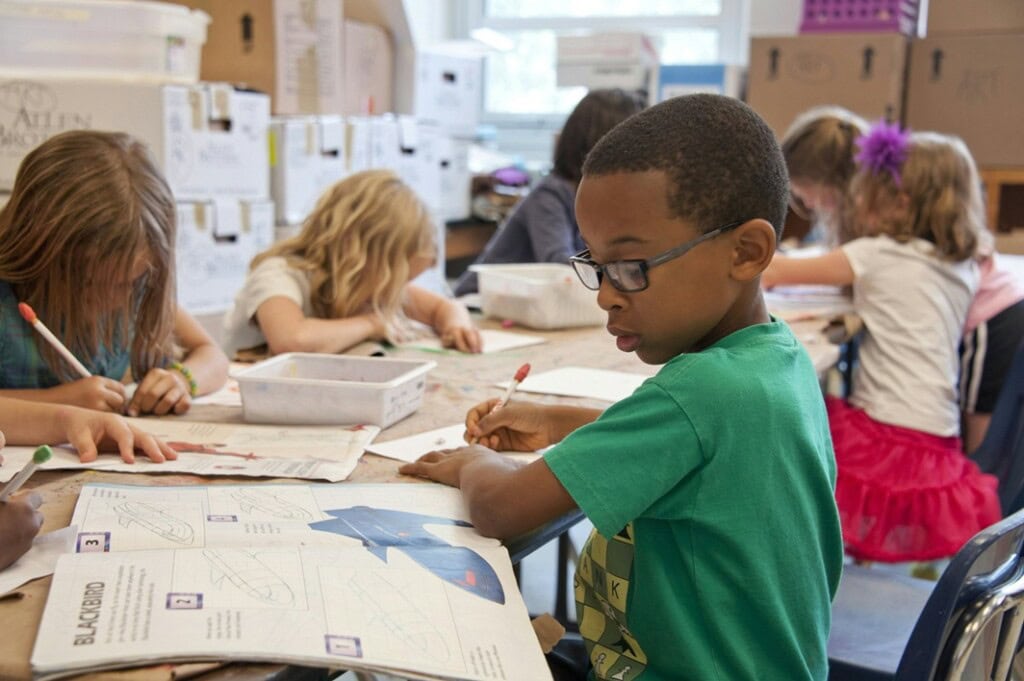
Research shows that long-term attitudes are fixed early, and by the time we leave primary education many of our views and interests are set for life. The 2018 ‘Drawing the Future’ report by the UCL Institute of Education and others found that children’s career aspirations only marginally differ from age seven to age 17.
This study of 13,000 UK-based primary pupils found 36% of children from as young as seven, base their career aspirations on people they know. For those who didn’t, 45% stated that TV, film and radio were the biggest influencing factor.
There is a great opportunity for the sector to engage more with schools and children to improve our social licence and recruitment challenges over the longer-term. Mining companies, social enterprises, universities, museums and professional associations are all undertaking fantastic work to provide a range of outreach activities and services that draw on best practice.

Future Is Mine, a not-for-profit organisation that I created together with experienced education professional Loren Crisp, is developing a schools outreach programme with Minerals Matter and with industry support from SLR.
To spark conversations and interest in materials, in our Mineral Mission children get to solve the mystery of a missing mineral – without which, an important piece of technology can’t work. This fun session provides an age-appropriate introduction to responsible sourcing, and to a range of mining-related careers. There are no right or wrong answers; what we aim to do is guide a conversation in which the children themselves decide the best way forward.
From the recent headlines, it’s clear to see that mining communication and outreach is needed now more than ever. A balance between our need for mined materials and the impact of mining on local communities can only be found through more conversations and a move to an outreach model based on participation.
We need more voices and more companies engaged in this mission – not just for special events or one-offs, but as a long-term way of operating.
If you’d like to explore how you and your organisation can contribute to school and community engagement projects, contact Jessica and Loren at [email protected]