

From attracting more children, pupils and university students to geoscience and engineering-related disciplines, to closing the gaps in professional training as part of continuous education… Tackling the declining trend of mining-related graduates and changing mining’s public image requires fresh ideas and unconventional approaches.
I wanted to know what it takes to affect change in these arenas, and whether it takes special people to do this or if being a trailblazer is a learnable trait.
In addition, I was curious about what makes teaching and learning – and consequently, communication – effective, and how the industry at large could apply these lessons to better engage with various groups of stakeholders.
Meet the change-makers
Haydon Mort has found ways to innovate geoscience teaching for British high-school children through cross-disciplinary links, attracting astounding numbers of students to his courses, and prompting other teachers to ask him how he did it.
Observing the need to communicate geosciences differently, and building on what he learned, he has developed all-level, on-demand geoscience communication courses which are available on his Geologize platform that professionals across the globe have also come to appreciate
Elisabeth Clausen is a professor of mining engineering and leads the Institute for Advanced Mining Technologies (AMT) at RWTH Aachen University in Germany where, together with her research team, she develops innovative solutions for the autonomous and digitally integrated mine of the future.
Clausen is passionate about educating and engaging graduate-level mining engineering students through various didactical, methodological and collaborative approaches.

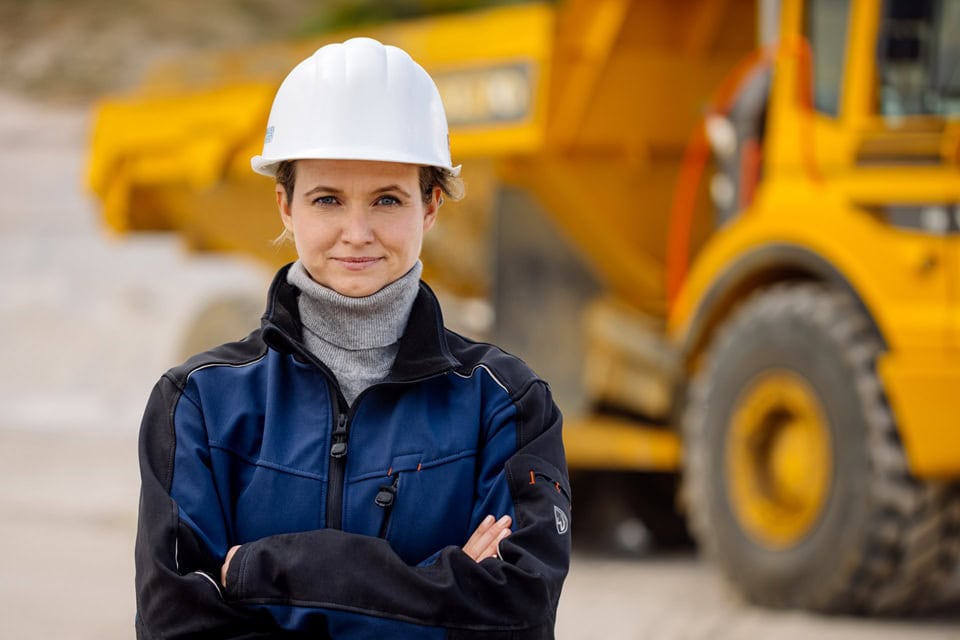
She was recently crowned Lecturer of the Year by RWTH Aachen to honour her contribution to innovating teaching and learning at one of Europe’s leading technical universities.
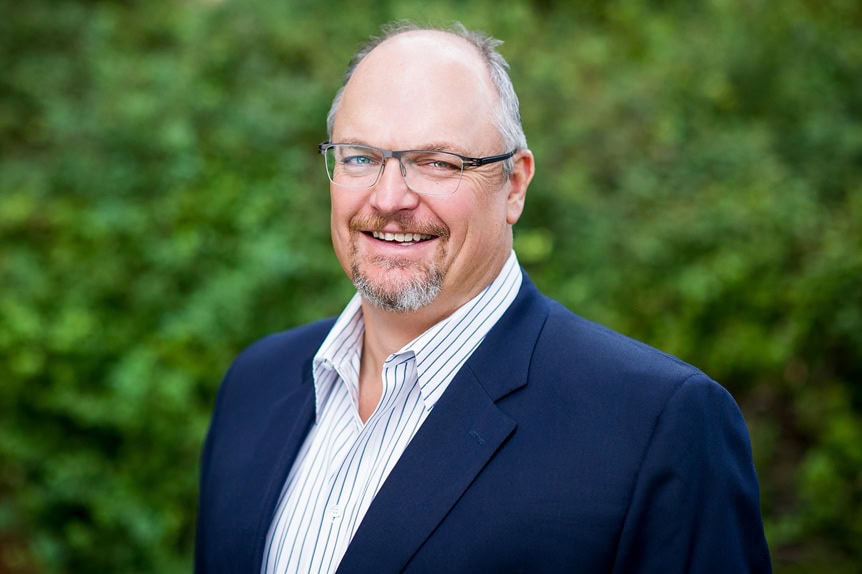
Christopher Hatton of WSP has dedicated himself to transforming continuous education in mine tailings management with a focus on post-university professionals.
His mission is to raise awareness of the specific need for training engineers of record (EoR) who are qualified to manage tailings dams and provide continuous learning opportunities for professionals in this area.
After training over 1,500 operators in the 1990s with hands-on practical approaches, Hatton expanded his mission to include advanced courses at Colorado State University and Colorado School of Mines.
He has also worked with the Society for Mining, Metallurgy & Exploration (SME) to compile available university training programmes in a centralised platform.
Observing commonalities in those who dare greatly
Reflecting on my conversations with these inspiring individuals, I have identified a few preliminary commonalities among them. Firstly, they all care deeply about their field and about improving the arena in which they are actively engaged.
However, these individuals do not just care about their subject matters; they also prioritise the human element in their work. In all cases, the human experience is central to what they do and why they do it.
Secondly, they are not content with the status quo and bring a willingness to question it. This comes with a unique perspective, rooted in keen observation of their current reality and a diverse experiential background.
This opens opportunities to bring a fresh approach, and a different way of thinking and doing to what most would accept as ‘normal’ or ‘given’.
Another ingredient is that they are not afraid of complexity. This fearlessness translates into a willingness to try new approaches and forge new paths, even if success is not guaranteed and further revisions may be required.
I have noticed that these trailblazers are not afraid to make mistakes, continuously refining their methods by discarding what does not work and building on what does.
Lastly, they all demonstrate a deep curiosity and willingness to learn, grow, and evolve within their field, coupled with a passion and excitement for what they do and why they do it.
Trailblazing: skill or trait?
If these are some of the ingredients for becoming a trailblazer, then how does one get there – and can it be learnt? Or does it simply take special people who only appear occasionally?
Interestingly, none of my three interviewees planned to become a change-maker.
“I have always followed what truly interested me,” said Clausen, “because I am convinced that genuine interest and passion is the foundation for success and motivation.” Clausen holds an additional degree in economics and considered a career in policy before she was tenured at RWTH Aachen University.
Passion clearly also drives Hatton who, even after 40+ years as a professional civil engineer, remains enthusiastic about his work. “I still love the creative process of finding solutions and supporting engineers in becoming more resilient individuals, complementing their technical skills with personal growth and increased emotional intelligence,” he said.
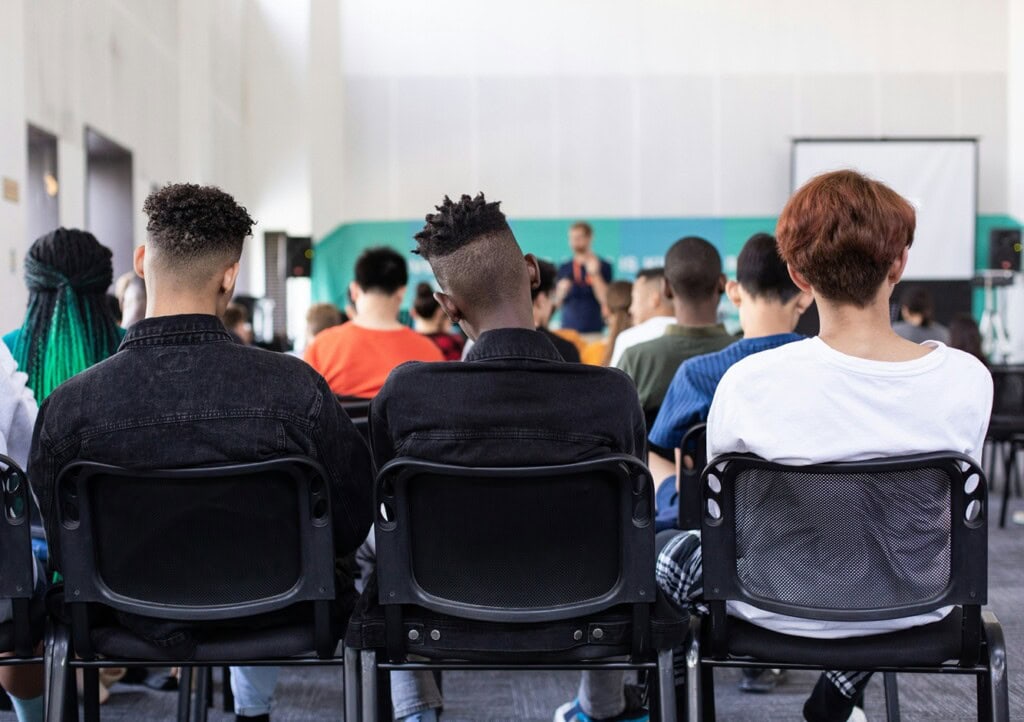
Moreover, he regularly volunteers at high schools and universities to engage with both students and parents “to promote engineering as a fulfilling career choice and a noble profession essential to modern society,” he explained.
“We need to nurture the next generation of engineers who can balance technical expertise with interpersonal skills.”
Mort attributes his ability to think creatively, at least in part, to his dyslexia. “I have always had a mind that loves making unexpected connections – a trait I attribute to my dyslexia and neurodivergence – which has enabled me to link geoscience with fields like music and history in ways that many might not consider,” he reflected.
While passion, diverse interests and neurodivergent thinking may sound more like traits than skills, Mort is convinced that “while my neurodivergent way of thinking has helped me make creative connections, I also believe that these skills can be learnt and taught.”
What is required, he is certain, “is a willingness to think differently and challenge traditional methods.”
Clausen concurred, stating, “Ultimately, much depends on who has the courage to forge new paths. It requires perseverance and the willingness to act as a pioneer, even when the journey can sometimes be met with skepticism and rejection.”
Hatton added that “in every organisation, there are people who really don’t want to take on anything new or innovative, because they are either overtly afraid or unwilling to advocate for an idea because they didn’t think of it.”
It seems that trailblazing is both a trait and a skill. While passion for one’s profession cannot be learnt but rather experienced, the courage to do things differently, to try new approaches, to develop novel methods, and to foster change can indeed be cultivated.
Equally, while caring deeply about what you do and being innately curious are attributes that are experienced and likely nurtured over time, good communication, cross-disciplinary, and divergent thinking are skills that can certainly be developed.
Creating a learning culture
How does the combination of change-making personality traits, honed skills, and life experiences translate into fostering a different kind of learning environment for students?
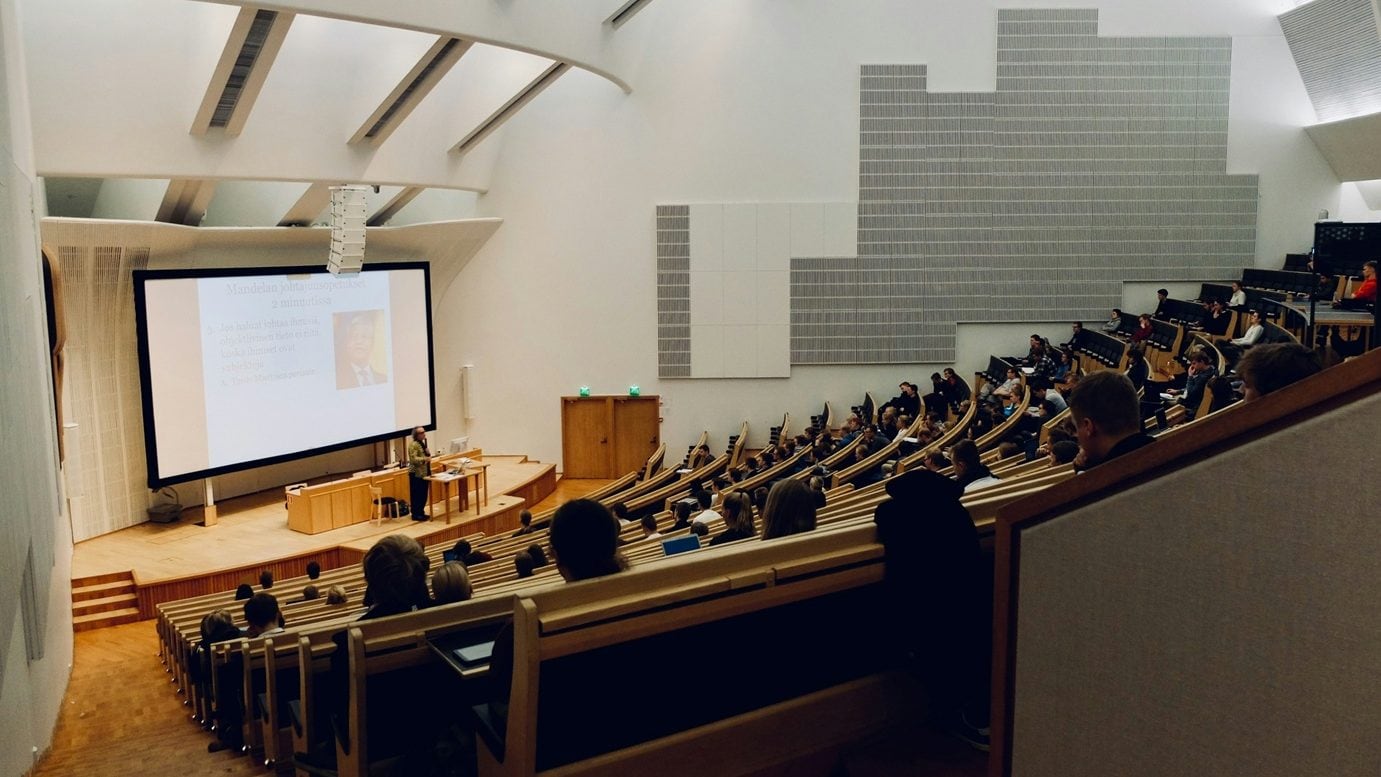
Image: Unsplash
“Cultivating an open, trusting atmosphere where critical reflection, questions, discussions, and open dialogue are encouraged forms the foundation of effective learning,” Clausen reflected.
Mort concurred, noting that “teachers should facilitate environments where students are encouraged to develop their own solutions rather than simply absorbing information.” This is an approach supported by brain science and is key to enabling long-term learning.
Understanding brain science and the processes behind learning is a vital foundation for any educator. However, these hugely relevant insights are only slowly permeating educational approaches at all levels.
Mort, having studied brain science extensively, also knows that “a good educator must be able to evoke genuine emotional connections with students.” As he put it: “When you feel good about something, you are more likely to remember it.”
This simple yet fascinating fact underlines just how rare such emotional engagement may have been for many of us during our own education.
“A teacher who can infuse emotion into their teaching – whether through humour, music, history, or poetry – has the potential to change lives,” Mort continued.
For instance, his own geology teacher often used humour to make lessons memorable and engaging – a testament to the power of emotional connection in education.
Another insight Mort shared was that “genuine understanding begins with listening.” This is crucial for engaging not only those who are already interested in the subject, but also those who might initially be indifferent.
“Truly listening includes the ability to empathise with those who might have different interests or perspectives,” he said. “This is the foundation for tailoring your communication based on what people want to hear, rather than merely delivering one-sided lectures rooted solely in your own interests and views.”
Clausen made a similar point, asserting that “a good educator should be capable of communicating on an equal footing and show genuine interest in their students. This includes active listening, a willingness to engage with different ways of thinking and asking questions to better understand the students’ thought processes.”
She also emphasised that learning is inherently a social process, enhanced by interactive exchanges.
Hatton advocated strongly for educational approaches that combine hard technical knowledge with soft skills training. “This includes breaking down the traditional ‘hard shell’ of engineers and fostering vulnerability and openness to enable more effective team interactions,” he explained.
This approach, inspired in part by insights from social scientist Brené Brown, is a focus in his courses.
“Most engineers approach problems with a finite mindset, seeking clear winners and losers,” he observed, “when, in reality, the future requires an infinite mindset that is process-focused and adaptable.”
Consequently, he is convinced that “embracing an open-ended, collaborative approach is essential for addressing the evolving challenges in the mining industry.”
Takeaways for the mining industry
Cultivating an open, trusting atmosphere where dialogue and critical reflection are encouraged; communicating on an equal footing with a genuine interest in others; listening intently to fully understand different perspectives; enabling emotional engagement with subject matters; encouraging cross-disciplinary thinking; and embracing a process-focused, adaptable mindset – these are some of the key insights I gathered from Mort, Clausen and Hatton.
They are equally relevant for the mining industry at large.
Mort added that “including people who think differently is not only a matter of diversity, it makes sound business sense.”
Citing examples of Google and Apple actively seeking neurodivergent individuals with autism and dyslexia for their creative solutions, he is certain that “without a willingness to change, the mining sector will continue to stagnate.”
His recommendation was that “both mining companies and academic institutions should cultivate a culture that celebrates diverse approaches and encourages individuals who are unafraid to think outside the box.”
According to Hatton, the challenge is significant: “Engineers often struggle with communication – it’s not in their DNA – which can hinder interpersonal exchanges.”
This is why effective communication must be actively nurtured. Platforms like Geologize are excellent starting points for mining engineers and geologists alike.
Moreover, Hatton observed that “our society’s emotional IQ is declining, which is why building emotional IQ is a commodity that can enhance how engineers collaborate and connect.”
This brings us back to the human element. We are social beings, with a brain as well as a heart, and a deep need for social connection. We cannot affect change by taking a siloed approach, whether in respect to technical disciplines or our human nature.
Vision ahead
So how do we get there?
“The first step,” as Mort aptly put it, “is to change ourselves and then demonstrate a better way to others.”
The key attributes for the journey, according to Mort, Hatton, and Clausen, are empathy, curiosity, and courage. Greater levels of empathy, according to Mort, would not only revolutionise industry, but also create a more peaceful world.
“Empathy is the key to reconnecting with our humanity,” he asserted. “It is essential that we truly understand what others want and need, and ultimately, all the techniques I have discussed revolve around empathy: listening, understanding others’ feelings, and engaging with their perspectives.”
For Hatton, “curiosity is a mindset of embracing the unknown, challenging existing norms, and fostering continuous learning.”
In tailings management – as in much of mining – no two dams or mines are the same, which is why he concluded that “creativity, adaptability, and curiosity are just as important as technical knowledge”.
Clausen has experienced how profound knowledge and diverse skills, paired with courage and the willingness to persist, even in the face of resistance and potential failure, can be critical for success and for effecting change.
What I believe the work of these three change-makers highlights is that transformation is not driven solely by subject-matter expertise. It is fuelled by curiosity, persistence, and the willingness to step into the arena of life and dare greatly.
True progress happens when people step outside their comfort zones and bring their full, authentic selves into their work. This is why I believe we need more people who dare greatly.
Because it is these individuals who have the potential to redefine how we educate, communicate and ultimately transform the mining industry.