

Imagine a serious incident occurring at your mine site, injuring several team members. How will you respond to the situation?
You care deeply for all those who work for you and at the same time, you need answers about what happened and why it happened, so it never happens again.
Will you seek to find out who made mistakes and start the disciplinary process? Alternatively, will you investigate if there were organisational gaps in processes, training, communication or awareness that could have led to this tragedy? Could the culture of the company have avoided the situation?
In business, the reality is that a safety culture exists, whether or not an organisation manages it. A company’s safety culture is reflected by what individuals do when the boss or safety manager isn’t watching.
They either speak up or stay silent when they see something or someone working unsafely. Are minor or even serious incidents reported, or are they swept under the rug?
Resilient safety culture
Managing safety positively and proactively in a business environment requires a conscious and coordinated effort across departments and up and down the chain of command.

A resilient safety programme considers the complex nature of people working in concert with each other to achieve a variety of production, quality and financial goals.
A resilient safety culture resists both internal and external pressures that could cause workers to compromise their commitment to safety. This type of culture continuously focuses on improving instead of blaming those who make mistakes. It learns from expert team members in the field before things go wrong, proactively putting safeguards in place to prevent serious incidents.
Experience has shown that developing and sustaining a resilient safety culture requires focus and development of four interdependent components:
- An established safety system that identifies hazards and mitigates risks on the job.
- An organisational mindset that fosters a culture of care and curiosity when facing challenges.
- Consistent leadership behaviours that positively influence individuals.
- Ownership from a fully engaged organisation at every level, focused on continuous improvement.
Human and organisational performance
When it comes to safety, we need to rethink how we operate. The traditional approach follows near misses or incidents like the example above with investigations to determine the root cause or causes and, sometimes, who is to blame.
How often have you read an incident report that concludes, “employee did not follow procedure” and stops there?
One flaw with traditional methods of safety systems management comes from designing policies, standard work and processes based on the assumption that work happens linearly; expectations are set by management, workers are told what to do, and they do it the same way every day.
This doesn’t account for organisational factors that can disrupt the system, nor does it account for individual factors that impact a worker’s awareness.
Human and organisational performance is a shift from the traditional method, from a systems-oriented approach to understanding situations and context.
This model offers next-level thinking by recognising there are opportunities to make work activities more error-tolerant and moves from investigations that create anxiety to interactions that help entire organisations learn and improve. It is a proven way of increasing both safety – and productivity – through building trust.
Human and organisational performance consists of five principles, which include:
- People make mistakes – the system manages the probability of having an incident, rather than requiring the worker to perfectly perform every day and helps to build systems that allow people to stay safe, even when they make a mistake.
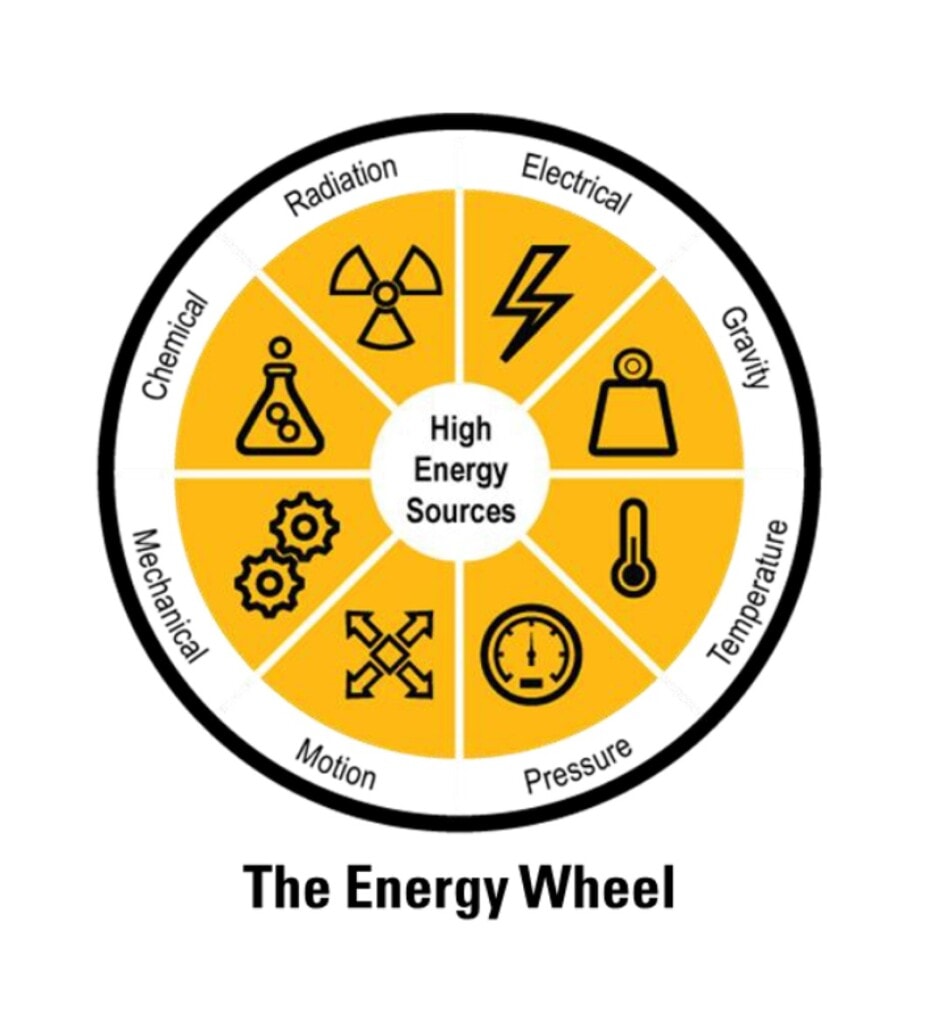
- Blame doesn’t work – when an incident occurs despite the use of the Energy Wheel, a learning, informed response focuses on understanding the systematic gaps and the ‘why’ behind what happened, rather than blaming individuals.
- Behaviour is driven by context – it is the context in which work occurs that primarily determines our behaviours and actions, so focus on the context and not the person.
- Learning is key to improving – when leaders create an environment that fosters speaking up, we can learn and improve from both mistakes and successful work.
- Your response matters – a leader’s response carries the potential to either attract or repel followers. The response to a mistake can either strengthen or weaken teams.
Leadership’s critical role
Leadership is one of the key interdependent components of creating this mindset shift toward building a resilient safety culture. This means the specific things leaders say and do to establish and reinforce safety culture.
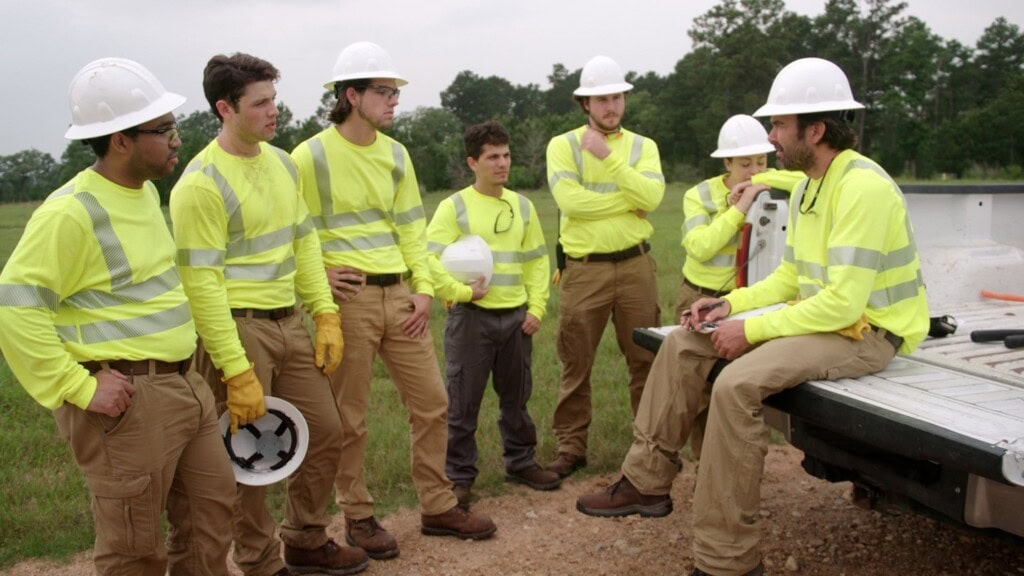
When organisations are striving to develop and sustain a culture of safety excellence, it’s the leadership’s words and behaviours that influence team members’ attitudes.
Some leaders have said to me, “I’m not afraid to tell my team when they screw up.” However, great leaders are not reactive, waiting until something negative happens to measure performance and provide feedback.
Rather, they define and communicate clear expectations, equip their people with training and resources, regularly observe performance, and continuously provide feedback – especially when people are doing well.
Leaders are busy. Often, they supervise work stretching over dozens of square miles and cannot be everywhere and have eyes on everyone. Therefore, great safety leaders build connections with their teams to instill confidence in the culture and motivate safe behaviour, even when a leader is not there.
That means connecting safety to every facet of the operation, so no decision, operation or process is completed that excludes safety considerations.
Simply saying “be safe” and glancing over the Energy Wheel at the beginning of the shift is not enough. We need to reinforce that message throughout the day with conversations that keep safety at the forefront.
Measuring leadership capabilities
Effective safety leaders building a resilient safety culture are not just hoping the right kind of people come along who will make a great culture. Rather, they are saying and doing things to create the preferred culture. Great leaders proactively equip themselves with the skills they need to succeed.
They seek feedback on their individual strengths and opportunities to improve. It takes vulnerability to ask for feedback.
Data, both quantifiable and contextual, is required to assess essential safety leadership skills (building trust, driving accountability, creating connectivity and demonstrating credible consciousness) and measure improvement over time.
There are statistically validated frameworks available to help evaluate these skills. These provide executives, directors and frontline leaders with a measurement of their leadership capabilities from their direct reports – those who regularly observe the leader’s behaviour.
They can then utilise both individual leader and composite organisational data to develop leadership skills that inspire a culture of safety excellence.
Assess your culture
How would your employees describe your organisation’s safety culture at this moment? Do they see it as compliance-driven, where mistakes are met with blame and shame? Or does it convey care and support, leaning on their expertise to find and fix issues before they become incidents? Does it need work to become more resilient?
Ideally, the time for organisations to apply the principles for establishing a resilient safety culture is before an incident occurs. Examine your system when things are seemingly quiet, as silence does not equal safety.
We all have the power to change the culture and make a positive impact on those that work for us, so all can return safely home every day.
Kelly Scott is Industry Account Manager at Caterpillar Safety Services. To continue the conversation, connect with Kelly on Linkedin