

Over the past decade, mining companies have become extraordinarily good at collecting data.
Fleet management systems track cycle times and payloads. Tyre monitoring platforms record pressure and temperature. Dispatch systems log every movement of trucks and shovels. Maintenance systems store vast records of equipment health and performance.
Yet despite this wealth of information, many operations still struggle to translate data into practical decisions. According to Christian Erdelyi, Technology Services Director, Kal Tire’s Mining Tire Group, the problem is not data scarcity but clarity.
“Mines today aren’t lacking data,” he said. “The opportunity lies in delivering clearer insights to make it easier for them to identify when and where action should be taken.”
Across most sites, valuable information remains fragmented across multiple systems. For instance, platforms designed and developed by original equipment manufacturers (OEMs) capture information on telemetry, enterprise software records maintenance activity and mine planning tools analyse production data. Each system holds useful insights, but rarely are they connected in a way that reveals how infrastructure conditions influence equipment performance.
Without context, even sophisticated analytics can become little more than operational noise. “The real challenge,” Erdelyi explained, “is converting that data into timely and actionable interventions.”
Kal Tire’s latest solution, KalPRO™ HaulSight, which builds on the success of KalPRO TireSight autonomous tyre inspections, is designed to do just that. The solution uses LiDAR and camera sensors mounted to haul trucks and edge computing to scan haul roads and provide fleet teams with instant alerts about hazards.
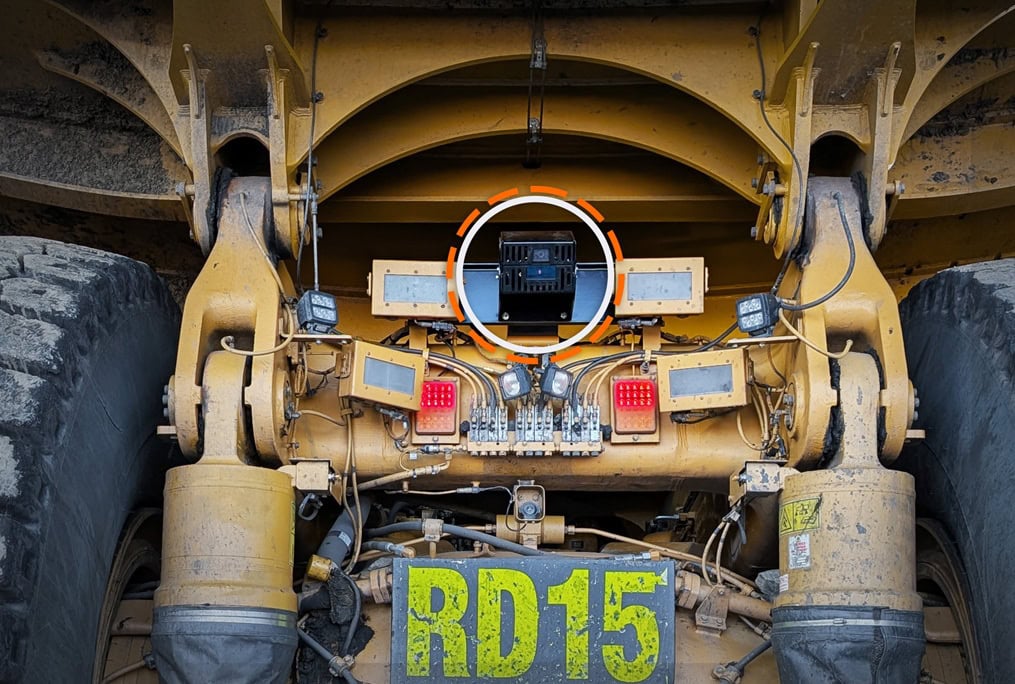
The technology also integrates with Kal Tire’s TOMS (Tire & Operations Managing System), allowing condition monitoring experts to assess flagged issues and automate priority-based work orders.
Two months on from its January 2026 launch seemed like a good time to take a closer look at the challenges the technology is designed to address and the opportunities it could unlock.
The overlooked importance of haul roads
Haul roads are the arteries of open-pit mines. Their condition influences cycle times, fuel consumption, equipment reliability and, ultimately, the productivity of the entire mining operation. Yet they’re often managed with less analytical rigour than the equipment that runs on them.
Part of the challenge lies in the way that responsibilities are divided across the organisation. “It’s not necessarily the road team’s budget that covers costs associated with vehicle damage caused by haul road issues,” Erdelyi explained. “The cost often shows up in the tyre or asset budget instead.”
The consequences of poor road conditions, including premature tyre failures, suspension damage, increased fuel burn or slower haul cycles, typically manifest across multiple functions owned by different teams. Without a unified view, these impacts can be difficult to trace back to their true cause.
The economic stakes can be high. Studies have shown that truck haulage can account for up to 50% of total operating costs at some surface mines, meaning that even small improvements in haul road performance can translate into substantial reductions in cost-per-tonne.
The hidden cost of micro-events
According to Erdelyi, road degradation rarely appears as a dramatic failure. Instead, it develops gradually through small, repeated defects in the road surface. Soft spots, spillages, potholes and undulations may seem minor in isolation. However, over time, they can create cascading operational effects.
“Undulations create shocks, shocks create spillage and spillage can create collisions,” said Erdelyi.
Every time a haul truck travels across uneven terrain, energy is transferred through the machine’s structure. Tyres absorb much of that energy, and over time, their condition slowly degrades. Erdelyi compares this process to draining a battery.
“Think of the tyre as a battery that can store massive amounts of energy,” he said. “Each time a truck travels over potholes or undulations, energy is transferred into the tyre through deformation and impact. That energy manifests as heat and structural stress within the tyre. Over thousands of haul cycles, repeated micro-events accelerate fatigue in the rubber structure, increasing the risk of separations or sudden failures.”
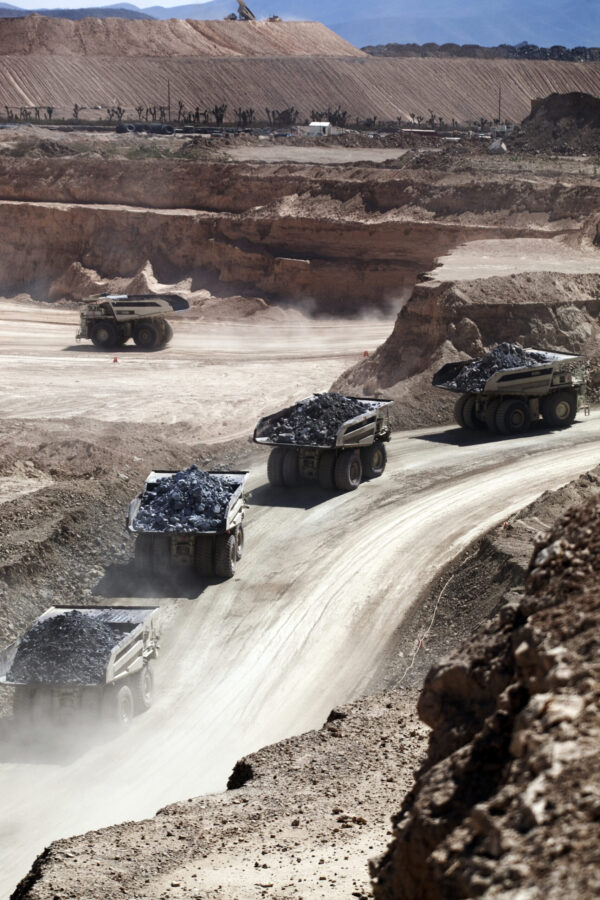
Research has shown how significant this effect can be. Poorly maintained haul roads can reduce tyre life by 30% or more, while even a 1% increase in rolling resistance can raise fuel consumption by 2-3% in haul trucks.
In extreme cases, these failures can escalate into more serious safety incidents. “The source of some tyre fires can actually be road conditions and damage that occurred earlier in the cycle,” Erdelyi noted.
The difficulty is that these subtle degradations are not always easy to detect through visual inspection alone. A haul road may appear relatively normal while still degrading fleet performance.
Reading the road through fleet behaviour
This is where modern data-driven monitoring approaches, like HaulSight, are beginning to prove game changing. Rather than relying solely on periodic inspections, technologies imbued with artificial intelligence (AI) analyse the behaviour of trucks as they travel across the haul network. Changes in speed, braking patterns or machine movement can reveal subtle variations in road condition.
“When you look at the road itself, it might not appear very different,” said Erdelyi. “But you can see it in the behaviour of the operator who has to slow down or brake because the machine is being impacted.”
These insights are becoming increasingly valuable as autonomous haulage systems become more widespread across the industry. Unlike human drivers, autonomous trucks typically maintain programmed speeds unless they detect a physical obstacle.
“In autonomous trucks you sometimes see them bouncing because they’re not slowing down on undulations,” Erdelyi explained. “That’s not something autonomy systems monitor for directly today.”
Detecting these hazards early allows fleet managers to intervene before they affect equipment reliability or productivity. For instance, HaulSight, which was developed in collaboration with Australian tech firm, Decoda, can identify and classify issues, such as rocks, potholes and severe undulations and alert operators without human help.
This means that instead of relying on periodic inspections, mines gain a continuously updated view of haul road conditions across the site.
Early deployments of the technology are already underway. According to Erdelyi, several of the first installations are taking place at large operations in the Canadian oil sands, where haulage fleets operate continuously across vast road networks and tyre performance is under constant scrutiny.
“Initial deployments are focused less on immediate speed gains and more on building a detailed picture of where severe road events occur across the haul network, and how those events correlate with tyre wear, fuel consumption and cycle time,” he explained. “With HaulSight, mines sites get a clearer understanding of the operational impact of haul road conditions and their impact on productivity and asset performance.”
From dashboards to action
Collecting more data or generating new dashboards does not automatically solve operational challenges. Many digital initiatives in mining struggle because they generate attractive visualisations without fundamentally changing how work is executed on site.
For Erdelyi, the turning point comes when analytics lead directly to action. “When technology starts prioritising work instead of just a fancy dashboard, that’s when we see value,” he said.
In practical terms, this means linking insights from monitoring systems directly into operational workflows. For example, if analytics detect deteriorating road conditions in a particular section of the haul network, the system should automatically generate a maintenance instruction, whether that involves grading the surface, removing spillage or addressing an emerging soft spot.
“In the future, the road team may not even need an interface,” Erdelyi suggested. “They might simply receive a work order telling them which section of road needs attention.”
This type of integration also helps supervisors make better use of limited manpower. Many operations today operate with fewer operators than machines, forcing managers to constantly decide where labour resources should be allocated.
“When managers come to work in the morning, they have to decide whether to put operators in dump trucks or in graders to fix the road,” said Erdelyi. “They need insights to make optimal decisions.”
Small improvements, big impact
At first glance, improvements in haul road conditions may seem incremental. A slight reduction in vibration or a small increase in haul speed might not appear significant when viewed in isolation. But at the scale of a large mining operation, these gains can quickly compound.
“If you operate 100 or 200 trucks, even a one-second improvement per cycle becomes a large number over time,” said Erdelyi.
In fact, haul road optimisation studies have shown that improving road conditions and managing rolling resistance can reduce truck cycle times by up to 15% and cut fuel consumption by as much as 13%.
Better road conditions also extend tyre life, reduce maintenance backlogs and improve fuel efficiency. Each of these benefits affects a different part of the cost structure, but together they can deliver substantial financial impact.
Modern analytics tools are also making it easier to quantify those improvements. By correlating road condition events with fleet telemetry data, operators can build models that link infrastructure performance directly to operational outcomes, such as tyre consumption, equipment availability and fuel use.
Why human expertise still matters
All of this comes with a caveat: while AI and automation are becoming more prominent in mining, human expertise remains essential. Technology can identify hazards and detect patterns, but deciding which issues matter most and when to intervene still requires experience.
Kal Tire’s approach with HaulSight reflects this philosophy. Rather than offering the technology as a standalone product, the company deploys it as part of a managed service supported by condition monitoring specialists.
These teams analyse incoming data, prioritise maintenance actions and communicate directly with site personnel. The model has evolved following early deployments that revealed the limitations of purely automated alerts. Initially, systems sent email notifications directly to mine teams whenever issues were detected.
“Some customers didn’t want more emails,” Erdelyi recalled. “Introducing human communication significantly improved engagement. It seems we still work better talking to each other than talking to a machine!”
Toward performance-driven road management
Looking ahead, Erdelyi believes that AI-enabled monitoring will gradually transform how mines manage their infrastructure. Historically, road maintenance has been driven by scheduled inspections or reactive repairs once problems become visible. But future systems are likely to shift toward predictive models that link infrastructure condition directly to asset performance.
“I think infrastructure maintenance will increasingly be driven by performance impact rather than inspection schedules,” he said. “By integrating haul road monitoring with fleet telemetry and maintenance data, these systems could forecast how infrastructure degradation will affect production days, or even weeks, in advance.”
Providing operators with early warnings that a particular road section is approaching a condition that will slow cycle times or accelerate tyre wear could allow early interventions to prevent productivity losses before they occur. In time, such predictive capabilities could fundamentally reshape how mines manage their infrastructure.
Making data work for the mine
To summarise, mining’s digital transformation is often framed around sensors, analytics and AI. But the real measure of success lies in how effectively those technologies support decision making on the ground.
Haul road management provides a powerful example of how that transformation is unfolding. By connecting infrastructure conditions with fleet performance, and translating insights into practical maintenance actions, mines can turn previously underutilised data into measurable operational value.
As Erdelyi put it, “the industry’s challenge is no longer collecting information. It’s ensuring that the information mines already have leads to smarter decisions in the field”.
This article is sponsored by Kal Tire