

We are expecting mining activity to increase significantly in the coming years. And it must if we hope to reliably source the critical minerals and metals we need for the future. After all, critical minerals are important aspects of national security for countries like Canada and the United States.
Why? They are used in the production of modern technologies such as electronics, semiconductors, medical equipment, renewable energy systems, batteries and more.
But developing a new mining project is no easy feat. Mining companies must undertake rigorous planning to map out the entire lifecycle of a mine before they can even begin extracting ore, including one of the most important aspects of a mine’s journey… the end.
Can the land be left in a better state than it was when we started? And how do we transition the land to a beneficial use once we’ve finished mining activities?
That’s why we consider mine closure plans at the very beginning of each project. We need to understand how we’re going to transition the land to the post-mining land use (PMLU) identified early in the project and advanced throughout operations.
Nature-based solutions – leveraging the benefits of natural systems in conjunction with traditional engineering – are increasingly being incorporated into mine closure plans. The aim is to build resiliency and achieve success in mine closure and they can come in the form of forests, grasslands, rivers, streams, wetlands and more.
Using nature-based solutions is far more sustainable than traditional methods because it mimics the natural environment. Yes, they can provide environmental, social and governance (ESG) benefits that are important to nearby communities and stakeholders. But they are oftentimes more reliable, sustainable and cost-effective.
Below, we’ll explore how we can implement nature-based solutions to reclaim the land, restore natural habitats and protect water systems.


Nature-based solutions for land reclamation
One of the first things we must consider in a mine closure plan is how we transition the land to an agreed-upon PMLU. After all, mining companies are tenants of the land for a short time – likely decades – while they extract ore from the earth. This is true for both underground and open-pit mine sites.
Consider open-pit mines. Operators must physically stabilise the pit to make it safe, since the slopes are often steep and can pose risks to both humans and wildlife. To reduce these hazards, we reinforce pit walls with natural materials and reshape slopes to create a gentler grade. We must also implement engineering controls to limit potential soil and water degradation from mining activities.
Transitioning land to a PMLU is also essential for underground mining operations. Although these projects do not create large open pits, they still require closure work. Extensive underground tunnels and shafts remain, along with large volumes of waste rock accumulated through years of mining. Mine operators must also seal access points to underground workings and manage mine water drainage.
Let’s look at an example in north-central Washington State. Holden Mine is located in a remote area of the Okanogan-Wenatchee National Forest. It was one of the United States’ largest copper mines between 1937 and 1957 and produced more than 90,000 tonnes of copper throughout its lifetime.
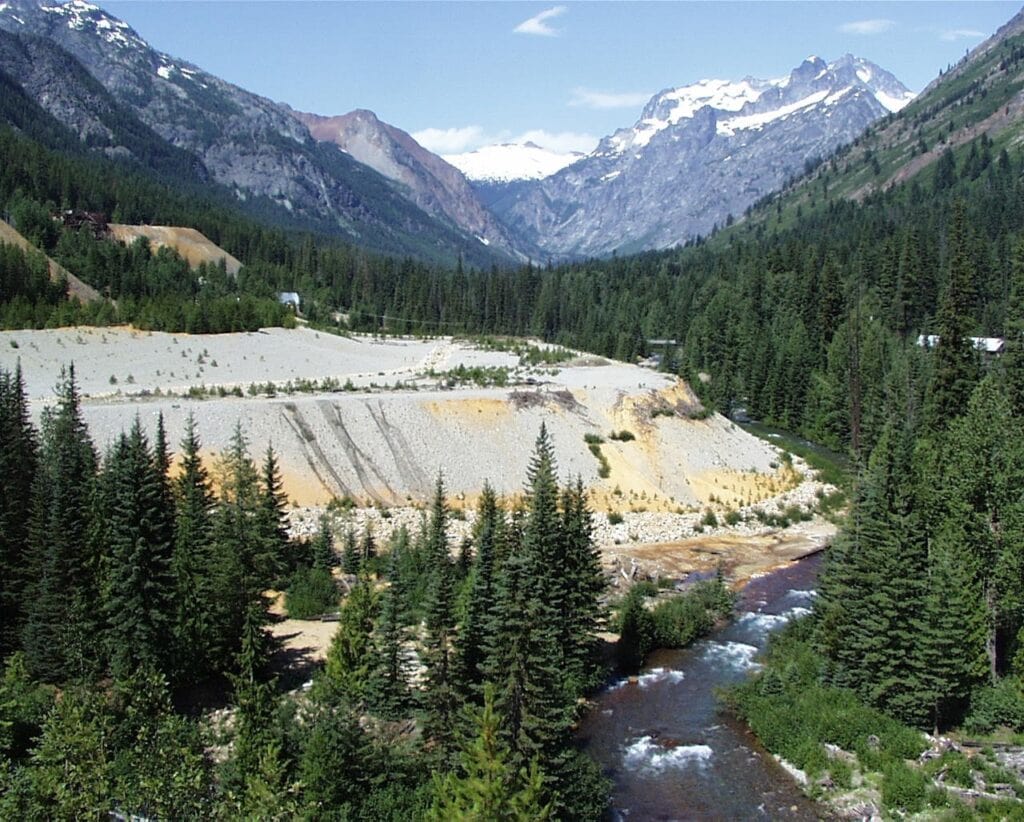
But once mining operations ceased, the land was essentially abandoned for years. Leftover mine waste eventually began leaking into the ground and a nearby creek, posing risks to aquatic life and the environment.
Stantec was brought on to facilitate the reclamation project. The site at Holden Mine is vast to say the least. There are approximately 100 kilometres of underground tunnels.
But that wasn’t the only challenge. There was also about 300,000 cubic metres of waste rock that needed to be removed. Not to mention the 8.5 million tonnes of mill tailings covering 50 hectares of US National Forest land.
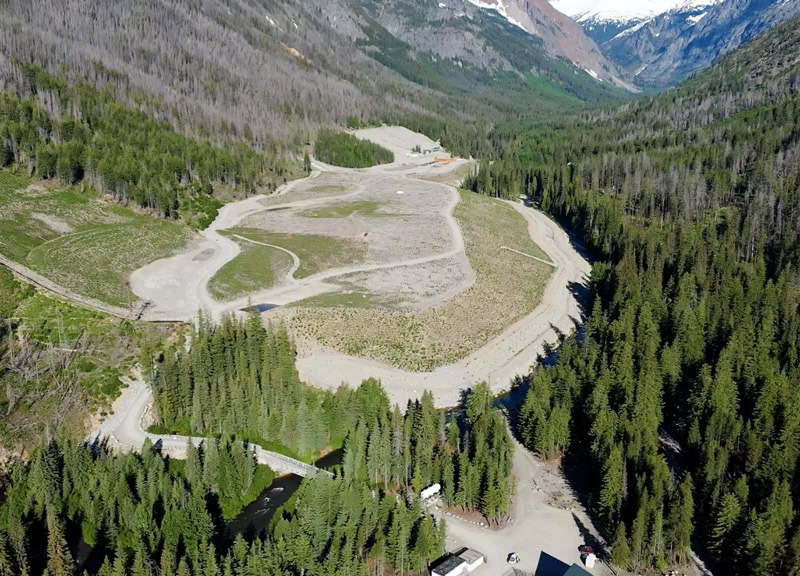
During mining operations, tailings were deposited right up against the creek with an almost vertical slope. We regraded eight million tonnes of tailings, stabilising the surface with topsoil and woody vegetation to create a successional forest.
We also realigned and restored about 275 linear metres of creek to improve aquatic habitat. Regrading of the tailings and realignment of the creek also facilitated access for the installation of a barrier wall at the toe of slope and groundwater treatment system to minimise discharge of impacted groundwater.
The combination of all these integrated solutions resulted in improved water quality and aquatic life in the creek, with species coming back sooner than anticipated.
Remediating the site required both detailed engineering design to stabilise the land and environmental engineering to restore the site so it can grow back green. Our teams focused on everything from infrastructure improvements to groundwater treatment.
Ultimately, it was one of the largest site clean-ups the state has ever seen. But now, Holden Mine has started the healing process.
Beyond the impressive clean up efforts and following forest regrowth in the past few decades, the Holden mine site has also become a prime example of digital-first closure monitoring. It uses many active sensors and telemetry at the site, enabling advanced analytics and data monitoring.
We also implemented an automated Trigger Action Response Plan (TARP) system, enabling near-real-time responses as conditions change. Due in part to these advanced data and monitoring efforts, Holden Mine is one of the first North American closure projects achieving Global Industry Standard on Tailings Management (GISTM) conformance.
Nature-based solutions for habitat restoration
Reclaiming a closed mine site isn’t just about stabilising the land. It’s also about recreating a healthy, natural habitat for plants and animals.
Our goal is to establish an ecosystem that matches the site’s surrounding environment, functions naturally and invites native plants and wildlife to thrive. Each geographic location is different and requires unique approaches determined by the wildlife present in the area and suitable vegetation .
There are a few key components of habitat restoration. As we mentioned above, planting native vegetation such as grasses, shrubs and trees can improve habitat quality. Likewise, removing invasive species can promote healthier ecosystems.
Restoring soils can create a suitable environment for new organic growth. Designing wildlife corridors can allow animals to move naturally between habitats. And reintroducing animals that may have been disrupted by previous mining activity can restore ecological balance. All these actions can support successful habitat restoration, particularly when done together.
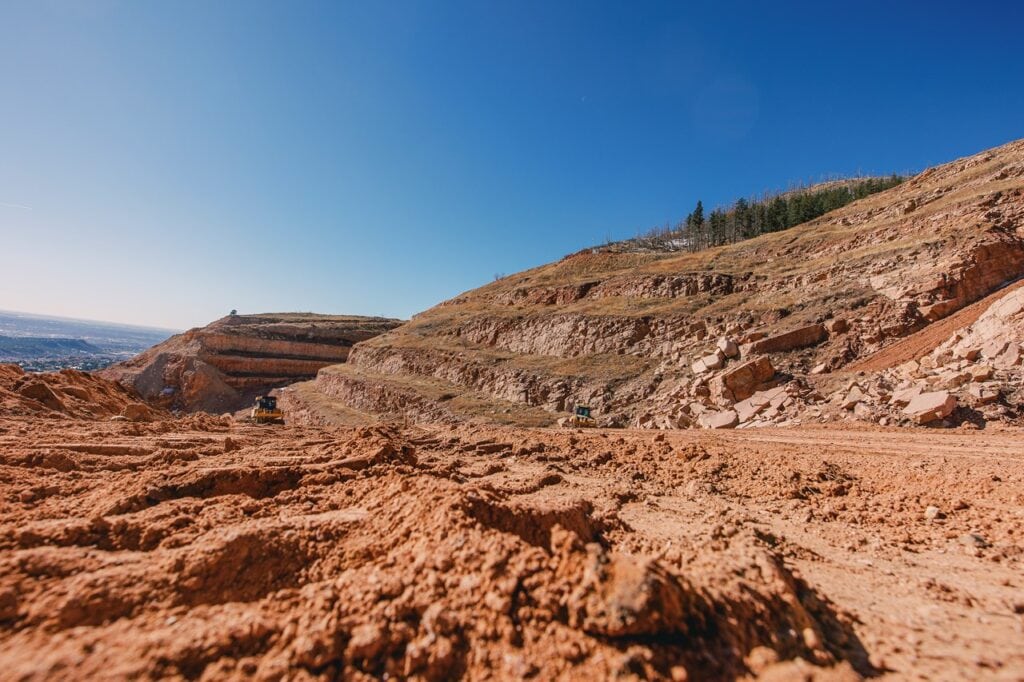
Take Pikeview Quarry in Colorado, for example. The old limestone mine was used to build much of Colorado Springs and had been foundational to the community since the early 1900s. But decades of mining activity left a visible scar in the mountainside. Once mining operations ceased, local residents wanted to do something about it.
Castle Aggregates brought on our teams to reclaim and restore Pikeview Quarry. Rehabilitating the mountainside meant using approximately 2.6 million cubic metres of material, primarily sourced from the mine, to stabilise the land.
But the restoration process was where things got interesting. We were tasked with enhancing the 130-acre natural landscape to establish a sustainable environment conducive to plants and wildlife. In the end, we turned a complex geological problem into a sustainable solution.
We planted more than 31,000 native shrubs and trees, creating a favourable habitat for wildlife such as bighorn sheep, deer, bears, bobcats, foxes, rabbits and birds. And by mid-2024, animals were already returning to the land.
In addition to providing benefits to the wildlife, Pikeview Quarry is being transformed to a recreational area for the community. With close proximity to Colorado Springs and spectacular views, the post-closure landform created an opportunity to provide open space for a mountain bike park and recreational community centre.
Nature-based solutions for stream restoration
Another important aspect of mining is the protection of streams and groundwater. Safeguarding these natural water systems with nature-based solutions can maintain habitats for both terrestrial wildlife and aquatic species.
Historically, regulations forced mine sites to rely on artificial solutions for stream restoration. The regulatory framework aimed to reduce erosion, and solutions included measures such as hard armouring of the channel with large rocks and metal wire. This approach limits ecosystems uplift.
But today, new policies permit limited erosion for these types of projects. We can now leverage the natural behaviour of streams, mimicking an undisturbed setting.
The main differences between artificial techniques and nature-based solutions lie in the recreation of a natural riparian ecosystem. Key components of a natural stream include low-flow channels, riffle-pool sequences, floodplains, vegetation and fish passages. All of which can be used to improve the environment, create habitat and promote biodiversity.
A good example of stream restoration is Four Mile Creek in Colorado. The creek supplies water to nearby communities but the watershed had been adversely affected by mining in the region.
The challenge? Leftover waste rock had led to increased arsenic levels in the water, exceeding drinking water standards. Our teams tested the waste rock to determine which metals were present. We also removed any waste rock from the channel and capped any remaining material with an evapo-transpiration cover. This helped reduce leaching into the soil and groundwater systems.
We also planted native vegetation along the creek to create consistency with the surrounding environment. The result? Water quality improved and arsenic levels fell below detection limits.
Nature-based solutions for stream restoration not only offer ESG benefits. They can also offer cost benefits through grants and incentives, as well as reduced maintenance and monitoring needs.
Mine closure plans should let nature-based solutions do the heavy lifting
Mine closure plans will only continue to become more important to mine project development. Communities want to know that mining companies will be responsible stewards of the land and its resources.
Companies that show attention, care and funding focused on environmental reclamation with resilient nature-based solutions are more attractive to investors and builds trust from the regulators and public.
Implementing nature-based solutions in mine closure plans can help demonstrate a commitment to responsibility, sustainability and the well-being of nearby communities.
And the future of the mining industry could depend on it.
This article is sponsored by Stantec