

When I started researching this story, I thought I would be writing about partnership models.
Over the past decade, the level of Indigenous participation in mining projects has changed dramatically. Consultation has given way to collaboration. Discussions about employment and procurement have evolved into conversations about shared decision-making, equity ownership and economic reconciliation. There are now frameworks, protocols and case studies that simply did not exist a generation ago.
I wanted to explore that evolution. How have partnership models changed? What does good look like today? And what lessons could mining learn from those who are leading the way?
But the more people I spoke to, the more I realised that while structures matter, relationships matter more.
Projects have finite lives. Even the biggest mines will close one day. Leadership teams move on and priorities change. Relationships, however, can outlast all of these things. They preserve knowledge, create opportunities for future generations and shape how communities and companies work together long after a particular project has ended.
According to Reuters analysis, 73% of Canada’s 504 major resource and energy projects are located on or within 20 kilometres of Indigenous territories. In many jurisdictions, relationships with Traditional Owners are becoming fundamental to how projects are conceived, permitted and developed.
In my opinion, that’s a far more interesting story. The mining industry is not just becoming more sophisticated in its approach to partnerships. It’s slowly learning that lasting value is built through relationships.

Words hold power
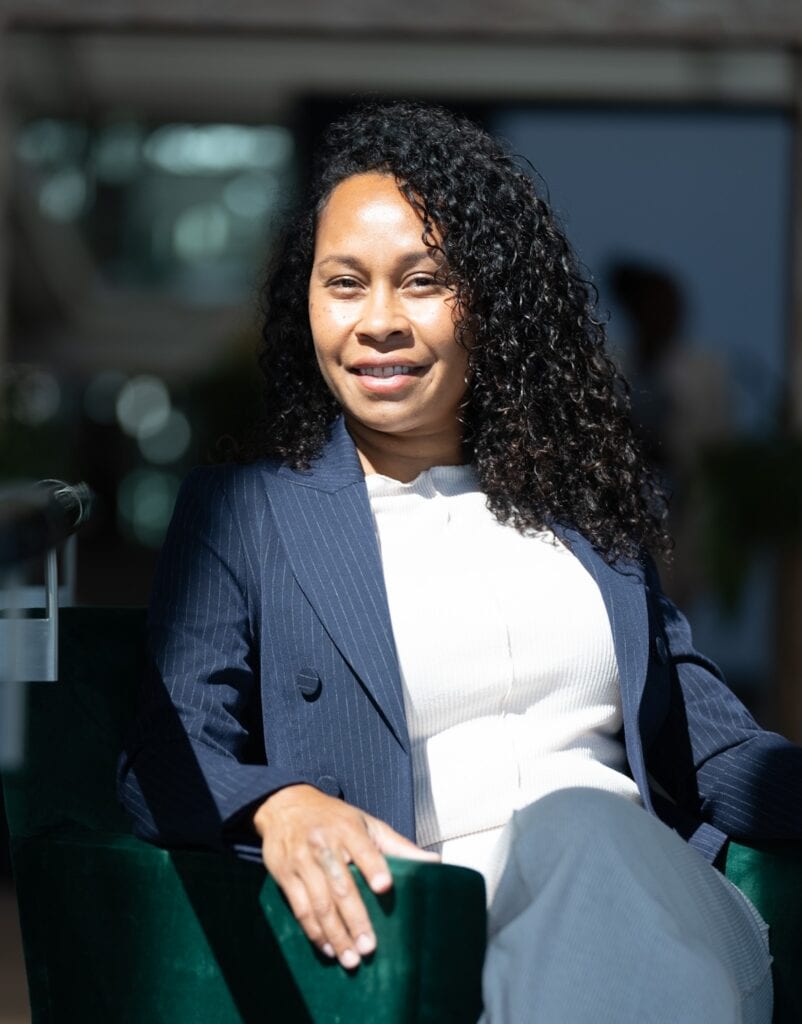
For Florence Drummond, Executive Director of the Development Partner Institute (DPI), one of the most significant shifts in recent years has been in the way people talk about the inclusion of Traditional Owners.
“The biggest improvement that I’ve seen is through language,” she said. “Particularly around inclusive language when we’re talking about partnerships, social performance and procurement diversity.”
Language may seem like a relatively minor thing, but Drummond sees it differently.
In her opinion, words create permission. They influence behaviours and shape organisational cultures. They determine what gets prioritised internally and what companies feel comfortable discussing externally.
They also signal intent. When leaders openly acknowledge the importance of Indigenous inclusion, it gives others the confidence to explore those ideas themselves.
“Fear can prevent change,” said Drummond. “So, when leaders demonstrate that it’s ok to talk about this topic, that gives other people permission to explore what’s possible too.”
She pointed to examples such as acknowledgements of country becoming more commonplace in meetings and organisations adopting language that would have been far less familiar even five or ten years ago. These shifts are encouraging because they suggest that companies are becoming more comfortable talking about Indigenous inclusion in meaningful ways.
But language is only the starting point. The more substantive change is happening in how relationships are being formed and maintained.
Through DPI’s work with Traditional Owner groups and industry partners across the globe, Drummond is increasingly seeing communities involved from the very beginning, rather than being brought in after projects are already well advanced.
“We’re now building relationships in a different way,” she explained. “Traditional Owners are now sitting at the table earlier, participating in conversations sooner and helping to shape projects rather than simply responding to them.”
For an industry accustomed to operating at pace, this presents its own challenge; relationships do not move according to project schedules. Mining companies are under constant pressure to move faster, deliver more efficiently and create certainty. Trust, however, cannot be accelerated.
“That point of friction is still there,” Drummond told me. “How do we make sure that we can move together?”
Relationships are inherently messy. They require dialogue, patience and a willingness to sit with uncertainty. They also demand that people listen and take a longer view. That long-term thinking is central to Drummond’s vision of what mature partnerships look like.
For her, projects are only one part of the equation. Communities are ecosystems, made up of families, businesses, young people and future generations who will all experience the effects of decisions made today in different ways.
That thinking sits behind initiatives such as DPI’s Youth Salons and Regional Catalyst programmes, which are designed to bring different groups together and encourage broader conversations about economic development and regional futures.
“If youth are informed, if everyone is informed and we’re thinking about multi-generational impact, inclusion, participation and economic development… then that’s the beginning of a mature partnership,” said Drummond.
The weight of generations
The subject of multi-generational responsibility came up several times during our conversation. Mining often frames decisions around project life or return-on-investment horizons. But Indigenous perspectives frequently work to entirely different timescales, and decisions are often considered in terms of generations rather than quarters or even decades.
Viewed through that lens, relationships start to look less like ‘soft’ outcomes and more like strategic assets.
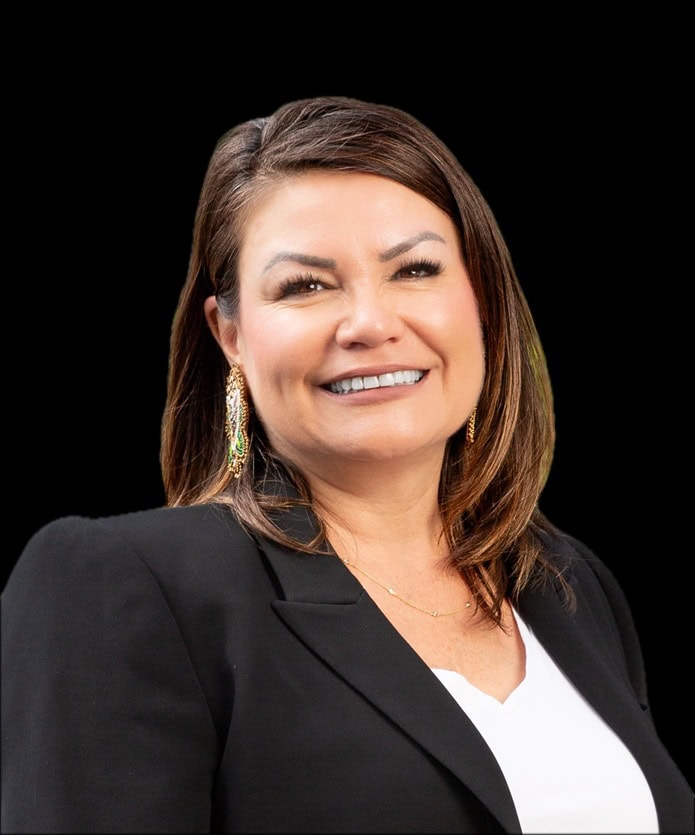
Saga Williams, Senior Advisor, External Relations at the First Nations Major Projects Coalition (FNMPC), has witnessed this shift first-hand. “We’re no longer bystanders in the development happening around us,” she said.
The growth of the coalition itself reflects this shift. What began as a regional initiative in northern British Columbia now represents more than 185 First Nations members across Canada. The organisation supports communities on major projects across the country, helping to build capacity around governance frameworks, impact assessments and equity negotiations.
For many communities, development historically happened around them rather than with them. Engagement often meant being informed of decisions that had already been made and being asked to respond within parameters set by others.
That situation is changing. Williams described communities that are increasingly participating in environmental assessments, helping to shape project governance and becoming economic partners in developments of all kinds (not just mining related). The FNMPC provides free toolkits to help support communities with the information they need on their development journeys.
“We want to be part of the evolution of mining as it happens,” she explained.
Importantly, participation also means having the ability to identify places where development may not be appropriate because of environmental sensitivities or cultural significance.
Some of the most successful relationships that Williams has seen involve companies that have moved beyond seeing Indigenous Communities and First Nations as project risks or regulatory hurdles and instead recognise the enormous value they can bring.
“The success of Indigenous inclusion and partnerships has increased the value add to mining projects significantly,” she said. “Those benefits can take many forms.”
For example, Traditional Owners can offer long-term perspectives, deep knowledge of place and a vested interest in ensuring developments are managed responsibly. Strong relationships can also help create certainty around projects and improve regulatory outcomes.
Owning the outcomes
Perhaps most importantly, strong relationships can create possibilities that wouldn’t normally emerge from more transactional forms of engagement. For instance, many communities today are taking ownership stakes in transmission lines supplying power to mines or owning and maintaining the roads that provide site access.
Some are going a step further and participating directly in governance structures or taking equity stakes in project themselves. Reuters recently reported that there are now 165 energy and related infrastructure projects across Canada that are partially or wholly Indigenous-owned.
Meanwhile, the FNMPC is involved in major projects with a combined capital value exceeding C$45 billion, many of which include equity participation opportunities for Indigenous Communities. What would have seemed exceptional only a few years ago is increasingly becoming part of mainstream project development.
While ownership, Williams was quick to point out, is not an end in itself, it does create choice.
Communities need economic foundations that allow them to invest according to their own priorities, whether that means strengthening governance, supporting language revitalisation, improving education outcomes or creating opportunities for young people.
“We have to create our own sources of revenue to reinvest back into our communities,” she explained. Economic prosperity and good governance, she argued, feed one another.
This is a perspective that broadens the conversation considerably. In this way, mining projects cease to be pure economic developments and become mechanisms through which communities can build capacity, resilience and long-term wellbeing.
Which brings us back to relationships once again.
Partnership in practice
Few examples illustrate this better than the partnership between the Fort McMurray First Nation Group of Companies and engineering firm, Stantec.
Established in 2013, the formal partnership initially focused on providing environmental services but has since expanded into engineering, surveying, geotechnical services and project management for mines and other infrastructure projects.
Jennifer Mills, Director of Indigenous Partnerships at Stantec, told me that the intention was never to create a relationship around a single project. “The intention was to have a long-term relationship and for it to grow into many projects,” she said.
The emphasis from both parties is not on projects but on continuity, shared values and capacity building. The aim is to create opportunities for the Nation, invest in local communities and support future generations all of whom sit at the centre of the relationship.
For Chris Beausoleil of Fort McMurray First Nation Group (FMFN), even the word partnership does not fully capture its essence. “For me, it’s more of a relationship,” he said.


He described the Cree concept of ‘wahkotowin’ or kinship. This is a wholistic way of understanding relationships that extends far beyond interactions between people.
“It’s our relationship or connection with every aspect of life,” Beausoleil explained. “It’s not just a relationship between people. It’s also that relationship with the birds, with the water, with the air… everything.”
This way of thinking – or systems thinking, if you will – has influenced practical outcomes from the partnership in unexpected ways. Take mine reclamation, for instance. Historically, this process was approached from an aesthetic perspective: plant some grass and trees to create something visually pleasing.
But FMFN community elders brought a different perspective. In their eyes, medicinal plants needed to return. The final habitat needed to properly support local wildlife, and landscapes needed to function ecologically rather than simply appear restored.
As Beausoleil put it: “Bears and wolves don’t really care for nice-looking parks.”
In this case, Traditional Knowledge didn’t complement technical expertise; it challenged it and expanded the definition of success.
The relationship between FMFN Group and Stantec has also supported initiatives beyond the scope of environmental management.
One example is the development of a Community Knowledge Keepers app that records the locations of community hunting areas, medicinal plants and culturally significant places while also preserving oral histories from elders. Many of those elders have since passed away. Without that work, much of that knowledge may have been lost.
The same relationship has also opened doors for community members to pursue careers in nursing, law, policing and a range of other fields.
Relationships are the cornerstone of trust
What stands out in these examples is not just the structure of the partnership, but what it makes possible over time. When conversations focus too heavily on models and frameworks, it can be easy to miss the quieter yet very significant outcomes that sit beneath them.
These are not things that can be easily measured or captured in an agreement, but they’re often what endure to form the foundations of trust.
I suspect this is why so many of the conversations for this article returned to the same point. The mining industry has made progress in how it approaches partnerships, but relationships operate on a different level.
Projects will always have an end point, but if built well, relationships can continue long after. And for an industry that’s increasingly thinking about long-term value, that understanding matters.
If you want to read more about development partnerships in mining, click here.