


When I worked in sustainability for a metals company, a surprising amount of my job depended on knowing where things were.
An auditor would arrive and I needed to know which document contained the evidence they wanted. A customer would send an environmental, social and governance (ESG) questionnaire and I would have to find the answers, often across different teams and operations.
If I needed information from a mine in the DRC or Brazil, finding it could take weeks or months. There were PDFs, spreadsheets, reports, policies and certificates, and a lot of knowledge that simply lived in people’s heads.
I remember this as one of the more mundane parts of the job. It was also expensive. I recently spoke to a company that spends around 18 months preparing the evidence book for a ResponsibleSteel certification.
More metal, more evidence
I’ve been thinking about this again, because we are asking the mining industry to do two things at once: we need it to produce considerably more metal, and we need considerably more information about how that metal was produced.
The first part is well understood. The IEA expects demand for critical minerals to almost double by 2040 under current policy settings. Lithium demand is expected to more than triple, while copper sees the largest increase by volume, adding around seven million tonnes of demand. Even with projects currently announced, the IEA still sees a 25% copper supply gap in 2035.
The second part receives less attention. Take a tonne of copper. Before it reaches a cable, grid or electric vehicle, several companies may have mined, processed, refined, traded and manufactured it.
Along the way, customers increasingly want to know where it came from, the emissions associated with it, whether the producer meets a particular responsible sourcing standard and what evidence sits behind those claims.
For carbon alone, that means looking well beyond the company selling the material. The ICMM estimates that Scope 3 emissions average around 75% of a company’s total emissions and can reach 95% in mining and metals because of the energy intensity of processing. Across sectors, CDP and Boston Consulting Group found that companies reported supply-chain emissions 26 times greater, on average, than emissions from their own operations.
So a large part of what a company needs to know about its footprint is information somebody else holds.
The cost of asking again
Having sat on the receiving end of these requests, I know what happens next. The questions move upstream.
A customer asks its supplier for emissions data. The supplier finds the calculation and the evidence behind it. Another customer asks for similar information, but in another format or against another framework. A bank wants something else. An auditor needs to see the original document. A certification requires evidence organised against its own criteria.
None of these requests looks particularly unreasonable by itself, but put them together and the workload becomes substantial.
It gets harder in critical minerals because the requirements do not follow one neat set of rules. They depend on the commodity, where you produce it, where you sell it and where you sit in the value chain. A copper producer selling into several markets may be dealing with customer requirements, certification schemes and regulations from several jurisdictions at the same time. A refiner buying feed from third parties inherits another set of responsible sourcing questions about its suppliers.
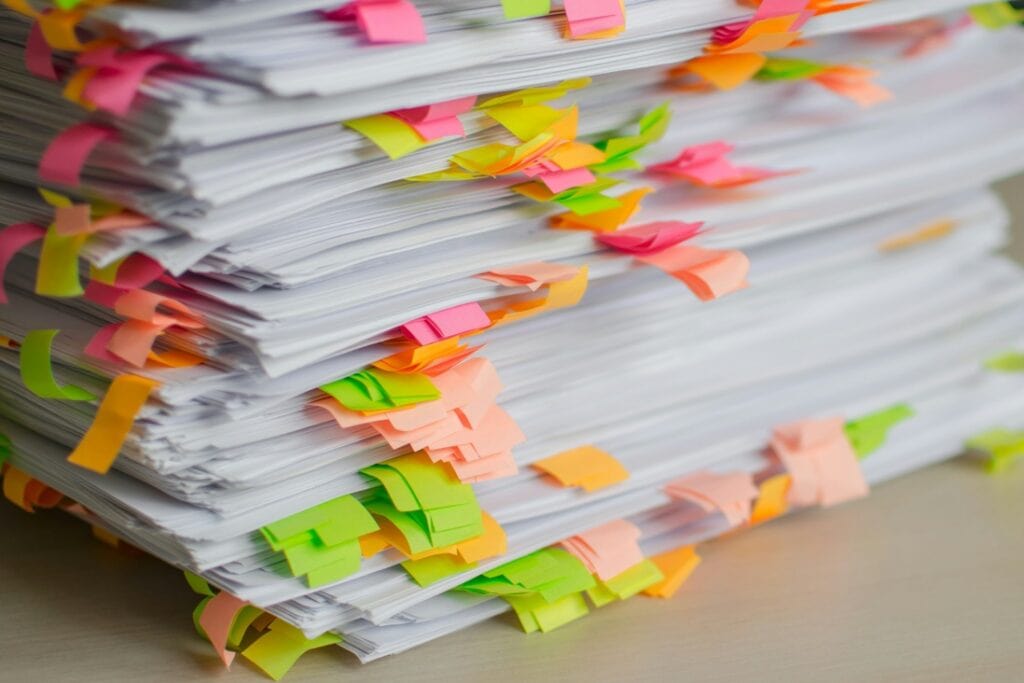
I have spoken to companies supplying 20 or 25 customers across different jurisdictions and trying to work out which requirements to address first with a limited budget. This is daily operational work, carried out by people who could otherwise be spending that time on the actual risks those requirements were designed to address.
And the amount of checking is increasing. An IEA and OECD survey published this year looked at more than 80 companies across copper, lithium, nickel, cobalt, graphite and rare-earth supply chains. Among the barriers companies identified to wider traceability were limited interoperability between systems and the difficulty of transmitting information through complex supply chains.
That description is very familiar. Often the evidence exists. It may have been collected, reviewed and provided before. But the next person who needs it may have no practical way of knowing that, finding it or understanding whether it answers their particular requirement. So they ask again.
Proof becomes part of the product
There is a business consequence to all of this. Sustainability information in mining is used for much more than a sustainability report. It can affect whether a company gets certified, whether a customer will buy its material, whether an investor is comfortable providing capital and whether it can sell into a particular market.
For a junior miner trying to secure an offtake, or a producer trying to sell into a new jurisdiction, the ability to demonstrate how it operates can matter directly to revenue.
That matters even more when supply chains have to change quickly. Critical mineral markets are concentrated, trade restrictions are growing and companies are being pushed to understand alternative sources. The IEA reports that, excluding rare earths, the leading refining country accounted for an average 72% of refined supply across the critical minerals it assessed in 2025.
A change in trade policy can leave a buyer looking for a new supplier much faster than anyone expected. And the new supplier still has to be checked.
We should absolutely know more about the metals we buy. I spent my career in sustainability because I believe mining has to be safe, responsible towards communities and the environment and able to demonstrate that. More scrutiny has helped raise standards across the industry.
But I also know what it feels like to spend weeks looking for information that already exists.
The energy transition will require more mines, more suppliers and more relationships across the value chain. We’re going to generate a lot more evidence along the way. Making that evidence easier to find, verify and use again would leave sustainability teams with more time for the part of the job that matters: understanding where the problems are and working with people to fix them.
Continue the conversation… Anastasia Kuskova is CEO and Co-Founder of beSirius, which builds AI for assurance and due diligence in metals and minerals. Previously Chief Sustainability Officer at ERG, she co-developed Re|Source and contributed to the World Economic Forum’s Mining & Metals Platform. She was named one of the 100 Global Inspirational Women in Mining and led beSirius to win the COP29 Sustainable Innovation Challenge. Connect on LinkedIn.
Click here to read more on transparency and accountability in the mining industry.