


When people talk about lithium, the conversation tends to begin with demand. How much will we need? Where will it come from? And are there enough projects in development to supply the battery industry?
These are all important questions, of course, but they overlook another crucial step. Finding lithium does not automatically guarantee the production of a battery-grade chemical. Between the resource and the battery sits a complex processing stage that’s expensive to build, difficult to ramp up and absolutely fundamental to supply security.
In its Global Critical Minerals Outlook 2026 report, the International Energy Agency (IEA) found that refining concentration continued to rise in 2025, while investment in lithium companies fell by around 40%. It also highlighted an imbalance: mining projects are moving forward faster than the refining and downstream capacity needed to handle their output.
In other words, having more lithium in the pipeline will not help if we can’t turn it into a usable product.
The chemistry question
Battery-grade chemicals typically exceed 99.5% purity and producers must maintain that quality through commissioning and ramp-up, even when mineralogy and impurity levels change.
The product they’re being asked to make is changing too. A few years ago, much of the focus centred on lithium hydroxide as nickel-rich battery chemistries gained ground. Today, lithium carbonate is firmly back in play alongside the rapid growth of lithium iron phosphate (LFP) batteries. The IEA reports that LFP accounted for more than 55% of EV batteries deployed globally in 2025.
A lithium processing plant is a long-lived, capital-intensive asset, while battery markets can change direction relatively quickly. At the same time, developers are looking at lower-grade deposits, different hard-rock minerals and a wider range of brines to bring in new supply. These feedstocks can deliver higher volumes, more difficult impurities and more abrasive or corrosive operating conditions.
In these scenarios, processes will need to be more selective as well as robust enough to handle hundreds of tonnes or cubic metres of material every hour.
“The biggest investments and the biggest risks are concentrated in mineral processing and refining,” said Marika Tiihonen, Technology Manager for Lithium at Metso. “Producers need a robust and flexible process plant that can deal with variations in the feedstock, while still maintaining recovery and a consistent battery-grade product.”
Making simplicity work harder
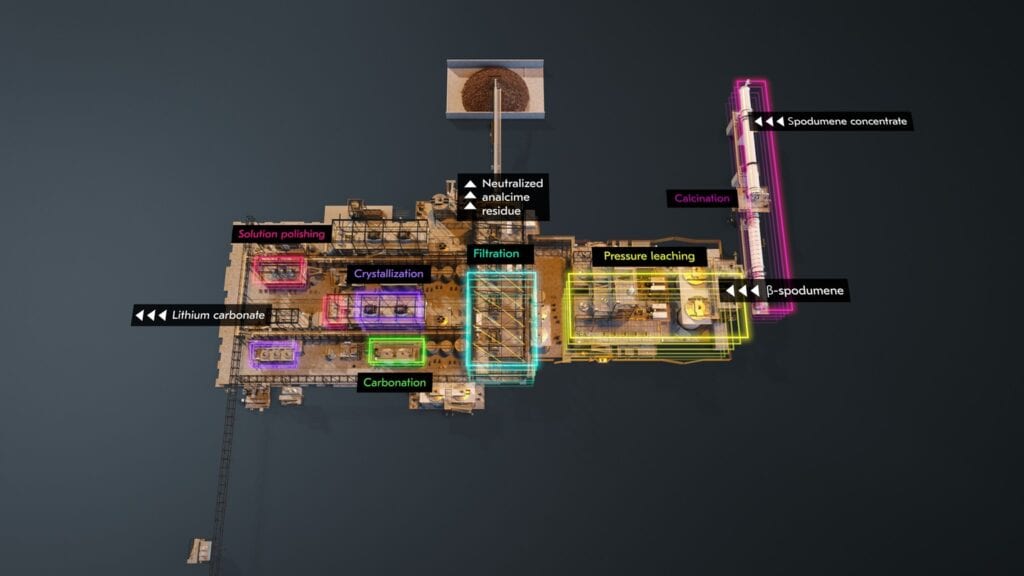
These requirements are the basis for Metso’s enhanced lithium carbonate process. Developed for spodumene concentrate, it combines thermal and hydrometallurgical technologies to produce battery-grade lithium carbonate in a single pass.
At the heart of the flowsheet is soda pressure leaching, which extracts lithium selectively while leaving more of the impurities behind. An enhanced carbonation-decarbonation stage then produces the final carbonate without creating the unwanted sodium sulphate by-product associated with some conventional routes. The remaining mineral residue is neutralised, which makes it easier to dispose of or, potentially, reuse.
“The main target was to refine lithium carbonate from hard rock in the fewest possible steps, sustainably and at a lower cost,” Tiihonen explained. “It’s a simple process, but we’ve also kept product purity at the centre of its development.”
That simplicity is important. Every extra stage adds equipment, reagents, interfaces and control requirements. It also creates another place where variability can creep in or where the plant can lose availability.
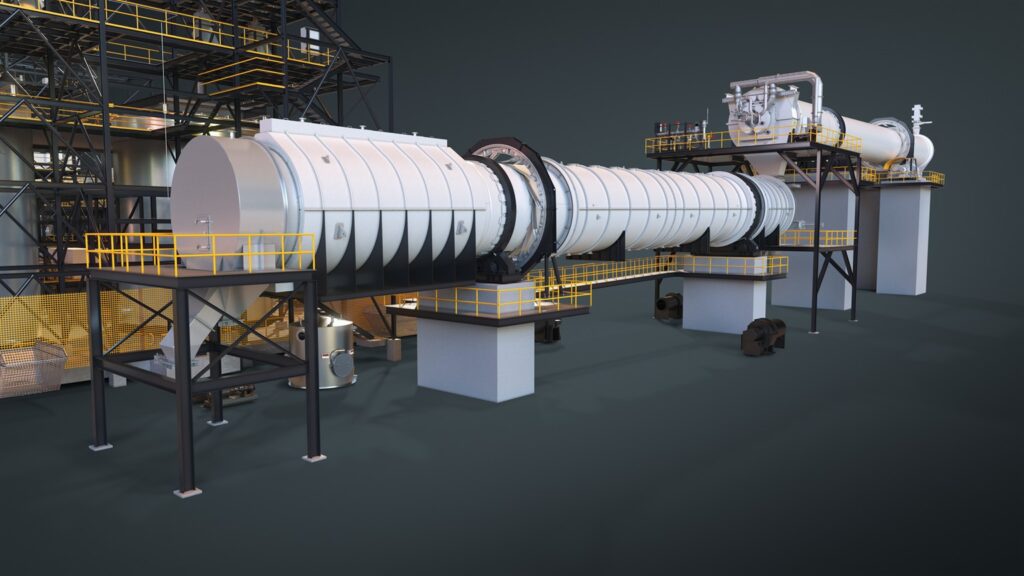
Reducing the number of processing steps can help lower capital and operating costs, make the plant easier to run and support a faster, more stable ramp-up. With lithium prices, energy costs and chemical prices all capable of moving quickly, a shorter flowsheet is not just smart engineering; it’s a way of reducing risk.
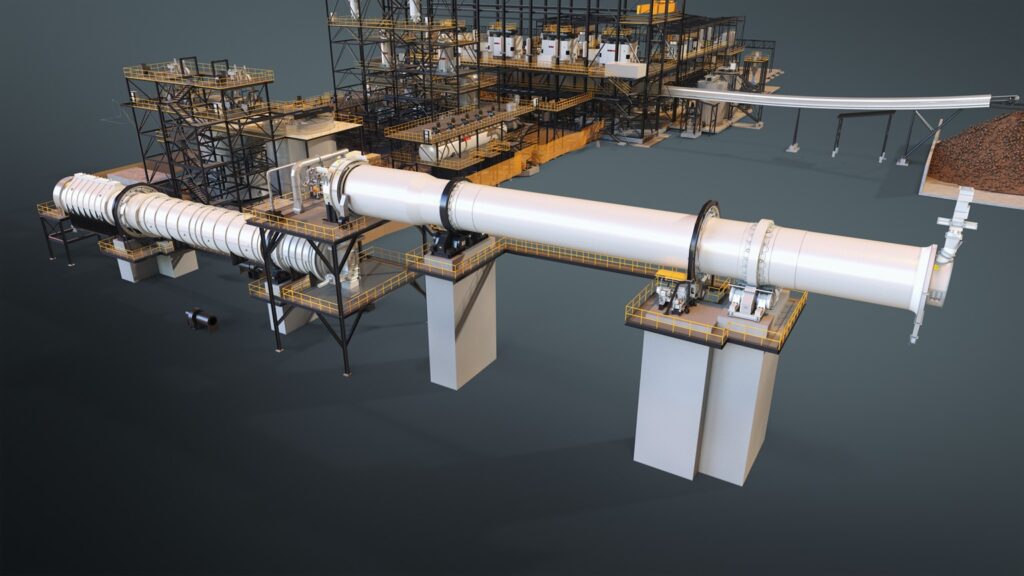
It also illustrates why lithium processing shouldn’t be approached as a collection of separate pieces of equipment. Every stage, from beneficiation to calcination, leaching and purification, to filtration and water treatment is linked. A decision made in one area will almost always be felt in costs or performance elsewhere. Testing the complete flowsheet can help to uncover interactions before they become expensive operating problems.
Designing plants for change
Of course, no flowsheet can take the uncertainty out of the lithium market. However, plants can be designed to allow fast responses to changes. And considering process flexibility, modular equipment and use of digital tools at the start of a project can allow their benefits to be maximised.
For instance, online analysis, automation and metallurgical digital twins can help teams spot changes in the plant feed earlier, test different scenarios without disturbing production and respond before recovery or product quality begins to suffer.
There’s also another facet to resilience that will be an important future challenge: closing the loops within the plant. Recovering waste heat, recycling water, finding uses for residues and regenerating process chemicals can help reduce exposure to scarce resources and volatile input prices, while also cutting emissions and waste.
“Closing the loops is a priority,” explained Tiihonen. “That means reusing waste heat, recovering as much water as possible and, eventually, finding ways to reuse side streams. It will require additional investment and it may need to happen step by step, but it’s the direction the industry needs to take.”
Tiihonen is equally clear that technology alone will not determine which projects succeed in the future. “Companies also need a team of experts who can work towards the same target and achieve more together than they could individually,” she said.
It’s an easy point to overlook, but processing knowledge is becoming increasingly scarce. Plants need people who understand how the whole system behaves, not just one part of it.
Going forward, the strongest lithium projects will be the ones that can repeatedly turn variable raw materials into the product the market needs, at the right quality, cost and scale. And Metso’s new carbonate process provides a way to make that mandate possible.
This article is sponsored by Metso.
Read more from Metso here.