

For much of mining’s history, tailings have been viewed solely as the unavoidable by-product of mineral processing; a cost to manage once the valuable minerals have been recovered. But that perspective is changing.
As miners respond to declining ore grades, increasing demand for critical minerals, water scarcity and evolving environmental expectations, tailings management has become far more than an operational necessity. It’s now fundamental to managing risk, maintaining a social license to operate, improving resource efficiency and supporting the long-term sustainability of mining operations.
“It’s no longer enough to think about tailings as simply the end of the process,” says Marko Kilkki, Director, Tailings Solutions at Metso. “The decisions made throughout the flowsheet influence how much value is recovered before material reaches the tailings facility, the quality of the tailings stream, the amount of water that can be reclaimed and the overall efficiency, sustainability and long-term economics of the operation.”
The result is a shift in thinking, from managing tailings at the back end of the plant to optimising the entire process from the mine through to final deposition.
Looking beyond the tailings storage facility
Tailings management has traditionally focused on transporting, storing and monitoring waste safely. While these remain fundamental priorities, today’s challenges demand a broader perspective.
Mining companies are being asked to produce more metals with fewer natural resources, reduce greenhouse gas emissions, minimise freshwater consumption and demonstrate responsible stewardship throughout the life of the mine.
At the same time, many operations are processing increasingly complex ores. Lower head-grades mean that significantly more material must be mined and processed to produce the same amount of metal, placing additional pressure on comminution circuits, water supplies and tailings storage facilities.
“Every tonne that enters the concentrator influences the tailings stream,” explains Kilkki. “If we want to improve tailings management, we need to optimise the entire beneficiation process, not just the final dewatering stage.”
Recovery starts long before tailings
One of the biggest opportunities lies in reducing the amount of valuable material that reaches the tailings storage facility in the first place.
Historically, mineral processing has focused on recovering particles within a relatively narrow size range. Very fine particles have often escaped recovery because they’re difficult to float efficiently, while coarse particles frequently required additional grinding before liberation.
Today, advances in flotation technology are changing that picture. Advanced flotation technologies improve what is recovered before material reaches the tailings stream. Fine particle flotation reduces valuable mineral losses, while coarse particle flotation rejects waste earlier in the process, reducing downstream energy and water demand and changing the characteristics of the tailings that ultimately require management.
The result is a plant that not only recovers more valuable minerals but also generates waste that is easier to process.
“It’s about extracting maximum value from every tonne of ore,” says Kilkki. “Every percentage point of additional recovery represents more saleable product, while every tonne of barren material rejected earlier reduces the burden on the rest of the operation.”
Water recovery becomes a strategic advantage
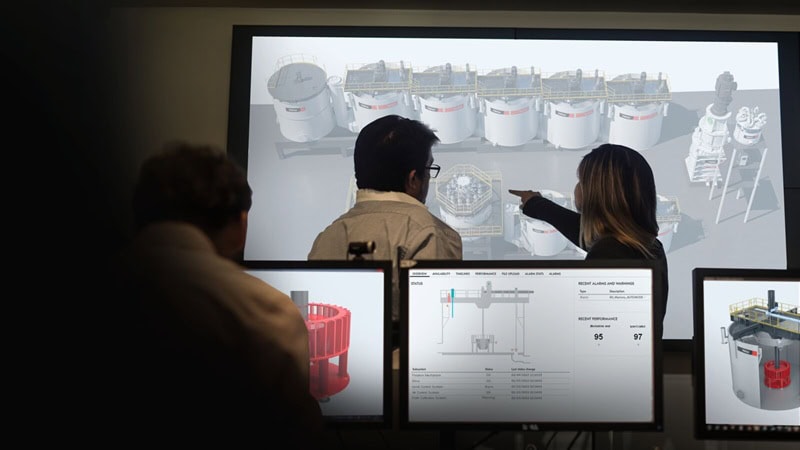
Water is rapidly becoming one of the mining industry’s most valuable resources. Many of the world’s major mining regions are experiencing increasing water stress, while permitting new water supplies is becoming progressively more challenging. In some regions, mines are increasingly dependent on desalinated seawater, which can significantly increase both capital and operating costs.
Maximising process water recovery from tailings has therefore become a strategic priority not only to reduce freshwater consumption and environmental impact, but also to minimise water-related operating costs and improve long-term operational resilience.
Modern thickening and filtration technologies enable mines to recover and return significantly more process water back into the plant before tailings are deposited, reducing freshwater demand while improving operational resilience. Recovering water at this stage is particularly important, as water retained in conventional tailings facilities may be lost through evaporation, or trapped within the deposited tailings making it more difficult to recover efficiently.
In addition, water decanted from a tailings storage facility has often aged considerably, and changes in its chemistry can adversely affect mineral recovery or increase the consumption of reagents and the cost of process water treatment.
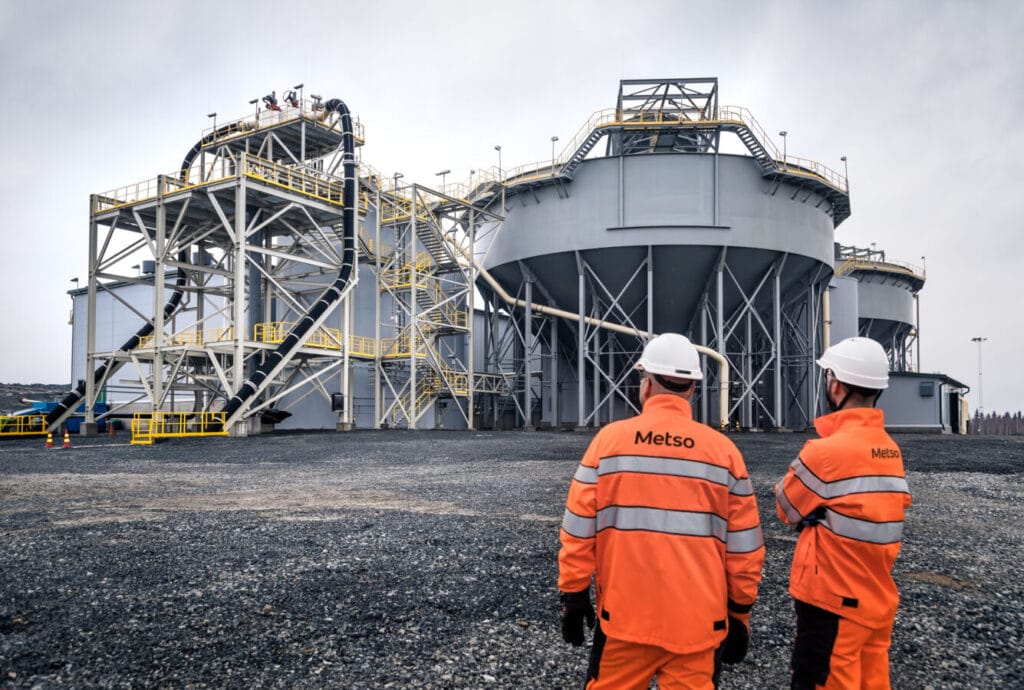
The long-term value of this approach is illustrated at Yara’s Siilinjärvi phosphate operation in Finland, where Metso’s paste tailings solution enabled the mine to recover more process water while extending the operational life of its tailings storage facility.
By producing higher-density tailings before deposition, the operation reduced the footprint required for storage and deferred the significant capital investment associated with constructing additional storage capacity. The project demonstrates how investments in tailings technology can simultaneously improve operational economics and environmental performance.
“The right solution depends entirely on the operation,” says Brian Berger, VP Thickening and Clarification at Metso. “There is no universal answer. Success comes from understanding the ore, the climate, the site’s water balance and the mine’s long-term objectives before selecting the appropriate technology.”
Integration creates greater value
Increasingly, mining companies are discovering that the greatest improvements come not from individual technologies but from how those technologies work together. The interaction between grinding, classification, flotation, thickening, filtration, pumping and process control determines the overall performance of the concentrator.
Optimising each stage in isolation can sometimes improve local performance while reducing efficiency elsewhere. Instead, many operations are adopting a flowsheet-wide approach that considers the entire process as an interconnected system.
This philosophy enables engineers to optimise recovery, water recycling, energy consumption and tailings handling simultaneously, rather than making trade-offs between competing objectives.
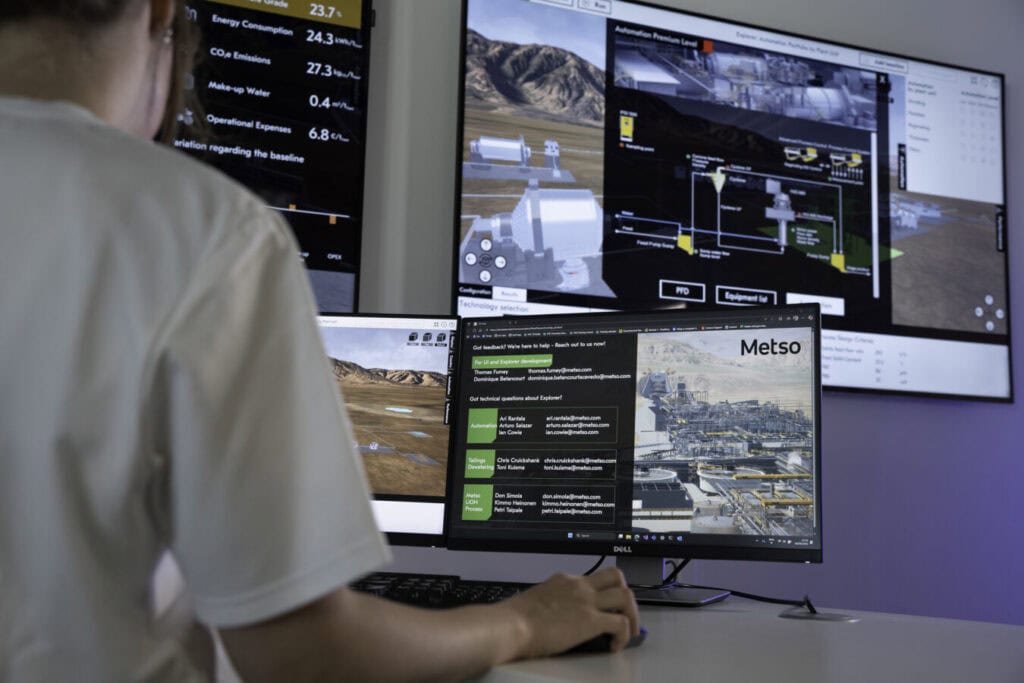
Digital technologies are further enhancing this integrated approach. Advanced process monitoring, equipment analytics and predictive maintenance help operators maintain stable performance despite changing ore characteristics and operating conditions.
“Digitalisation gives operators better visibility across the complete flowsheet,” explains Berger. “That allows faster decision-making, improved equipment reliability and more consistent process performance.”
Supporting responsible mining
As the mining industry works to supply the minerals needed for the global energy transition, responsible tailings management will continue to receive increased attention from regulators, investors and communities. Meeting these expectations requires more than adopting a single technology. It requires combining process expertise with equipment, digital tools and lifecycle support to optimise performance throughout the operation.
For Metso, this means helping customers evaluate the complete process, from liberation and recovery through to dewatering, water recycling and tailings disposal to identify opportunities that improve both operational performance and environmental outcomes.
Ultimately, the best positioned mines for the future will be those that view tailings not as the end of the process, but as an opportunity to improve the entire operation. Because when every tonne of ore, every cubic meter of water and every kilowatt of energy counts, tailings management becomes far more than waste management; it becomes a competitive advantage.
This article is sponsored by Metso.
Read more from Metso here.