

There was no shortage of good news at this year’s UK Mining Conference, held in Cornwall in June.
Companies shared updates on lithium, tin, tungsten and other critical minerals projects edging closer to production. Discussions extended beyond mining to cover processing, refining, recycling, geothermal energy, investment and skills. More than 600 delegates from 295 organisations representing 21 countries came together to discuss how the UK could strengthen domestic supply chains for critical materials.
Five years ago, many of these conversations simply weren’t happening. But today, there’s genuine momentum. Cornish Metals is progressing towards the reopening of South Crofty with backing from the National Wealth Fund. Cornish Lithium continues to advance its hard rock and geothermal lithium projects. HyProMag has opened the UK’s first commercial rare earth magnet recycling facility in more than two decades, while Geothermal Engineering Ltd has begun producing lithium from geothermal waters in Cornwall. These are exactly the kinds of projects the UK’s Critical Minerals Strategy was designed to encourage.
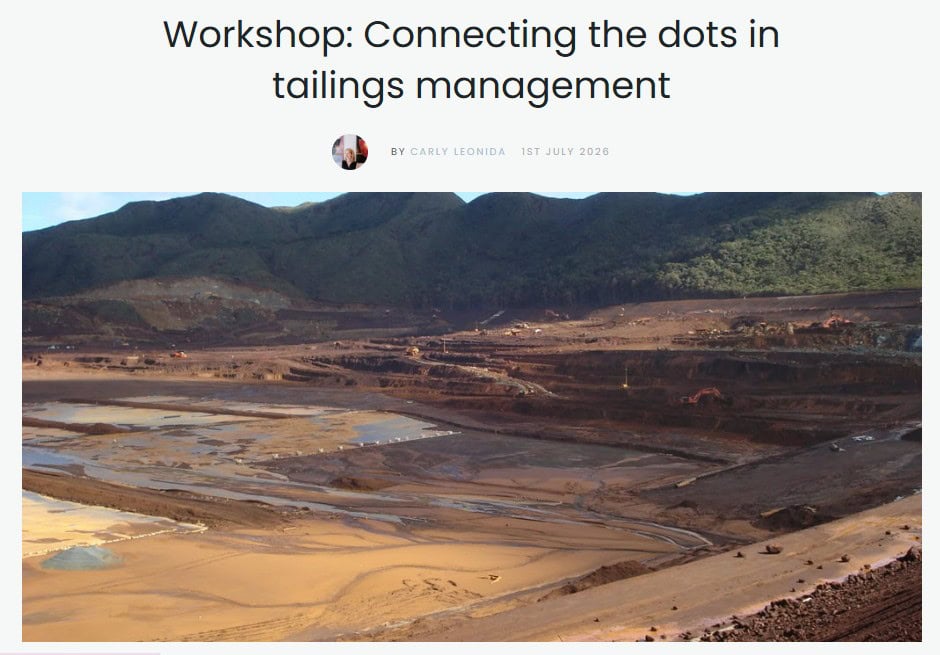
But as I listened to presentations and caught up with people between sessions, I found myself asking: is this momentum enough? Because while individual projects are making steady progress, I’m less convinced that we’re accelerating the UK critical minerals ecosystem as a whole.
The government’s Vision 2035 strategy sets out an ambitious destination. By 2035, it wants 10% of UK demand for critical minerals to be supplied from domestic production, 20% from recycling, and greater refining and processing capability established here in the UK. Those ambitions are justified given the growing importance of secure mineral supply chains, but they’re also only nine years away. If we’re honest, it feels unlikely we’ll get there at our current pace.
One conversation from the conference has stayed with me. Professor Frances Wall from the University of Exeter (winner of the event’s lifetime achievement award – big up Frances!) told me that many mining companies are not making full use of the research and innovation funding that’s already available to the sector and that stronger links with funding bodies could help more projects move forward.
She’s right. This isn’t just about whether the government should provide more money, although there’s undoubtedly always room for further investment. Nor is it a criticism of the industry; if anything, collaboration within the sector has never been stronger. But too much still depends upon individuals joining the dots themselves.
The UK has built an impressive support network around critical minerals. Innovate UK, the Advanced Propulsion Centre, UK Export Finance and Catapult centres are just a few examples. And the UK government recently announced a further £50 million to support extraction, processing and recycling projects, alongside initiatives to strengthen downstream manufacturing. Yet navigating this landscape remains far from straightforward, particularly for smaller companies with limited resources.
I think that’s where the next phase of the UK’s critical minerals journey needs to focus; on making it easier for good developers to find the support that already exists. Not viewing exploration, processing, manufacturing, skills and research as separate policy areas, but as interconnected parts of the same industrial system.
Other countries have recognised that supporting individual companies and mines isn’t enough. Canada has increasingly aligned infrastructure funding, Indigenous partnerships and downstream processing alongside project development. Australia has also integrated critical minerals into a broader industrial strategy spanning mining, manufacturing and exports. Both recognise that competitive advantage comes not simply from what lies beneath the ground, but from how effectively an entire value chain is developed.
The UK is moving in the same direction, but it needs to move faster. That doesn’t necessarily mean spending more money. It means connecting people, projects, institutions and funding more effectively. It means helping companies navigate the ecosystem rather than expecting them to go it alone. And it means recognising that every delay in permitting, financing, demonstration, processing or skills development slows the whole value chain, not just one project.
Leaving Cornwall, I was more optimistic about the UK’s critical minerals future than I’ve been for some time. But optimism alone won’t deliver the ambitions set out in Vision 2035. Only execution will. And to do that, we need to get better at connecting the dots.
Throughout September, we’ll be exploring critical minerals and the energy transition from every angle. If you haven’t already, subscribe to The Intelligent Miner to receive full access.
Carly
Editor’s pick
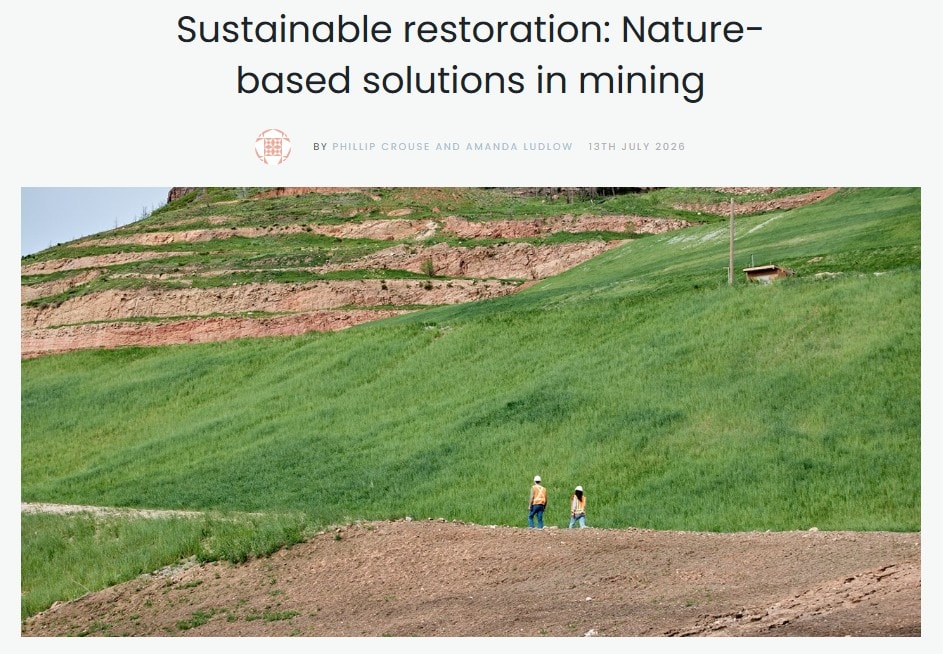
Phillip Crouse and Amanda Ludlow of Stantec explore how working with natural systems can improve environmental outcomes, strengthen community trust and create more resilient mine closure strategies.
Top three articles in July and August
Our three most-read articles during the past two months. Click the pictures to read.

Become a subscriber
To access our monthly reading list and a host of other exclusive content, become a member of The Intelligent Miner community. Click here to find out more.
Follow us
Follow us on LinkedIn, Instagram and X to keep up to date with with all our latest developments
Copyright © 2026 The Intelligent Miner
All rights reserved