

When writing about mineral exploration, it’s always hard to avoid the cliché ‘needle in a haystack’ comparison. But the more research I did for this article, the more inaccurate I found that analogy to be.
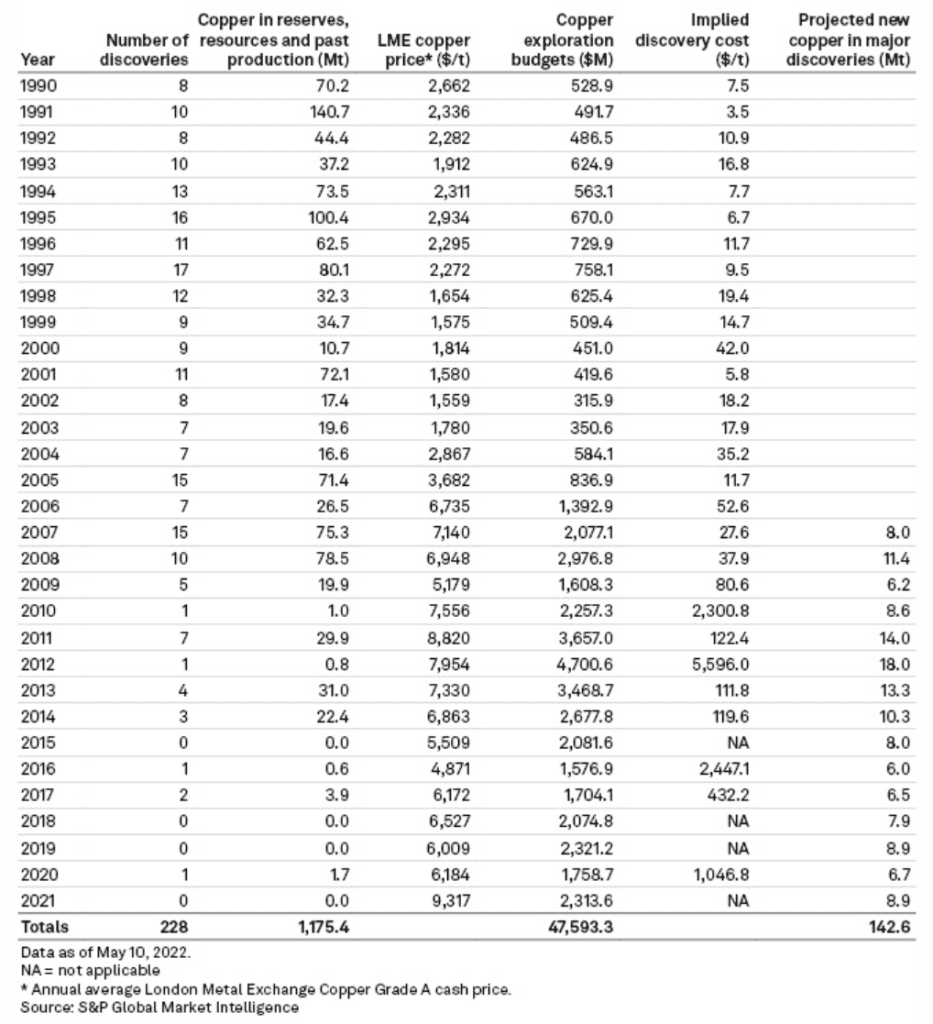
For example, despite copper exploration budgets having increased 21% to US$2.79 billion in 2022 – their highest level since 2014 – there has not been a corresponding rise in the discovery of new deposits.
In fact, a 2022 report by S&P Global, found that only 12 of 228 major new discoveries since 1990 were made between 2012 and 2022, and three of those were in the last five of those years. Only 5.2% of all copper discovered since 1990 has come from new discoveries (the rest were brownfield sites).
It’s clear that we’re not talking about needles in haystacks anymore. We’re talking drops of water in oceans. And finding those ‘droplets’ under significant time and economic pressures requires a different, much smarter set of tools.
Innovating to overcome challenges
“There are many challenges in identifying and defining orebodies today,” Tyler Hall, Co-Founder and President of ExploreTech, told me. “One is the multi-scale nature of exploration.
“At different phases of exploration, mining companies are looking at geological features of different scales. Explorers must consider regional-scale structures that inform drill targets, while at the same time understanding how microscopic grain structures control geometallurgy.
“Each scale requires a different set of tools and, oftentimes, a different expert. Allocating capital effectively to understand each scale is therefore challenging, yet pivotal to identifying and defining orebodies.”
It takes a long time to gather enough information about the size, grade, and character of mineralisation to enable informed investments that eventually catalyse the development of a resource into a mine.
Investors, governments, and employees may not be patient enough to wait the years necessary to explore for and then drill a promising target. Thus, it’s increasingly important to reduce the timeline of the entire exploration process, especially drilling and delineation.
Today, technology can help to locate deposits and make drilling more efficient and informative. For instance, remote sensing techniques, like hyperspectral or geophysical sensing, can help to narrow the search space and improve decision making.
Hall explained: “People are constantly inventing new ways to collect and analyse geological data. Advances in sensor technology, like spectrometers, muon detectors, and quantum gravimetry, are generating data that gives us new insights into the physical properties of the subsurface.
“Drilling is inherently slow, and so is processing (logging) the data generated. Smart technologies, like core scanners, can significantly speed this up.”
He added though that advanced data science is not always needed, nor is data formatted properly for it. “We believe that traditional ‘big data’ methods can do more harm than good,” he told me. “Doing traditional geology, geochemistry, and geophysics – but in a faster way – can lead to more successes than applying artificial intelligence (AI).”
Big data versus small data
Big data is useful for drawing comparisons and helping to inform hypotheses. However, Hall pointed out that much depends upon the definition of ‘big’ – it’s a rather ambiguous term.
“Traditional regression-based AI and machine learning (ML) methods can work well in localised exploration areas with dense, high-quality and consistent data, but they can struggle in situations with sparse datasets,” he said.
“Therefore, regression-based approaches tend to be better suited for late-stage exploration projects and active mines. In early-stage projects, before a deposit has been drilled out, big data techniques are often less effective, though it’s not to say people aren’t trying to do that.”
The team at ExploreTech are more excited by ‘small data’ approaches that leverage advanced computing to gain a deeper insight into data by combining it with pre-existing knowledge.

Hall explained: “This can take the form of improved geophysical inversion, automated drill planning, and more. These are techniques that take what used to be a manual process and automate them using smart technologies and whatever amount of data a company has.
“We believe small and well-defined datasets should be the only inputs into a system, and that the more successful, newest systems actually look like very fast traditional workflows. These fast, traditional workflows are where the value from hardware will be captured.”
From sensing to modelling and Gen AI
It’s only in the past ten years that computers and software have become commonplace and easy to use in exploration. Initially, these tools weren’t easily incorporated into traditional or low connectivity workflows.
“Now, we’re seeing computers become more useful, and therefore more common in exploration,” said Hall. “Implicit modelling (e.g. Leapfrog) and 3D visualisation, leading to better communication (e.g. VRIFY), have done wonders. 3D visualisation software in particular has been a game changer, since we can now quickly create realistic 3D models that help identify drill targets.
“The advance of new sensor technologies is really exciting. Muon tomography (by Ideon Technologies), ambient noise tomography (Fleet Space), and quantum gravimetry (Dirac Labs) are just a few.
“These techniques give us insight into the subsurface that we’ve never had before, letting us delineate orebodies more effectively and at a cheaper cost. However, as companies gather more sensor data, there’s a growing need for techniques to integrate it into a 3D model that’s easily updated.”
He added that the next generation of successes will likely come from small, rapid sensing modalities that generate a lot of data, and software that can recommend a variety of decisions based on those new datasets.
“Quantum gravimetry is one to keep an eye out for,” said Hall. “These are high-resolution gravimeters that can be mounted on drones. These will provide cheap 3D density models that we’ve never seen before.
“Muon tomography is very compelling for delineating ore deposits over time. And faster, smaller drill bits with more accurate surveys will also be key,” he added. “In time, we might even be able to fit geophysical tooling, which currently takes up the space of a large truck, into a drill bit.
“Through technologies like generative AI, explorers will likely be able to talk to their database to find relevant documents, draw comparisons, and plot data just by speaking. Innovation in finance is another very important area that will support the application and advancement of new technologies.”
The ability to ‘see’ what humans cannot
US-based tech developer, VerAI Discoveries, is pioneering a methodology that combines AI/ML technology with deep geoscience expertise to generate an objective, reproducible targeting platform for use in mineral exploration.
Yoav Naveh, VP of Product, spoke to me about the value that AI-based algorithms can provide in this context. “Mining companies are underdelivering today when it comes to identifying new high-potential greenfield targets,” he said.
“The main challenge is that greenfield targeting of new economic orebodies under covered terrain is still done using conservative approaches and technologies. It’s still vastly based on expert hypotheses – which are proving to work very rarely, with only 1 in 1,000 exploration projects becoming a mine.
“Targeting under covered terrain, in underexplored but high-potential areas requires a new mindset and new technology that’s fit-for-purpose.”
In the last couple of years, the improvement of AI and ML technologies has skyrocketed, creating stronger, faster, and more accurate algorithms. If used correctly (and, according to Naveh, that is the secret sauce), these can help in almost every part of the mineral exploration value chain, as they have done in other industries.
“At VerAI, we’re harnessing these technologies to build a platform that generates high-probability targets under covered terrain (both brownfield and greenfield),” Naveh told me.
“To apply these algorithms smartly, we are utilising a data science team with varied backgrounds, for example, in earth sciences, healthcare AI technology, algorithm development, and more, that together will tackle these challenges.
“I think the most significant advancement from the past 10 years is the utilisation of improved AI/ML algorithms across the exploration value chain, made possible by hardware and software improvements.
“These have the power to discover patterns in complex data sets that humans can’t see with their own eyes. This capability enables mineral exploration teams to connect the dots better and to achieve better results, quicker and cheaper.”
Going forward, Naveh expects continuous algorithmic improvements driven by different industries, and their adaptation to mineral exploration to result in higher volumes of critical mineral discoveries.
“We’re excited to see how algorithmic and data science improvements help us and our partners find new, much needed deposits for the green energy transition.” he added.
Bringing people closer to data
For Annelie Lundström, Chief Alliance Officer at Veracio, implementing the right technologies will transform the way explorers interact with data and with their colleagues. This will play a vital role in helping mining companies to attract the next generation of talent and uncover future discoveries.
“Our industry faces several challenges,” she said. “We must adapt to mining at depth and grapple with the growing complexity of new orebody discoveries. On top of this, we’re experiencing increasing geopolitical tensions and surging energy costs. And as these challenges mount, the skilled workforce needed to address them is shrinking, leaving the industry with a talent shortage.
“The integration of smart technologies and big data in the mining sector is crucial for overcoming these challenges and facilitating the discovery and extraction of minerals essential for the green energy transition. Without these technologies, we cannot succeed.”
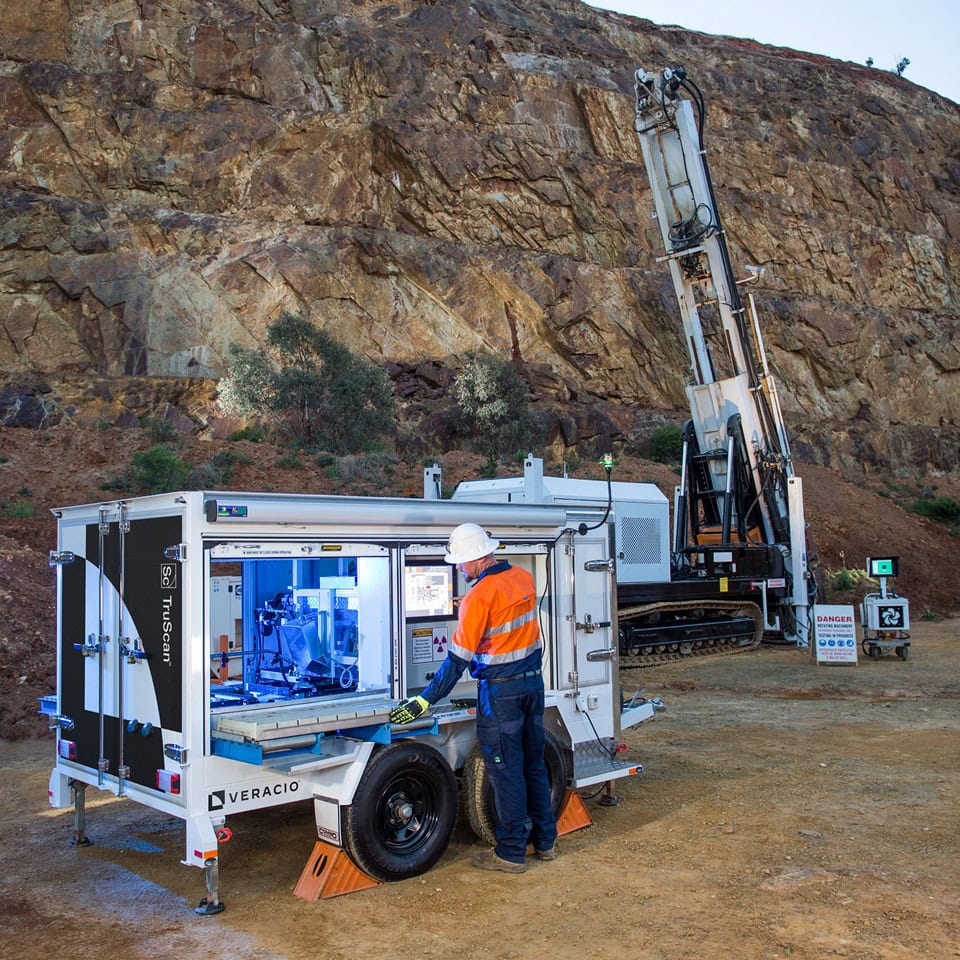
Veracio’s platforms capture information, such as digital representations of drill cores, which enable geologists worldwide to access them remotely. This means their daily tasks can be performed both in the field and off-site, improving their quality of life – a key factor in attracting people to join the industry.
“Digitalisation also allows for better collaboration with team members, regardless of location and time zone, so teams can focus on finding their next exploration target or use data to unlock complex orebodies,” she added.
Unlocking orebody knowledge
“What are some of the most significant technological advances that you’ve seen in mineral exploration and orebody definition over the course of your career?” I asked.
“As a mining tech entrepreneur and co-founder of the core scanning solution, Minalyzer, I’m biased, but I firmly believe the ability to unlock information from precious drill cores is one of the most groundbreaking innovations in the mining industry,” Lundström replied. “Enabling fast access to high-resolution orebody knowledge is changing work from the core shed to the boardroom.
“This is not about the future – it’s already happening today. Recently we shared results from our partnership with Foran Mining. Working together, Veracio and Foran Mining have achieved a milestone in mineral exploration at Foran Mining’s McIlvenna Bay and Tesla deposits in Saskatchewan, Canada.
“Veracio’s TruScan in-field sample scanner played a pivotal role, offering near real-time geochemical data and enabling the discovery of the Bridge Zone of mineralisation.
“The TruScan system allowed Foran Mining’s team to make swift, informed decisions on drill targets, thanks to its ability to deliver detailed geochemical insights directly from drill cores. This allowed them to expedite the exploration process and bolster the accuracy of resource estimation.”
Idaho Copper Corporation also recently announced the deployment of TruScan at its copper-molybdenum project to digitally scan and measure the metal grades of 18,288 metres of drill cores pulled over the past 20 years.
The results will be used to determine potential ore sorting parameters in an updated preliminary economic assessment, and to select various bulk core samples for detailed metallurgical and ore sorting studies. The goal is to reduce the project’s overall mill size and increase mill feed grades, which the company expects will translate into lower capital costs and higher profitability for the project.
“The game changers over the next 10-20 years will be based on AI that changes the complete workflow, from sample to extracting,” Lundström told me.
“Veracio broke new ground by introducing continuous high-resolution volume scanning, and we have started to scratch the surface of what can be done in this space by applying AI to solve the challenges. We have a clear vision of how to further develop this and how it will positively impact the mining industry and the people working in it.”
1 comment
Joel Jeangrand
In the same vein, this SEG paper could also be interesting to read: https://pubs.geoscienceworld.org/segweb/segdiscovery/article/doi/10.5382/SEGnews.2024-136.fea-01/634328/Empowering-Geologists-in-the-Exploration-Process