

In the Indonesian archipelago, nestled among the tropical forests of North Sulawesi, lies the Tokatindung gold mine—home to one of Southeast Asia’s most progressive digital mining transformations.
Since 2020, owner-operator, PT Archi Indonesia Tbk, has been working closely with Hexagon’s Mining division to implement advanced fleet management and operator alertness solutions at the mine. The results are significant, but the secret to the project’s success isn’t just technological; it’s cultural.
As the mining industry embraces a new era of data-driven operations, social acceptance of technology has become as critical as use of the technology itself.
Tokatindung’s journey provides a model for how thoughtful change management can create lasting impact and improve trust, safety, and performance in mining operations.
A new chapter for Toka Tindung
Prior to engaging Hexagon, Tokatindung’s operating systems were largely manual. Two-way radio communication was used for dispatching, which created inefficiencies between mine planning and execution.
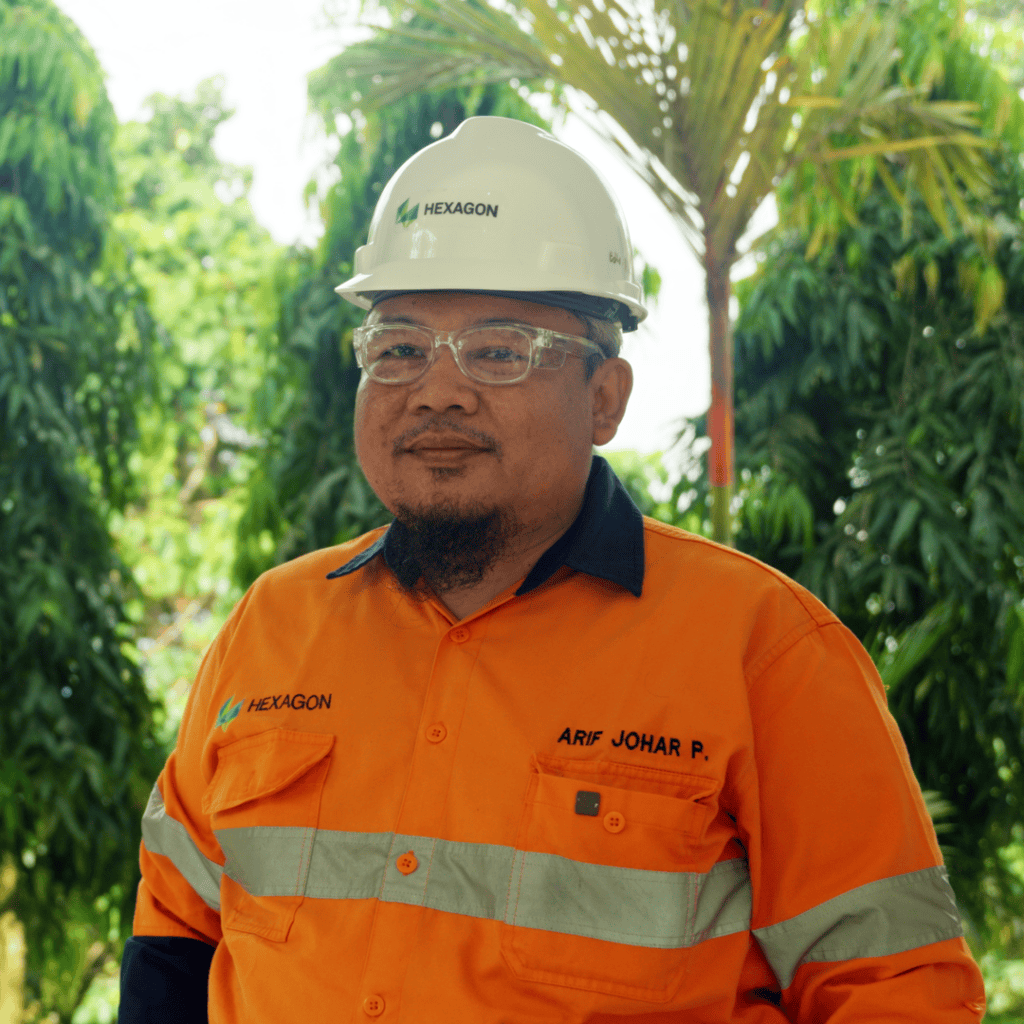
“The mine understood that its operations weren’t as effective as they could be,” explained Arif Johar Pratama, Senior Consultant at Hexagon’s Mining division in Indonesia. “They began looking for a technology partner who could help improve efficiency, and after a competitive tender, chose us.”
The implementation involved the deployment of Hexagon OP Pro, a fleet management system, and Hexagon Operator Alertness System (OAS) which work seamlessly together to optimise productivity and enhance on-site safety.
While the technology rollout was important, the challenge in realising the full value of these tools lay in the human element.
“This project was never just about installing hardware or software,” said David Prior, Senior Customer Success Manager at Hexagon’s Mining division. “It was about guiding an organisation through a profound change—from paper-based practices to real-time, data-driven decision-making. That’s a huge cultural shift.”
Change is the real work
For many mining operations, the allure of modern technologies can overshadow the complexity of adoption. Without a clear strategy for socialising new systems across all levels of an organisation, even the best tools can see limited usage or risk being mothballed after just a few years.
“At Hexagon, we don’t just install and go,” said Pratama. “We stay with the customer throughout their maturity journey, helping them build understanding, confidence, and trust in the technology.”
This approach involved more than technical training. Together the teams developed a tiered change management program, starting with training for Tokatindung’s in-house technology champions.
“We built internal capacity first to ensure the system would be sustainable,” Pratama explained. “The trainers shadowed our team, then took the lead in mentoring the mine’s dispatchers and truck operators. We didn’t leave until we were all speaking the same language.”
This strategy ensured knowledge was embedded into the organisation—not just owned by a few individuals. Managers, supervisors, engineers, and operators were all involved in tailored training sessions. Even the system’s most granular functions were tied to personal and operational benefits to enable full utilisation.
One example of this was the rollout of in-cab cameras for the OAS. Initially, some operators were wary of surveillance, fearing they were being watched. But through targeted education and open conversations, Hexagon reframed the technology as a safety tool.
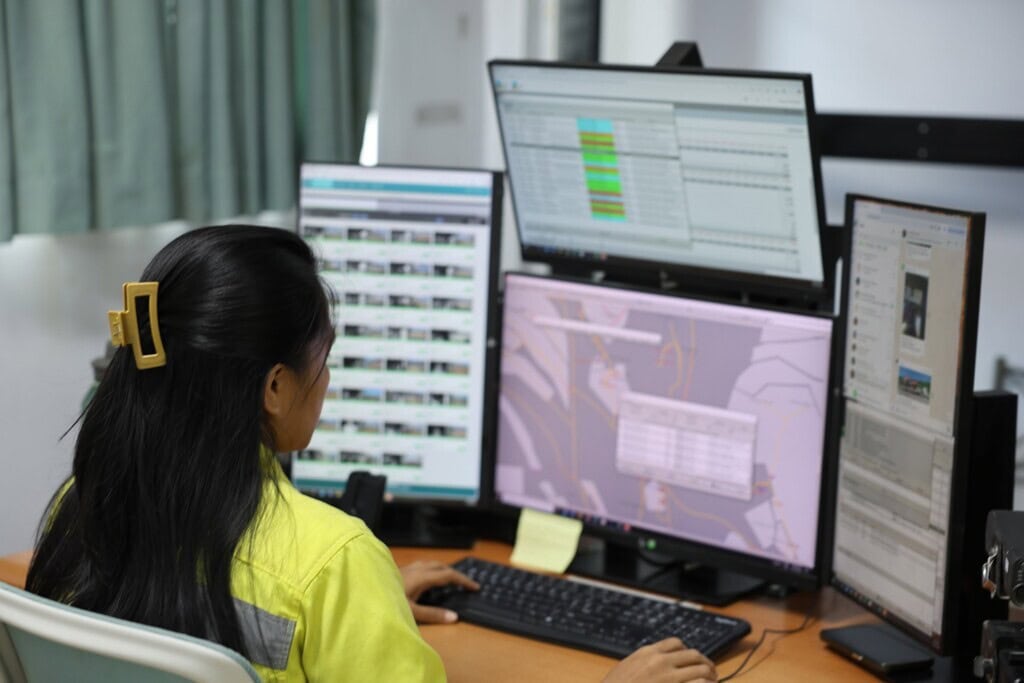
“We told them, ‘This camera is for you. It’s not to catch mistakes. It’s to ensure you go home safely to your family,’” said Pratama. “Once they understood that, acceptance improved dramatically.”
Results that speak for themselves
The shift from manual systems to digital decision-making paid off quickly. Within a year of implementation, Tokatindung began seeing measurable results across its operations.
“Productivity improvements were clear,” Prior said. “But even we were impressed by the scale of the impact.”
By leveraging OP Pro’s real-time data and dispatch optimisation capabilities, Tokatindung achieved a 28% increase in truck fleet productivity and a 16% reduction in queueing time for trucks at loading and dumping points. These gains were supported by a 31% reduction in fuel consumption, directly reducing operational costs and Scope 1 emissions.
More nuanced improvements—such as a 4% reduction in hang time (the time between truck loading and departure)—also contributed to smoother cycles and tighter control over shift performance.
On the safety side, OAS helped reduce fatigue-related alerts for truck operators by 79%, allowing managers to intervene before risks became incidents. “That’s a huge social benefit,” said Prior. “It’s not just about compliance; it’s about protecting lives.”
A safe mine is a productive mine
Behind every screen is a human story, and often, a ripple effect that extends beyond the mine gates. Prior explained that mining companies are increasingly being asked to demonstrate not just performance improvements, but social and environmental accountability too.
“Customers want tangible benefits from technology,” he said. “At Tokatindung, the productivity gains were obvious. But the mine also achieved reductions in greenhouse gas emissions and fuel usage—outcomes tied to better fleet management and real-time decision-making.”
The data also had broader implications. Through OAS, site leaders began to understand patterns in operator fatigue. Sometimes these were linked not to work conditions, but to personal circumstances at home.
“That’s when you begin to see technology influencing community wellbeing as well as workplace safety,” said Prior. “It opens up conversations around support systems, shift planning and even access to healthcare.”
Since implementing the systems more than three years ago, Tokatindung has recorded zero fatigue-related safety incidents—an outcome that resonates with both regulators and local communities. As Pratama noted: “A safe mine is a productive mine. When people feel protected, they perform better.”

Mining with purpose
Hexagon’s philosophy of acting as a technology partner rather than a vendor was key to maintaining trust throughout the transformation process. “We walked the path with the customer,” said Prior. “That built confidence, but it also demonstrated that success was a shared responsibility.”
For an industry that’s often perceived as conservative, the Tokatindung case study highlights how, with the right mindset, social license and innovation can be mutually exclusive. The site’s willingness to share its experience publicly has also become part of the story.
“It’s rare to see a customer be so open about their journey,” said Prior. “PT Archi Indonesia didn’t just adopt new technology—they owned it, and in doing so, set a standard for what good implementations look like.”
The impacts are tangible. Production and mining selectivity have increased. Fuel consumption, emissions and material losses have decreased. Workers are safer. And perhaps, most importantly, the mine has become an even stronger anchor in its local community.
“Mining can be a huge lever for socioeconomic development when done right,” Prior added. “Digital technologies, like OP Pro and OAS, are key enablers of responsible mining.”
From resistance to resilience
As more mines confront the dual pressures of digital transformation and environmental, social and governance (ESG) performance, Tokatindung’s experience offers important lessons. Namely, that technology must be introduced hand-in-hand with transparency, empathy and education; a human touch is more important than ever.
“Change doesn’t happen because you switch on a system,” Pratama said. “It happens when people understand what a system can do for them and believe in the value of using it.”
In today’s mining landscape, social acceptance is no longer a soft metric—it’s a strategic imperative. By placing people at the heart of their technology implementation, Tokatindung and Hexagon have proven that digital mining can be both efficient and inclusive.
And for Pratama, who has walked the journey with Tokatindung from first pitch to full integration, the reward is clear: “This is not just about technology. It’s about transformation. And transformation begins with people,” he said.
This article is sponsored by Hexagon