

When collision avoidance systems – or CAS – first emerged in mining, the value proposition was straightforward. If technology could reduce the likelihood of vehicles colliding and prevent people from being injured, then it was worth investing in.
While that argument still stands 20 years on, the context in which mining companies operate has evolved considerably. Alongside safety, operators face growing pressure to improve productivity, reduce costs and demonstrate strong environmental, social and governance (ESG) performance.
As a result, the industry’s view of CAS is beginning to shift. Rather than seeing them solely as a means of preventing incidents, mining companies are increasingly recognising their value as a source of operational intelligence. Every vehicle interaction, warning and intervention generates data that can reveal patterns in traffic flow, operator behaviour and operational performance.
At the same time, advances in technology have made sophisticated CAS more accessible than ever, raising expectations across the industry.
For Xiao Ru, Senior Product Manager at Hexagon’s Mining Division, the growing attention being paid to CAS is not surprising. “A severe incident can have many consequences,” he said. “Not only compliance related but also reputational.”
Morgan Avis, Head of Product, Analytics and Data Platform for Hexagon’s Mining Division, agreed that safety today is inseparable from mining’s licence to operate. “It’s almost impossible not to think about safety as a first principle,” he said.
Increasingly, the question isn’t just whether a collision can be prevented, but what can be learned from the conditions that create collision risk in the first place.


More than a safety system
Historically, mines tended to view safety and productivity technologies as separate categories. Fleet management systems improved utilisation while planning tools optimised production. CAS reduced risk by alerting operators to potential safety hazards. Each technology had a distinct purpose and a clear business case. But that distinction is becoming increasingly blurred.
Modern CAS are deployed across entire fleets, creating a network of connected sensors that continuously monitor vehicle movements and interactions. As a result, they generate vast quantities of data about how equipment, infrastructure and people interact across a mining operation. While much of that information was initially collected to identify potential collision risks, it can also provide a detailed picture of how the mine functions on a day-to-day basis.
The challenge, Ru explained, is not collecting the information; it’s connecting and contextualising it and making insights accessible to decision makers.
When analysed properly, CAS data can reveal patterns that would otherwise be difficult to identify. For example, repeated alerts at an intersection may indicate a traffic management issue, while frequent overspeed events could suggest that speed limits are poorly aligned with operating conditions. Certain routes may consistently generate interactions between different vehicle types, highlighting opportunities to redesign workflows or improve segregation.
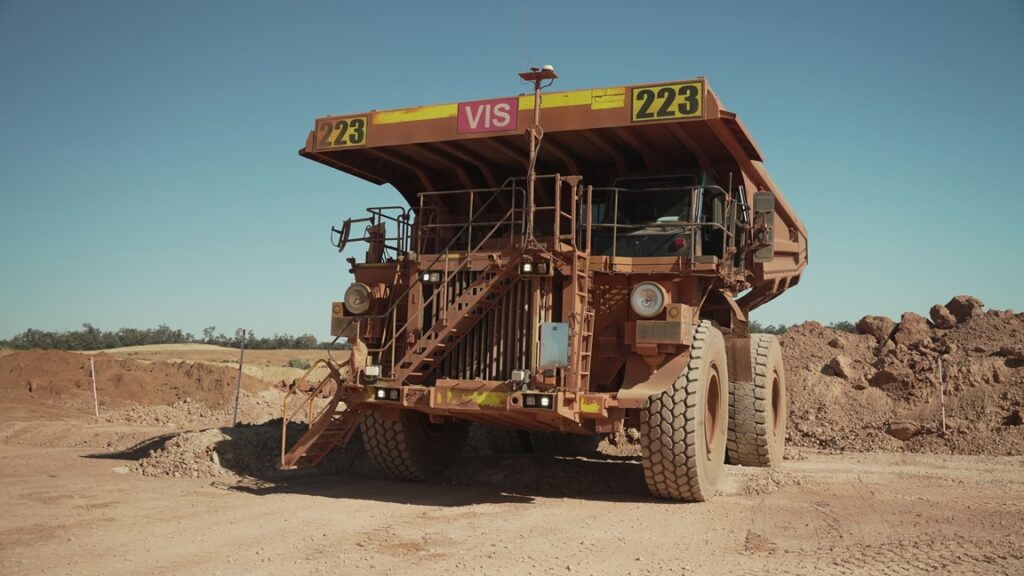
The data can also reveal subtle behavioural trends. Ru recalled instances where operators began relying heavily on vehicle intervention systems (VIS) – which slow down vehicles when hazards are detected – trusting the systems to react to hazards rather than remaining attentive. Without access to operational data, management teams would have little visibility into how behaviour was changing in the field.
For Avis, the concept is linked to what he described as “observability”. Rather than simply recording incidents as they occur, CAS and VIS now provide a continuous stream of information about operational interactions. That visibility creates opportunities to reduce risk and improve the way mines function.
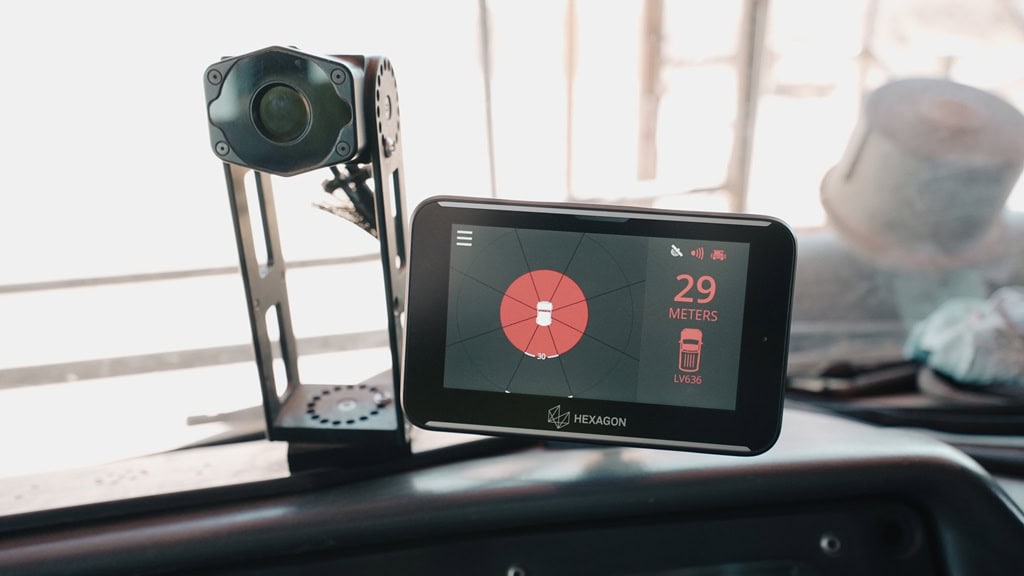
Modern CAS are deployed across entire fleets, creating a network of connected sensors that continuously monitor vehicle movements and interactions. Image: Hexagon
When safer can also mean smarter
This challenges a long-held assumption that safer operations must inevitably be less productive. But by understanding where interactions occur, how traffic flows through the mine and where unnecessary risks are introduced, operators can remove inefficiencies while simultaneously improving safety performance.
Ru highlighted examples where mines, having gained confidence in VIS, were able to rethink their traffic management strategies. In some cases, stop signs at specific intersections were removed because the technology provided an additional layer of protection should vehicles approach each other unexpectedly. The result was smoother traffic flow without compromising safety.
Other benefits are less visible but equally important. VIS can reduce harsh braking events, lowering wear on components and reducing maintenance requirements. Data from CAS and VIS can also identify recurring bottlenecks, allowing operators to redesign workflows or address infrastructure constraints.
For operators, even small improvements can make a meaningful difference. Avis described situations where drivers could identify nearby vehicles in dusty conditions through the CAS interface and communicate more accurately via radio. While difficult to quantify, these enhancements contribute to greater situational awareness and more consistent operations.
From awareness to intervention
Hexagon describes its own approach to collision avoidance as a “progression from insight to intervention”.
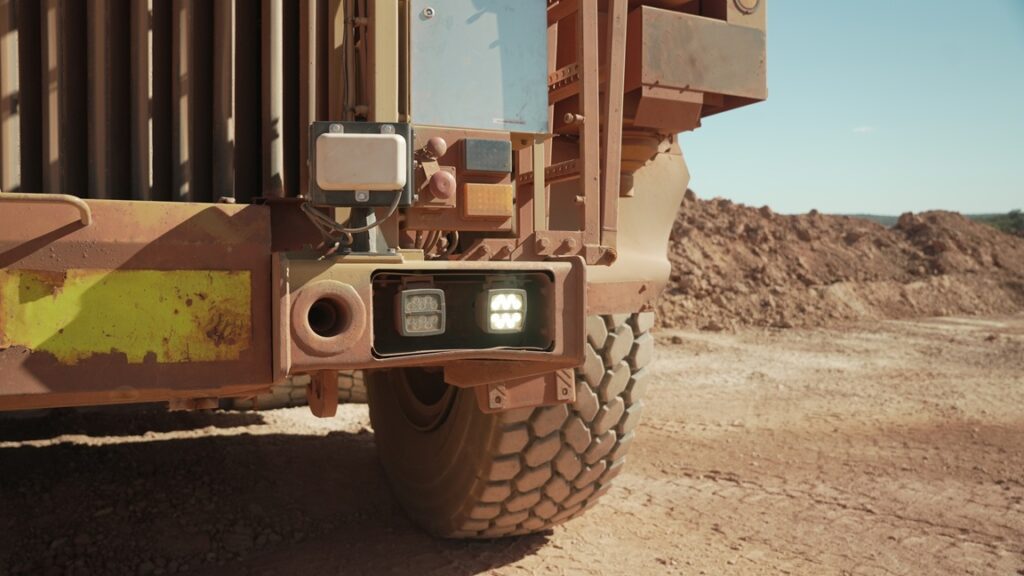
The journey typically begins with awareness. The Hexagon OP CAS provides operators with alerts and warnings about nearby vehicles and potential hazards, helping them make informed decisions in real time. In dusty or dark conditions, the technology acts as an additional layer of situational awareness.
The next step involves understanding what the resulting data reveals. Through its CAS Insights platform, Hexagon analyses collision avoidance events to identify recurring patterns, hotspots and operational risks. This means that rather than treating alerts as isolated incidents, mines can build a clear picture of how risk develops across an operation.
Interestingly, Hexagon recommends that customers spend time gathering and analysing this information before introducing automated intervention capabilities. According to Ru, new deployments often begin with advisory and awareness systems, followed by a period of data collection and analysis. Only once operational patterns are understood and configurations refined does the company typically recommend introducing the Hexagon Vehicle Intervention System, an EMESRT Level 9 solution.
That recommendation reflects an important lesson learned through years of deployment: many organisations approach advanced VIS as though they’re a complete solution to collision risk. But, Ru explained, that mindset can create unrealistic expectations. “Mines often mistake Level 9 intervention systems as a silver bullet,” he said.
Instead, VIS are most effective when deployed as part of a broader safety strategy. After analysing operational patterns, adjusting system configurations and addressing behavioural or procedural issues, intervention technology becomes the final layer of protection for situations where risk cannot be completely eliminated.
The human factor
For all the discussion around sensors, analytics and VIS, one theme surfaced repeatedly during our conversation: technology alone is not enough. “The technology is only as good as the people who are using it,” Ru told me.
That observation touches on one of the most significant challenges facing digital transformation in mining. Technology can be purchased and deployed relatively quickly. But changing behaviours, operating practices and organisational culture is considerably more difficult.
Introducing CAS or VIS often requires adjustments to training programmes, operating procedures and management processes. Operators must understand why systems behave the way they do. And management teams need mechanisms for turning insights into action. Without those supporting elements, even sophisticated technologies can struggle to deliver their full value.
Ru noted that poorly understood interventions can create frustration among operators, while poorly configured systems can undermine trust altogether. Conversely, successful deployments tend to involve continuous collaboration between technology providers and mine operators.
One example involved a site where CAS data revealed a recurring hotspot between light vehicles and mine haul trucks. Rather than accepting the risk, the operation redesigned the road network to better separate traffic flows and eliminate the interaction. The technology identified the problem, but it was the mine’s willingness to act on those insights that delivered the outcome.
Avis believes this collaborative approach is increasingly important as mines seek to maximise value from their technology investments. “CAS and VIS cannot be treated as one-time installations,” he said. “Traffic patterns change, mine plans evolve and operational priorities shift. Maintaining alignment between technology and operating conditions requires ongoing review and continuous improvement.”
From reactive to predictive
The mining industry has become remarkably effective at collecting data. The challenge now is using that information to anticipate problems and inefficiencies before they occur.
For Hexagon, AI and predictive analytics will play an important role in this transition. As CAS and VIS accumulate larger datasets, opportunities emerge to identify trends that precede incidents. Changes in operator behaviour, increasing alarm frequencies or evolving traffic patterns may all serve as early indicators.
Future systems may be able to recommend interventions before problems emerge, helping managers respond proactively rather than reactively. Such capabilities could become particularly valuable as experienced mining professionals retire and a new generation of workers assumes responsibility for increasingly data-rich operations.
In many ways, this reflects the broader evolution taking place across collision avoidance itself. The mining industry is moving beyond a world where safety technologies simply respond to hazards. Instead, CAS and VIS are becoming part of a larger effort to understand risk, improve operational decision-making and build more resilient operations.
This article is sponsored by Hexagon. Click here to read more expert insights from Hexagon.