

Mining is often a frontier industry. We’ve chased orebodies beneath deserts, mountains and into the Arctic. Now our attention is turning to the ocean floor.
Deep-sea mining is often presented as the next logical step in securing the minerals needed for the energy transition. Polymetallic nodules scattered across vast areas of the seabed contain nickel, cobalt, manganese and copper – metals that are essential to electrification and modern industry.
There are plenty of arguments in favour of extraction. Critical mineral supply chains are highly concentrated, creating geopolitical vulnerabilities and raising concerns about future availability. Governments and companies are increasingly looking for ways to diversify supply and reduce dependence on a small number of producing and processing jurisdictions. In this context, the deep ocean has become strategically interesting.
At the same time, terrestrial mining is hardly impact-free. New mines can require significant land disturbance, consume large volumes of water and affect communities and biodiversity. Some proponents of deep-sea mining argue that harvesting nodules from the seabed could, in certain circumstances, result in a smaller environmental footprint than developing new land-based operations.
Perhaps. But “could” is doing an awful lot of heavy lifting.
One of the most striking aspects of the deep-sea mining debate is how much remains unknown. The deep ocean is one of the least understood environments on Earth. Scientists are still discovering species and trying to understand the ecological relationships that exist thousands of metres below the surface.
A recent review led by the Natural History Museum drew together more than 50 years of experimental evidence and concluded that while we’re beginning to understand some local impacts of deep-sea mining, significant uncertainties remain around the broader and longer-term consequences. Recovery times are likely to be measured in decades, and potentially far longer for some ecosystems. In some cases, species could be lost before we have even documented their existence. That statement should give us pause.
Mining often works at the edge of scientific understanding. We make decisions with incomplete information all the time. But there’s a difference between managing known risks and proceeding when the baseline knowledge itself remains limited.
The push towards commercialisation appears to be accelerating regardless. Regulatory discussions continue, geopolitical competition is intensifying and several nations are seeking strategic positions in what could become an entirely new extractive industry.
The question is: have done enough homework to make an informed decision? I also wonder whether we’re asking ourselves sufficiently difficult questions about resource efficiency closer to home.
Could companies recover more critical minerals from end-of-life products? Could we improve recycling rates, design products differently, extend asset lifecycles or become more efficient in our use of materials? Could substitution and circular economy approaches reduce demand for virgin extraction altogether?
Granted, none of these solutions will eliminate the need for mining. The energy transition will require enormous volumes of minerals and metals, and responsible mining will continue to play a central role. But, to me, the order in which we approach these challenges matters.
There’s a tendency in our industry and, if we’re honest, in society more broadly to assume that if demand rises, the answer must be another frontier. Another deposit. Another province. Another planet. Maybe the answer is first to become much better stewards of the resources we already extract.
The deep ocean has existed for millions of years without us disturbing it. The ecosystems that inhabit it have evolved under conditions we’re only just beginning to understand. Once altered, they cannot simply be restored by writing a rehabilitation plan and walking away.
This is not an argument against deep-sea mining forever. It’s an argument against haste. There may come a time when the evidence supports carefully regulated seabed mining. There may also come a time when society decides that the strategic benefits outweigh the environmental risks.
But we’re not there yet. And when it comes to pristine environments that we scarcely understand, “first, do no harm” feels like a surprisingly good place to start.
Has this discussion piqued your interest? Our July editorial theme is environment and sustainability. Subscribe to read more.
Carly
P.S. In August, we vacation! We’ll be back in your inboxes in early September. Have a great summer.
Editor’s pick
Carly Leonida speaks with experts from Hexagon about how collision avoidance systems are evolving from standalone safety tools into strategic sources of operational intelligence.
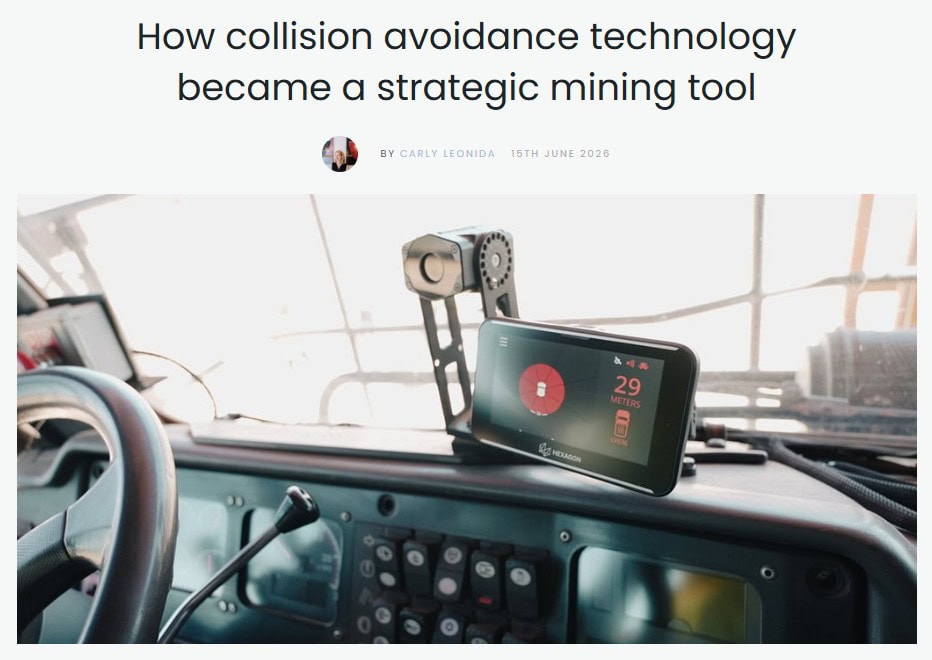
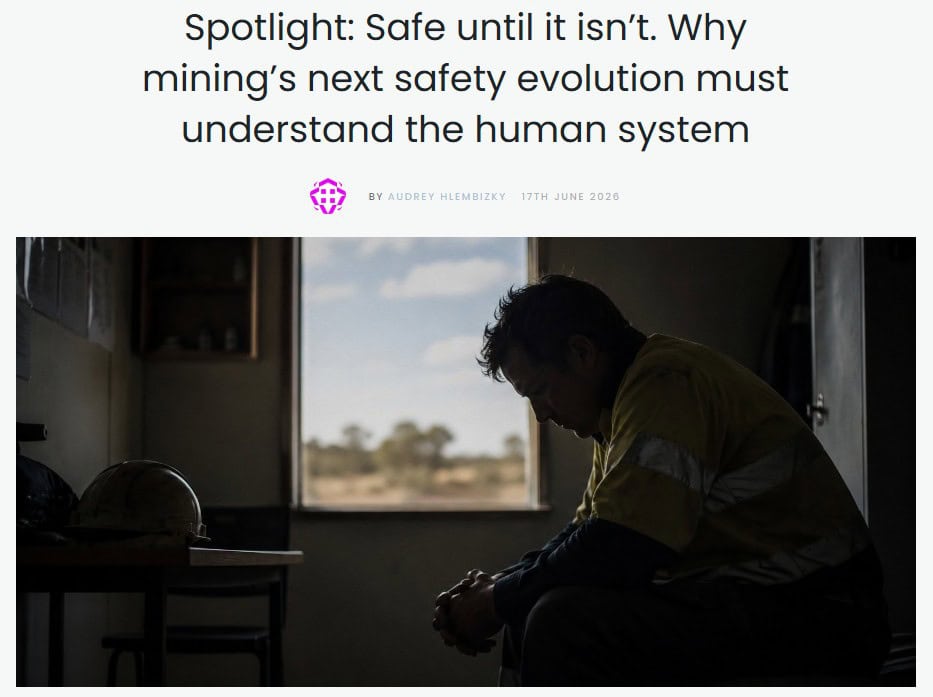
Top three articles in June
Our three most-read articles from past month. Click the pics to read


Become a subscriber
To access our monthly reading list and a host of other exclusive content, become a member of The Intelligent Miner community. Click here to find out more.
Follow us
Follow us on LinkedIn, Instagram and X to keep up to date with with all our latest developments.
Copyright © 2026 The Intelligent Miner
All rights reserved